


By Kazeem Ajibola Shoyebo
With the 2026 FIFA World Cup fast approaching, an unexpected geopolitical controversy has emerged over whether Iran national football team will participate in football’s biggest tournament, raising a complex question about authority in global sport: who ultimately decides, the host country or FIFA?
The debate intensified following escalating tensions between the United States and Iran, which have placed the presence of the Iranian national team under scrutiny despite the country having already secured qualification for the expanded global tournament scheduled to run from June 11 to July 19, 2026 across the United States, Canada, and Mexico.
Iran qualified during the Asian qualifying campaign and was expected to be among the 48 participating teams in the newly expanded format, the largest World Cup in history. However, growing political and security concerns linked to tensions between Tehran and Washington have raised questions about whether the team will be able to travel and compete on American soil.
Infantino’s Reassurance After White House Meeting
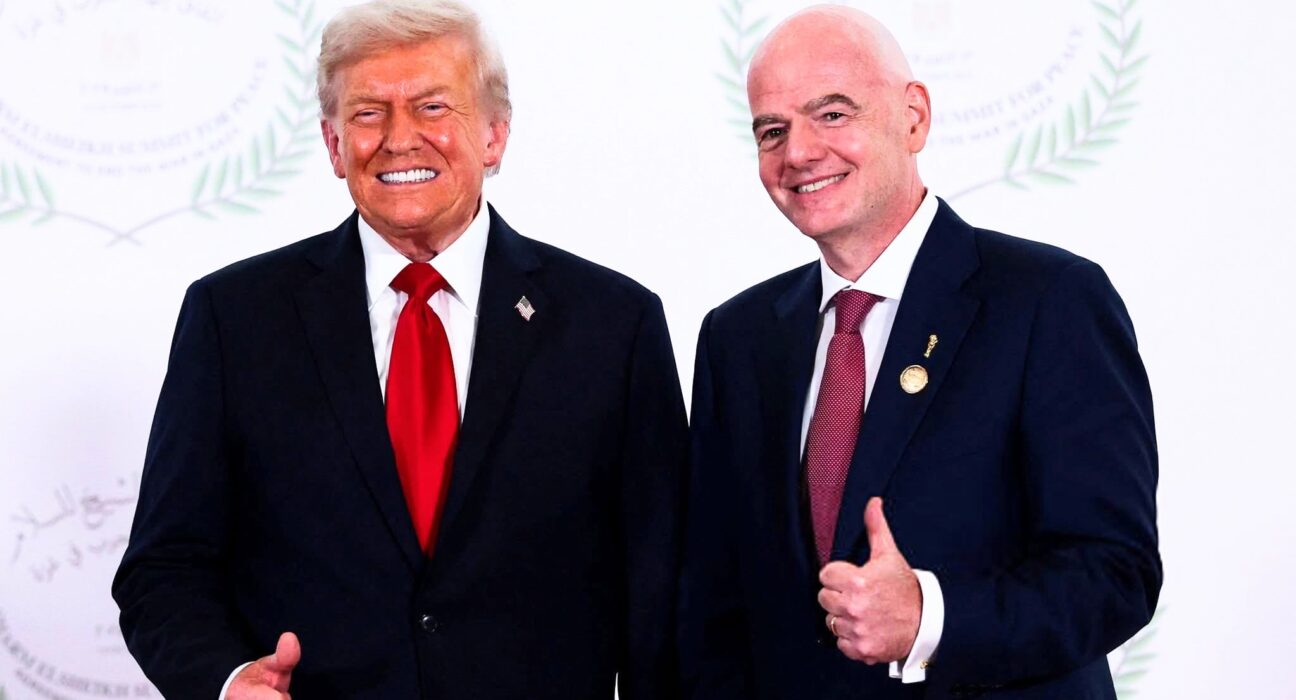
In an effort to calm speculation, Gianni Infantino, president of FIFA, confirmed that he recently met with Donald Trump, the president of the United States, to discuss preparations for the tournament and the broader political climate surrounding it.
Infantino described the meeting as constructive and emphasized that the World Cup should remain a unifying global event despite geopolitical tensions.
“This evening, I met with the President of the United States, Donald J. Trump, to discuss the status of preparations for the upcoming FIFA World Cup and the growing excitement as we are set to kick off in just 93 days,” Infantino said in a statement shared by FIFA.
“We also spoke about the current situation in Iran and the fact that the Iranian team has qualified to participate in the FIFA World Cup 2026. During the discussions, President Trump reiterated that the Iranian team is, of course, welcome to compete in the tournament in the United States.”
Infantino stressed that football’s global showpiece has historically transcended politics and should continue to serve as a platform for unity.
“We all need an event like the FIFA World Cup to bring people together now more than ever, and I sincerely thank the President of the United States for his support, as it shows once again that football unites the world.”
Trump’s Contradictory Message
However, the situation took a dramatic turn less than 48 hours later when President Trump appeared to adopt a different tone in a post on his Truth Social platform.
While reiterating that Iran’s team would technically be allowed to participate, Trump suggested that their presence might not be advisable due to safety concerns.
“The Iran National Soccer Team is welcome to the World Cup, but I really don’t believe it is appropriate that they be there, for their own life and safety,” Trump wrote. “Thank you for your attention to this matter!”
The statement quickly drew global attention because it appeared to question whether the Iranian team should actually attend the tournament despite having qualified on sporting merit.
If implemented, such a move would represent an unprecedented moment in the history of the World Cup, which began in 1930 and has since grown into the most watched sporting event in the world.
A Tournament Beyond Politics
Historically, FIFA has maintained strict control over participation rules in the World Cup, insisting that political disputes between nations should not interfere with football competitions.
Under FIFA regulations, only the global governing body has the authority to suspend or exclude a national federation from competitions such as the World Cup. Host nations are expected to grant entry visas and security guarantees to all qualified teams regardless of diplomatic relations.
This principle has been tested several times in the past.
During the 1994 FIFA World Cup hosted by the United States, teams from politically sensitive regions were allowed to participate without interference. Similarly, the 2018 FIFA World Cup in Russia took place amid major geopolitical tensions but still welcomed teams from across the world.
The 2026 edition will mark another historic milestone for the tournament. For the first time, the competition will feature 48 teams instead of 32, increasing the number of matches from 64 to 104 and expanding participation to more regions of the world.
Iran’s Defiant Response
The controversy deepened when representatives of the Iranian national team responded firmly to Trump’s comments, emphasizing that qualification for the tournament was earned on the pitch rather than granted by political authorities.
“The World Cup is a historic and international event, and its organizer is FIFA — not any single country,” the team said in a statement circulated by Iranian media.
The statement stressed that Iran secured its place in the competition through sporting achievement.
“The Iranian national team qualified for this event with authority and through consecutive victories, becoming one of the first teams to reach this great tournament.”
Iranian officials also rejected any suggestion that their participation could be decided by the host nation.
“Certainly, no one can remove the Iranian national team from the World Cup,” the statement continued. “Rather, the country that should be removed is the one that merely carries the title of ‘host’ but does not have the ability to ensure security for the teams participating in this event.”
A Diplomatic and Sporting Balancing Act
The dispute highlights the delicate balance FIFA must maintain when organizing global tournaments in politically sensitive environments.
As the governing body of world football, FIFA operates independently from national governments but relies heavily on host countries to provide security, infrastructure and logistical support for major competitions.
That arrangement can sometimes create friction when geopolitical tensions intersect with international sport.
For the United States, hosting the World Cup alongside Canada and Mexico represents a massive undertaking. The tournament is expected to attract millions of visitors and generate billions of dollars in economic activity across North America.
FIFA has repeatedly emphasized that all qualified teams will be treated equally under its regulations and that political disputes should not influence sporting participation.
Uncertainty Ahead of Kick-Off
With the tournament still months away, it remains unclear whether the diplomatic tensions between Washington and Tehran will escalate further or be resolved in time for the competition.
For now, Iran remains a qualified participant in the 2026 World Cup, and FIFA has given no indication that the team could be removed from the tournament.
But the controversy surrounding Trump’s comments illustrates how international sport can quickly become entangled with global politics.
As preparations for the biggest World Cup in history continue, one question lingers in the background: when political tensions collide with football’s global governing body, who truly calls the shots, the host nation or FIFA?
The answer may ultimately shape not only the participation of Iran in the 2026 tournament but also the broader relationship between global sport and geopolitics in the years to come.