

How One Quarterfinal Revealed Why Football Rewards Preparation—but Never Guarantees Victory
By Paul Lucky Okoku
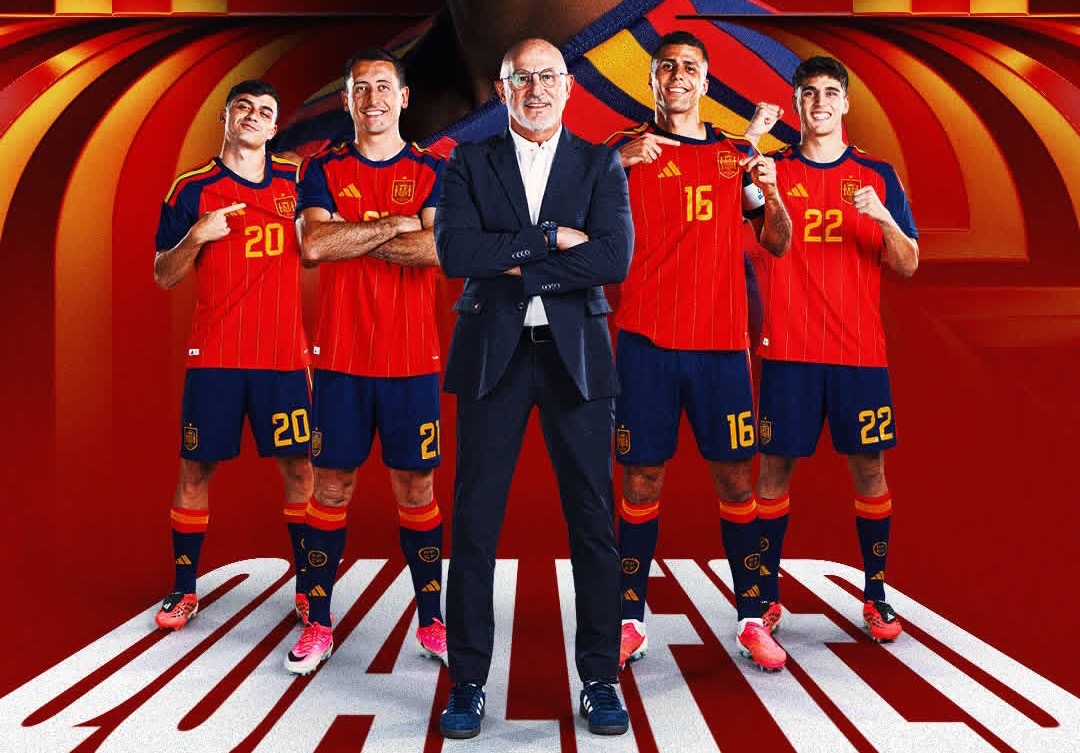
From tactical brilliance to late drama, Spain’s victory over Belgium reminds us that football is not merely a game of statistics—it is a game of uncertainty, resilience, and timeless lessons.
“Football rewards preparation, but it never guarantees outcomes. That is why it remains the world’s most beautiful game.— Paul Lucky Okoku”.
Opening Reflection: Before the First Whistle
Before every football match, there are predictions. Supporters make them. Pundits make them. Journalists make them. Coaches quietly make them. Even players step onto the field with expectations of how the match may unfold.
Statistics are analyzed. Historical records are revisited. Head-to-head meetings are examined. Current form is evaluated. Injuries are considered. Likely lineups are discussed. Every possible scenario is debated. Then the referee blows the whistle. And football begins writing a story that no human being can completely predict. Because football has a mind of its own. That is why I have often said “Football has no human script. It has its own script.”
Before every major match, I begin preparing long before kickoff. As a football analyst and writer, I gather facts, study tactics, revisit history, and consider the many storylines that could unfold.
Yet after decades studying football’s history, culture, and evolution—as an international footballer, coach, mentor, project management professional, football analyst, and writer—I have learned one lesson that football never stops teaching.
Football has no human script. It has its own script. The game always reserves the right to surprise us. No amount of preparation can guarantee the outcome. No tactical board can account for every bounce of the ball. No statistic can fully measure courage. No prediction can anticipate every moment of brilliance—or heartbreak. That uncertainty is not football’s weakness. It is its greatest strength. It is why ninety minutes can produce memories that last a lifetime. It is why billions of people around the world continue to fall in love with the game. And it is why football remains, in my view, the world’s most beautiful sport.
Spain’s Perfect Record Finally Met Football’s Uncertainty
Spain arrived in the quarterfinal carrying one of the tournament’s most remarkable achievements. They had not conceded a single goal. Their defensive organization had frustrated every opponent. Their pressing was disciplined. Their movement was intelligent. Their confidence continued to grow with every match.
Watching the game, I honestly believed Belgium would struggle to become the first team to score against them. Not because Belgium lacked quality. Far from it. Belgium possessed enough attacking talent to punish any mistake. But Spain had shown almost no weakness throughout the tournament. When Fabián Ruiz gave Spain the lead in the 30th minute, it appeared the match was unfolding exactly as expected. Spain controlled possession. Belgium chased the game.
Everything pointed toward another disciplined Spanish victory. Then football reminded us that statistics explain the past. They never guarantee the future. Just eleven minutes later, Charles De Ketelaere became the first player to breach Spain’s defense in this World Cup. One goal changed everything. Belgium suddenly believed. Spain suddenly realized they were in a genuine contest. As the clock moved toward ninety minutes, extra time looked increasingly likely. Then came another reminder that football always reserves the right to write its own ending.
Substitute Mikel Merino struck in the 88th minute. One opportunity. One finish. One moment that separated celebration from heartbreak. Spain advanced. Belgium went home. And once again this World Cup reminded us that some of football’s greatest stories are written in the closing minutes.
Throughout this tournament, we have repeatedly witnessed late goals that transformed matches many believed were already decided. That is why football remains different. The scoreboard may suggest certainty. Football rarely does.
Spain and France: More Than a Semifinal
Spain’s reward is a meeting with France. On paper, it is one of the biggest fixtures world football can offer. Two former world champions. Two football powerhouses. Two nations that continue producing extraordinary talent. Millions will focus on the players. The tactics. The formations. The individual battles. But another question deserves equal attention.
How did European football build an environment capable of consistently producing teams like Spain and France? Many people immediately point to money. Others point to infrastructure. Some emphasize coaching. All of those factors matter. But none tells the complete story. The real story is more complicated. European football was not built on perfection. It was built through decades of learning from failure. That lesson extends far beyond Europe. It offers valuable insight for every football nation seeking long-term success—including Nigeria.
European Football Was Never Perfect
One of the greatest misconceptions in world football is that Europe became successful because everything was always done correctly. History tells a different story. European football has wrestled with many of the same problems that continue to challenge football around the world.
Crowd violence. Hooliganism. Racism. Poor officiating. Administrative failures. Corruption. Financial instability. The difference is not that Europe avoided those problems. The difference is that football authorities gradually confronted them instead of pretending they did not exist.
Progress required difficult conversations. Strong leadership. Investment. Accountability. And patience. Football cultures are not built overnight. They are built over generations. That is one of the greatest lessons Spain and France offer every developing football nation.
From Hooliganism to Reform
During the 1970s and 1980s, football hooliganism became one of Europe’s greatest embarrassments. Violence between rival supporters frequently overshadowed the football itself. The tragic Heysel Stadium disaster in 1985, where 39 supporters lost their lives before the European Cup Final, shocked the football world.
Four years later, the Hillsborough disaster transformed how stadium safety was viewed forever. Governments became involved. Football associations introduced stricter regulations. Security improved dramatically. Modern stadiums replaced outdated facilities. QaqwqSupporters who engaged in violence faced severe sanctions, including lifetime stadium bans. European football did not become stronger by denying its problems. It became stronger by confronting them. That distinction matters.
Why VAR Exists
Supporters often criticize referees after controversial decisions. That is part of football. But the introduction of the Video Assistant Referee (VAR) teaches an important lesson. Football’s lawmakers accepted that human beings—even the very best referees—make mistakes. VAR was never introduced because referees were failures. It was introduced because football embraced continuous improvement. Ironically, VAR itself remains controversial. Supporters still debate decisions. Managers still complain. Pundits still disagree. That is because technology can assist human judgment. It cannot replace it. Football remains beautifully imperfect. And perhaps that is exactly why we continue loving it.
Supporting Europe Should Never Mean Abandoning Nigeria
Watching Spain and France should inspire us. Not intimidate us. There is nothing wrong with admiring excellence wherever it exists. I enjoy watching European football. Millions of Nigerians do. Supporting Manchester United does not prevent someone from supporting Enyimba. Supporting Arsenal does not prevent someone from supporting Rangers International or Shooting Stars. Supporting Barcelona does not prevent someone from following Ranchers Bees or Remo Stars. These loyalties are not in competition. They can coexist.
Europe did not build world-class football by asking supporters to ignore local clubs. It built strong football by strengthening every level of the game. Grassroots football. School competitions. Youth academies. Coaching education. Referee development. Community support. Professional clubs. Each level strengthened the next. That is perhaps the greatest lesson Nigerian football can take from Europe. Not to imitate blindly. But to learn intelligently.
A Lesson Worth Bringing Home
Spain’s victory over Belgium was more than another World Cup result. It became a reminder that sustained success rarely happens by accident. It is usually the product of long-term planning. Consistent investment. Strong institutions. A willingness to learn from failure. And a commitment to continuous improvement. Those principles apply equally to football clubs, football associations, businesses, governments, and individuals. As Nigerians, we should celebrate great football wherever we find it.
But we should also ask ourselves an equally important question: What lessons can we bring home? Not everything Europe has done should be copied. But neither should every lesson be ignored. Progress begins by learning from both success and failure. And perhaps that is one of the greatest gifts this World Cup has given us.
It reminds us that football is not simply about winning matches. It is about building cultures capable of producing excellence year after year. That, more than any single trophy, is the real victory.
Football’s Greatest Lesson
Every World Cup produces unforgettable goals. Historic victories. Heartbreaking defeats. New heroes. Unexpected villains. But long after the medals have been awarded and the trophy has been lifted, what remains are the lessons. Spain’s victory over Belgium reminded us that preparation matters. Discipline matters. Talent matters. But none of those things guarantees victory. Football always reserves the right to surprise us.
That is why supporters continue filling stadiums. That is why billions continue watching. That is why journalists continue writing. And that is why players continue believing until the very last whistle. Because football refuses to become predictable.
The Final Whistle Is Never the Final Lesson
As Spain prepares for its semifinal against France, one thing is already certain. This quarterfinal gave us much more than another result. It reminded us that football is one of life’s greatest classrooms. It teaches preparation. Resilience. Leadership. Humility. Discipline. Teamwork. Accountability. And hope. The greatest teams are not necessarily those that never encounter problems. They are those that learn, adapt, and continue improving. Perhaps that is football’s greatest lesson—not only for players and coaches, but also for clubs, institutions, and nations.
Personal Reflection: Football Has a Mind of Its Own
Whenever I write about football, my goal extends beyond reporting the final score. Scores become history within hours. Statistics are eventually broken. Records are surpassed. But lessons endure. That is why I enjoy connecting football with leadership, history, culture, and personal responsibility.
Football is not merely ninety minutes of entertainment. It reflects who we are. How we prepare. How we respond to adversity. And how we grow.
If Spain’s victory over Belgium encourages us to think a little more deeply about those lessons, then this quarterfinal has already achieved something far greater than producing another semifinalist.
After all…
Football has no human script. It has its own script. And perhaps the most beautiful part of that script is that every match leaves us with an opportunity to become better than we were before kickoff.
Share Note
If this article expanded your perspective on football, leadership, or national development, I invite you to share it with fellow football lovers, coaches, former players, administrators, students, and young people.
My hope is that these reflections encourage thoughtful conversation—not simply about who won or lost, but about what football can teach us as individuals, communities, and nations.
Respectful discussion is always welcome.
Football grows stronger when ideas are exchanged with humility, evidence, and a genuine desire to learn from one another.
Paul Lucky Okoku
FIFA Legend | Football Analyst | Journalist-at-Large | CAF Africa Cup of Nations Silver Medalist | Former Nigerian Super Eagles & Flying Eagles International | Former Vice-Captain, Flying Eagles | Former Olympic Qualifying Team Member | Founder, Greater Tomorrow Children’s Fund (GTCF)
The views expressed in this article are intended to educate, preserve football history, encourage thoughtful dialogue, and contribute to the long-term development of football in Nigeria, Africa, and the global game.
Leave feedback about this