

By Paul Lucky Okoku
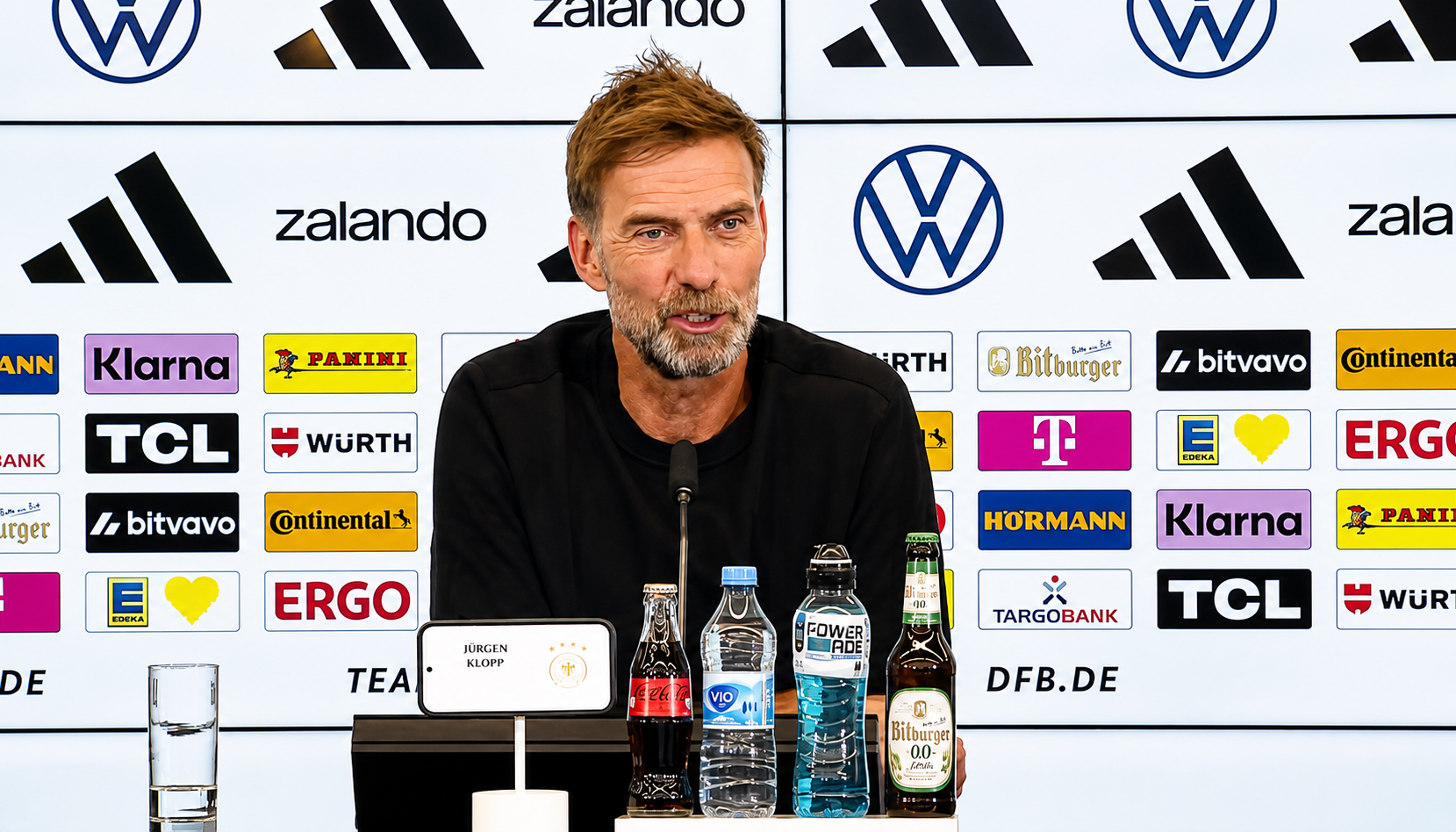
Germany have wasted no time preparing for the future. Just days after their disappointing exit from the 2026 FIFA World Cup, the German Football Association (DFB) has officially appointed former Liverpool manager Jürgen Klopp as head coach of the German men’s national team on a four-year contract running through the 2030 FIFA World Cup. Klopp officially begins work on August 15 and will lead Germany into the UEFA Nations League, UEFA EURO 2028* and ultimately the 2030 FIFA World Cup.
Joining Klopp is a trusted coaching team that has enjoyed success with him over the years:
- Peter Krawietz
- Pep Lijnders
- Former Germany international Sven Bender
Germany’s message to the football world is unmistakable:
The rebuilding has already begun.
This appointment is about far more than replacing a coach.
It is about restoring Germany’s football identity after another disappointing World Cup campaign.
Klopp has been tasked with rebuilding confidence, integrating the next generation of German talent, reconnecting the national team with its supporters and constructing a squad capable of challenging for major honours by 2030.
Speaking after his appointment, Klopp described leading Germany as one of the greatest honours in football and pledged to build a team that fights for one another and earns the full support of the nation.
Germany is not alone.
Across Europe, major football nations are already putting their long-term plans into motion.
Belgium has appointed former Netherlands captain Mark van Bommel on a two-year contract through UEFA EURO 2028, replacing Rudi Garcia following the World Cup. Van Bommel’s immediate task is to prepare Belgium for the Nations League and the next qualification cycle.
Italy is also moving decisively. Following Luciano Spalletti’s departure, the Italian Football Federation has accelerated its search for a new national team coach, with reports indicating that Andrea Pirlo is close to taking over after Pep Guardiola declined the position. Regardless of the final appointment, Italy is acting immediately rather than delaying its rebuilding process.
The lesson is clear.
Successful football nations do not wait until World Cup qualifiers are around the corner before making difficult decisions.
They evaluate.
They reorganize.
They recruit.
They plan.
Then they execute.
That naturally brings us to Nigeria.
As Germany, Belgium and Italy begin laying the foundation for 2030, Nigerian football stakeholders have every right to ask an important question:
What is Nigeria’s roadmap to the 2030 FIFA World Cup?
Who is evaluating the technical structure?
What is the long-term vision?
Is there a clearly defined football philosophy that links our youth teams with the Super Eagles?
How are scouting, sports science, player welfare and coaching development being strengthened?
These are legitimate questions every serious football nation must answer if it hopes to compete with the world’s best.
History has shown repeatedly that World Cups are not won during qualification.
They are built over the four years before the opening whistle.
Germany has started.
Belgium has started.
Italy has started.
Nigeria cannot afford another cycle of waiting.
The journey to the 2030 FIFA World Cup has already begun.
The question is not whether Nigeria will participate.
The question is whether Nigeria is already preparing to compete.
Final Thought
The appointment of Jürgen Klopp is not just another coaching announcement.
It is a statement of intent.
Germany has acknowledged its shortcomings, made a decision and committed to a long-term vision.
Whether Klopp ultimately succeeds or not, one thing is already certain:
Germany has begun preparing for 2030.
The same can be said for Belgium and Italy.
For Nigeria, the challenge is no longer simply identifying the right coach. It is developing a comprehensive football strategy that outlives any one individual. Coaching appointments matter, but so do technical planning, grassroots development, talent identification, sports science, player welfare, administration and accountability.
The nations that lift tomorrow’s trophies are usually the ones that begin preparing today.
Nigeria cannot afford another cycle of reacting when it should be planning.
The road to the 2030 FIFA World Cup has already begun.
The question is simple:
Is Nigeria already on that road, or are we still standing at the starting line?
Share Note
If this article resonates with you, please share it with fellow football lovers, coaches, administrators and policymakers.
Constructive conversations lead to better decisions, and better decisions build stronger football nations.
The journey to 2030 starts today—not when the qualifiers begin.
Paul Lucky Okoku
FIFA Legend | Journalist at Large | Founder & CEO, Greater Tomorrow Children Foundation | CAF Africa Cup of Nations Silver Medalist | Former Nigerian Super Eagles & Flying Eagles International | Former Olympic Qualifying Team Member | Football Analyst
Leave feedback about this