

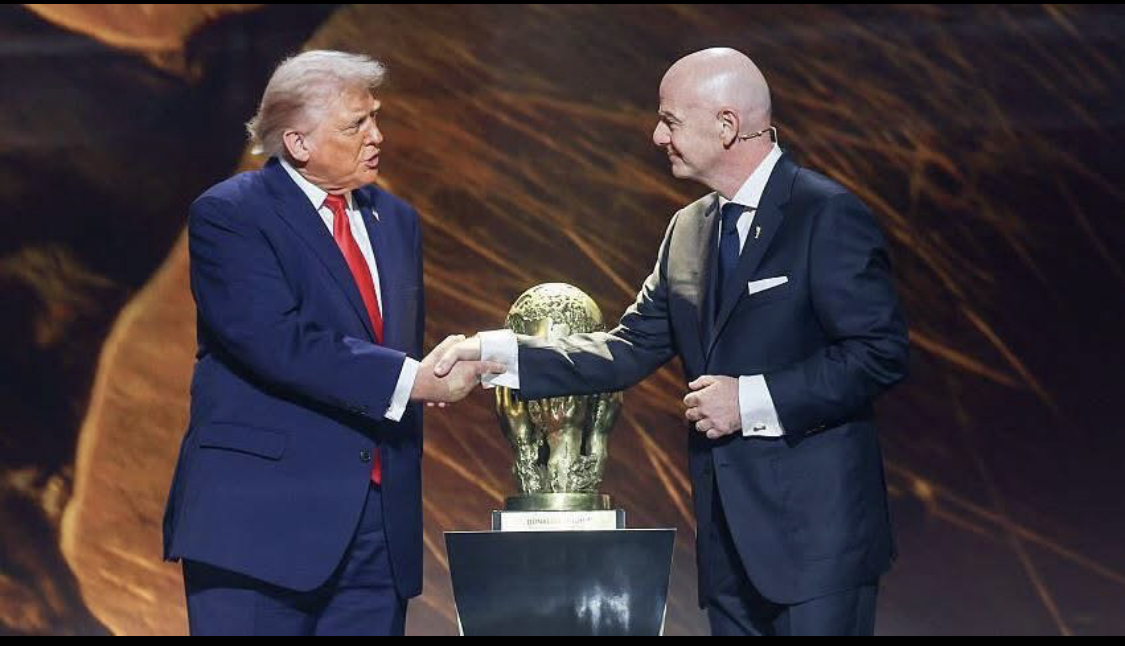
A 42-question letter to FIFA raises concerns over the Balogun disciplinary case, the FIFA Peace Prize, links to US political figures, judicial independence and the use of organisational resources during the presidential election.
UEFA has raised a broad set of governance concerns involving FIFA President Gianni Infantino, including alleged political interference in a disciplinary case, the independence of FIFA’s judicial bodies and the organisation’s neutrality during its presidential election campaign.
The concerns form part of a 42-question letter sent to FIFA Secretary General Mattias Grafström, in which UEFA has requested written answers and supporting documentation by November 2.
Among the most prominent issues is the disciplinary case involving Balogun, which UEFA says followed a telephone call from US President Donald Trump to Infantino requesting a review.
UEFA has asked FIFA to explain what Trump requested, how Infantino responded and whether the case would have been reviewed without the intervention. It also wants to know whether Infantino or Grafström subsequently contacted FIFA officials or the chair of the Disciplinary Committee about the matter.
The European governing body is seeking the full written reasons for the decision, details of how the relevant provision of the FIFA Disciplinary Code has been applied in comparable cases, and an explanation for a proposed amendment to the rules following the controversy.
The letter also raises concerns about FIFA’s relationship with the US president and people associated with him, citing a series of reported decisions and arrangements that UEFA says require greater transparency.
These include the creation of the FIFA Peace Prize, a reported seven-year office lease at Trump Tower involving Eric Trump, a proposed investment agreement with Thrive Capital led by Joshua Kushner, and reported discussions involving a FIFA cryptocurrency.
UEFA also questioned a World Cup sponsorship arrangement with prediction-market company Kalshi, reports of a last-minute relocation of the World Cup draw to a venue associated with Trump in Washington, and the involvement of members of the US president’s family in the Club World Cup draw.
The letter further refers to the announcement of a $75 million investment in Palestine during a meeting of Trump’s Board of Peace, questioning whether FIFA’s Finance Committee or Council had been informed or asked to approve it beforehand.
UEFA said these matters, taken together, raise questions extending beyond the normal relationship between a sports governing body and the government of a World Cup host country.
The European body also questioned the decision to establish the FIFA Peace Prize without prior FIFA Council involvement, asking who authorised the award, why it was created and what role Infantino personally played in its establishment and the decision to present it to Trump.
Election neutrality is another major area of concern. UEFA questioned whether FIFA’s administration had complied with its duty to remain neutral during the official presidential election campaign, which it said began on April 30, 2026, at the FIFA Congress in Vancouver.
The letter specifically refers to a statement issued after a meeting in Rabat on August 5, in which Grafström and members of FIFA’s management team reportedly expressed their “full support for FIFA President Gianni Infantino” and circulated a letter to all 211 member associations.
UEFA asked how such an endorsement could be reconciled with the administration’s obligation to remain impartial during the electoral period. It also sought details of the safeguards in place to prevent FIFA resources from being misused during the election.
The independence of FIFA’s electoral and judicial bodies also came under scrutiny.
UEFA questioned the impartiality of electoral committee chair Chiomento, citing his reported long-standing relationship with Infantino and attendance at FIFA events and competitions at the organisation’s expense.
It also raised questions about the independence of Martin Ngoga, chair of FIFA’s Investigatory Chamber, referring to his reported political and professional ties to Rwandan President Paul Kagame and Kagame’s relationship with Infantino.
The letter asks whether Ngoga would consider recusing himself from current or future ethics proceedings involving the FIFA president.
UEFA separately questioned the impartiality of Adjudicatory Chamber chair Rojas, referring to reported personal friendships with former and current Colombian football association presidents and asking how potential conflicts of interest had been assessed.
The correspondence also seeks details of FIFA’s expenditure on Infantino’s private-aircraft travel and accommodation, including costs associated with trips to Qatar and the United States. UEFA has requested information about the amounts spent, the purposes of the expenditure, authorisation procedures and compliance with FIFA’s financial and travel policies.
It has also asked for the complete list of guests seated in the VIP and VVIP sections during the World Cup final and clarification on whether premium hospitality suites provided to celebrities and other guests were complimentary.
In another question, UEFA referred to reports about a player representing the Democratic Republic of Congo during World Cup qualifying, asking FIFA to explain the legal and factual basis of the eligibility outcome and whether Infantino intervened.
The letter also challenges decisions concerning the 2026 World Cup final’s 27-minute half-time interval and the introduction of mandatory hydration breaks, asking for the regulatory basis of those decisions and why the International Football Association Board (IFAB) and FIFA Council were allegedly not consulted beforehand.
UEFA’s letter presents these matters as questions requiring clarification; the concerns and reported allegations do not, by themselves, establish misconduct.
The correspondence forms part of UEFA’s wider request for accountability over decisions taken under FIFA’s leadership. FIFA’s responses to the questions were not included in the material containing the letter.
Leave feedback about this