

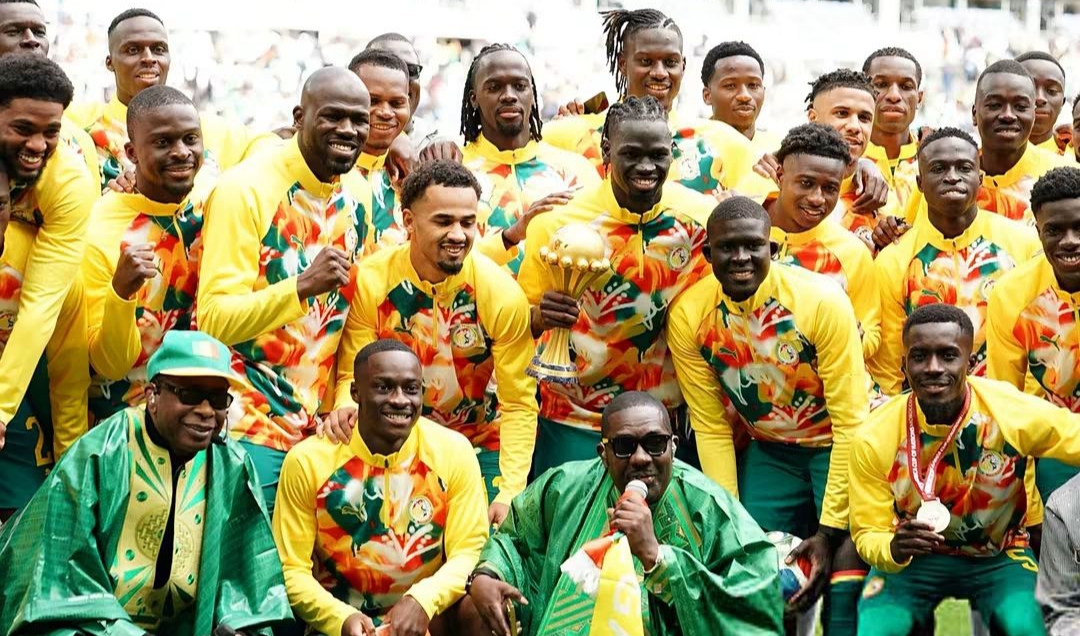
The Court of Arbitration for Sport (CAS) has overturned the Confederation of African Football’s (CAF) Appeal Board decision that stripped Senegal of their 2025 Africa Cup of Nations title, restoring the original 1-0 final victory over Morocco and raising fresh questions about the application of competition regulations in African football.
In its November 24 ruling, CAS upheld the appeal filed by the Senegalese Football Federation (FSF) against CAF and the Royal Moroccan Football Federation (FRMF), setting aside the Appeal Board’s March 17 decision and reinstating the earlier decision of CAF’s Disciplinary Board.
The ruling means Senegal retain the championship they secured on January 18, 2026, while Morocco lose the title previously awarded to them through CAF’s administrative decision.
The dispute centred on the interpretation of Articles 82 and 84 of CAF’s Africa Cup of Nations regulations following Senegal’s temporary withdrawal from the pitch during the final.
During the closing stages of normal time, referee Jean-Jacques Ndala awarded Morocco a penalty following a VAR review of a challenge involving Brahim Diaz.
Senegal’s players protested the decision and left the playing area, with head coach Pape Thiaw also involved in the team’s withdrawal.
Play was eventually resumed after approximately 14 minutes, with Morocco receiving the opportunity to take the penalty.
Diaz failed to convert his attempt, and Senegal subsequently scored through Pape Gueye in extra time to win 1-0.
Morocco later challenged the outcome, arguing that Senegal’s conduct fell within the provisions of Articles 82 and 84, which address teams abandoning the field of play and the consequences of forfeiture.
CAF’s Disciplinary Board initially dealt with the matter before its Appeal Board overturned the earlier outcome on March 17, declaring Senegal to have forfeited the match and recording a 3-0 victory for Morocco.
Senegal rejected the decision and took the matter to CAS on March 25.
The arbitration proceedings were conducted by a three-member panel presided over by French sports law expert Gérald Simon, with Italian international law professor Luigi Fumagalli and German legal expert Ulrich Haas also serving on the panel.
The hearing took place on October 8 in Lausanne, Switzerland, before the tribunal delivered its final decision on November 24.
According to reporting by The Independent, CAS secretary general Matthieu Reeb indicated that the referee had not committed an error of law, providing an important insight into the reasoning surrounding the decision.
The immediate consequence is that the original match result stands, restoring Senegal’s status as champions rather than awarding them a new victory through arbitration.
The ruling also comes against the backdrop of controversy over an alleged telephone conversation between Senegalese Football Federation president Abdoulaye Fall and one of the arbitrators. Morocco had reportedly raised the issue with CAS ahead of the announcement.
Reuters reported that Morocco alleged the conversation took place on November 22 but could not independently verify whether the call occurred or establish what was discussed.
There is no verified evidence that the allegation influenced the tribunal’s decision.
Although CAS has settled the sporting dispute at the arbitration level, the ruling is likely to remain an important reference point in discussions about the enforcement of competition regulations, procedural fairness and the relationship between refereeing decisions and post-match disciplinary proceedings.
For Senegal, the verdict restores the title won on the pitch. For Morocco and CAF, it marks the reversal of the administrative outcome that had dominated African football discussions for months.
Leave feedback about this