


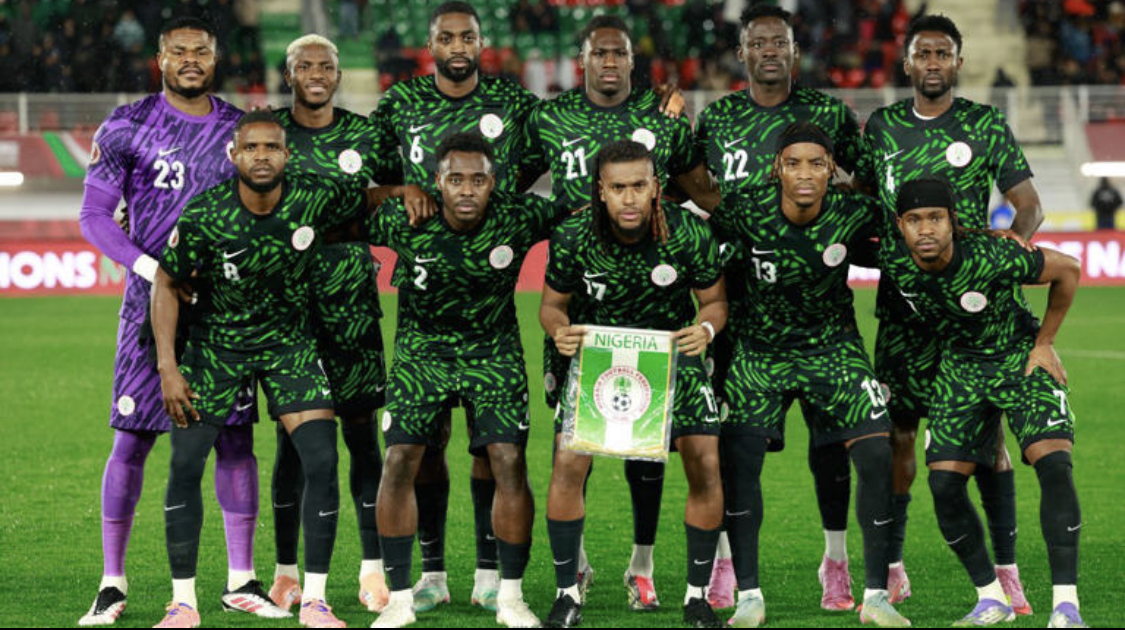
By Paul Lucky Okoku
-
A controlled knockout performance defined by tempo, trust, and structure—dominant in execution, but properly measured in context
-
“In tournament football, authority is revealed not in moments of excitement, but in long stretches where the opponent is denied belief.”
Match Context
This Round of 16 tie at the Africa Cup of Nations was played on January 5, 2026, at the Complexe Sportif de Fès. Nigeria progressed with a 4–0 victory over Mozambique national football team, advancing to the quarter-finals.
Final Score: Nigeria national football team *4–0 Mozambique
Possession: Nigeria 63.7%
Mozambique 36.3%
Goals:
Ademola Lookman (20’)
Victor Osimhen (25’, 47’)
Akor Adams (75’)
Opening Phase: Nigeria Remove Anxiety From the Game
Nigeria’s intent was evident from the first whistle—not through aggression, but through control. The Super Eagles established possession early, recycling the ball patiently across the back line and midfield, forcing Mozambique to chase shadows rather than contest space.
For the first 20 minutes, Nigeria dictated where the game was played and how fast it moved. Mozambique were not overwhelmed by pace; they were disarmed by rhythm. This was possession with poise—measured circulation designed to deny the opponent momentum.
The opening goal in the 20th minute was the natural outcome of that control. A flowing move involving multiple passes, each one taken without panic, ended with Lookman arriving at the right moment to finish cleanly. It was not a spectacular solo goal; it was something more valuable—a collective statement.
Momentum Builds: Nigeria Strike With Precision
Just five minutes later, Nigeria doubled their advantage. The second goal reflected Nigeria’s growing confidence and Mozambique’s increasing disorganization. As Nigeria pushed their defensive line higher, Mozambique struggled to coordinate their press.
Osimhen’s first goal came from sharp anticipation and decisive finishing—exactly the kind of ruthlessness required in knockout football. At 2–0 inside 25 minutes, Nigeria had not only taken the lead; they had taken control of the psychological balance of the match.
From that point onward, Mozambique were playing to survive, not to compete.
Midfield Control: The Game Slows on Nigeria’s Terms
As the first half progressed, Nigeria’s 63.7% possession became more telling. The tempo dropped—not because Nigeria lacked ideas, but because they chose to manage the game.
At the heart of this control was Alex Iwobi, who functioned as the team’s reference point. When defenders were under pressure, he was the first option. When Nigeria needed to slow the game, he provided calm recycling. When progression was required, he delivered it with economy.
This trust from teammates is not accidental. In tournament football, players pass responsibility to those they trust most—and Mozambique’s inability to disrupt that axis left them chasing a game they could not influence.
Second Half: Early Closure of the Contest
Nigeria removed any remaining doubt shortly after halftime. Osimhen’s second goal in the 47th minute was decisive—not just on the scoreboard, but tactically. At 3–0, the match ceased to be competitive.
From that moment, Nigeria shifted into game-management mode. Possession was retained in safer zones, risks were minimized, and Mozambique were denied transitions. The Super Eagles were no longer chasing goals—they were controlling outcomes.
Mozambique, for their part, struggled to register meaningful attacking phases. They rarely completed sequences of passes in Nigeria’s defensive third and failed to test the goalkeeper in any sustained way.
Akor Adams: The Goal That Ended the Conversation
The fourth goal in the 75th minute was the final punctuation mark. Akor Adams’ strike was forceful and decisive—a shot hit with conviction and balance. It was the type of goal that confirms superiority rather than extends hope.
At 4–0, Nigeria had total command. The remaining minutes were played largely in Mozambique’s half, with Nigeria probing selectively and conserving energy.
Mozambique: Outmatched, But Not Without Contexts
It is important to place this result in perspective. Mozambique were appearing in the AFCON knockout stages *for the first time in their history*. Reaching this stage represents progress, even if the gulf in quality on the night was evident.
Nigeria’s dominance should be viewed as a reflection of their own maturity and tournament experience—not as a dismissal of Mozambique’s achievement.
Game Management, Discipline, and Fine Margins
Nigeria’s substitutions reflected strategic thinking. With a comfortable lead and Osimhen already cautioned, his withdrawal was sensible risk management. Protect key players, preserve availability, and think ahead.
One cautionary note remains Nigeria’s goalkeeping distribution. Against stronger opposition, delays in releasing the ball may invite pressure. These are details that may seem minor now but become decisive deeper in the tournament.
Leadership and Emotional Control
Osimhen’s intensity is part of what makes him elite. However, leadership at this level also demands restraint. Visible frustration toward teammates—even briefly—can erode collective confidence.
The principle is universal, on and off the pitch: praise publicly, correct privately.
The Bigger Picture
Nigeria were dominant, organized, and convincing. They controlled possession, dictated tempo, and denied their opponent belief. This was a professional knockout performance—nothing flashy, nothing reckless.
But honesty demands context. Mozambique were not the benchmark. The quarter-finals and beyond will present sharper tests, where missed chances, emotional lapses, and small errors are punished.
Authority has been asserted. The challenge now is sustaining it against elite opposition.
Match Summary
• Competition: AFCON 2025 – Round of 16
• Date: January 5, 2026
• Venue: Complexe Sportif de Fès, Morocco
• Result: Nigeria 4–0 Mozambique
• Possession: Nigeria 63.7% | Mozambique 36.3%
• Next: Quarter Finals is Algeria, Saturday, January 10, 2026
In knockout football, dominance is not declared—it is quietly enforced.
If this article added value or offered perspective, you’re welcome to share it with others.
Paul Lucky Okoku
Former International Footballer | Football Analyst
Published Online
Former Nigerian Super Eagles International
• CAF Africa Cup of Nations (AFCON) 1984 — Silver Medalist
• WAFU Nations Cup 1983 — Gold Medalist
• CAF Tesema Cup (U-21) 1983 — Gold Medalist
• FIFA U-21 World Cup, Mexico 🇲🇽 1983 — Vice-Captain, Flying Eagles of Nigeria 🇳🇬 (Class of 1983)