

By Paul Lucky Okoku
-
A dominant scoreline, useful rotation, and a familiar warning beneath the surface
-
Nigeria won. That part is settled. What remains unsettled is whether this team is truly ready for what comes next.
-
Before the Whistle: Remembering Fez
As the match unfolded in Fez, it was impossible to ignore the broader context surrounding the host city. Only weeks earlier, On December 9, 2025, tragedy struck the Al-Mustaqbal district when two residential buildings collapsed, leaving dozens dead and many more injured.
For families still grieving, football offers little comfort. Matches are played, tournaments move on — but human loss does not pause for competition schedules. AFCON arrived in Fez at a moment of mourning, and that reality deserves acknowledgment.
Football exists within society, not apart from it.
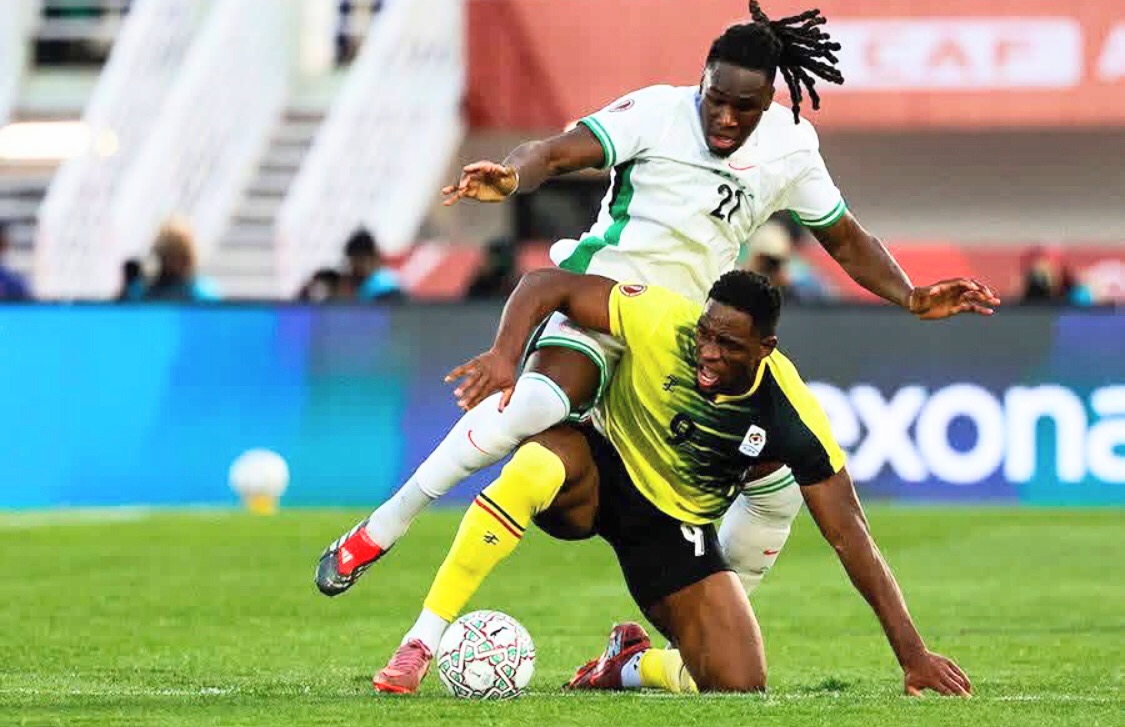
Nigeria entered the fixture already assured of progression. Uganda arrived with discipline, structure, and no interest in reputational intimidation.
Result: Nigeria 3–1 Uganda
Possession: Nigeria 67% | Uganda 33%
Scorers
• Paul Onuachu (28’)
• Raphael Onyedika (62’, 67’)
• Rogers Mato (75’)
The margin of victory was clear. The performance, however, warrants closer examination.
Victor Osimhen led the side as captain — quietly, responsibly, without excess.
Early Pattern: Uganda Compete, Nigeria Calculate
Uganda’s early possession disrupted Nigeria’s rhythm. This was not a reckless opponent. East African teams are often underestimated tactically, and Uganda showed organization and patience in the opening exchanges.
Nigeria, however, never panicked. The plan was evident. Control would come with time.
The Moment That Shifted the Match
Midway through the first half, Osimhen produced an example of elite decision-making. Instead of forcing an attempt on goal, he created space and released Paul Onuachu. The initial effort went straight at the goalkeeper — a missed opportunity.
More important was the intent.
Moments later, Nigeria were rewarded. Fisayo Dele-Bashiru delivered with intelligence, Onuachu finished with authority, and the breakthrough arrived. From there, Nigeria settled. Passing improved. Movement sharpened. Confidence followed.
The Dismissal That Changed the Dynamic
The red card decision left little ambiguity.
Uganda’s goalkeeper handled the ball outside the penalty area to prevent Osimhen from scoring what would likely have been Nigeria’s second goal. It was an intentional infringement — a choice made in awareness of the consequences.
The referee acted correctly.
Uganda gambled on survival rather than legality. In the 56th minute, goalkeeper J. Salim was dismissed for denying a clear goal-scoring opportunity. Severe? Some may argue so. Correct? Absolutely.
Nigeria responded as strong sides should.
Between minutes 62 and 67, Raphael Onyedika delivered twice — one finish requiring reach and balance, the other composure and timing. Nigeria led 3–0 with numerical superiority.
The match should have been finished.
And Yet, It Wasn’t
Uganda’s goal, scored with ten men, was preventable. It did not result from brilliance but from complacency. Defensive responsibility faded. Pressure eased. A familiar Nigerian vulnerability resurfaced.
At this stage of a tournament, such moments matter.
Rotation, Responsibility, and the Bigger Picture
Osimhen’s captaincy was understated but effective. His late substitution reflected sensible tournament management: conserve key players, avoid disciplinary risk, expand squad involvement.
Uganda’s effort was honest but limited. Their shortcomings must be acknowledged when assessing Nigeria’s display. This was not a severe examination.
That, too, matters.
Game Management: The Line Between Progress and Exit
Nigeria’s challenge is not talent. It is control.
Game management is not flair. It is awareness. It is knowing when to pass instead of dribble, when to foul instead of retreat, when to compress space instead of admire possession.
Uganda’s goal exposed this flaw starkly.
Nigeria lost the ball in a moment requiring simplicity. What followed was worse: no recovery sprint, no pressure, no interruption. Uganda completed six uninterrupted passes. The sixth ended in the net.
Nigeria never touched the ball in that sequence.
That is not a single mistake. It is collective negligence across attack, midfield, and defense.
Knockout football does not forgive that.
Why This Tournament Carries Extra Weight
AFCON matters — deeply.
Not as celebration, but as restoration. Missing consecutive World Cups has left a scar. Winning here will not erase that absence, but it can restore belief, credibility, and direction.
Nigeria last appeared at the World Cup in 2018. Qatar 2022 passed without us. 2026 will do the same.
That is below Nigeria’s expectation.
To change the narrative, Nigeria must stop creating its own obstacles.
Where Nigeria Truly Stands
Talent decides matches.
Control decides championships.
Nigeria finished top of the group. Squad rotation succeeded. Goals came from multiple contributors.
Still, this was an effective win — not a defining performance.
Encouraging signs are evident:
• Greater squad depth
• Growing chemistry
• Shared attacking output
• Eight goals in three matches, none from penalties
• Consistent dominance of possession
But unresolved issues persist:
• Periodic lapses in focus
• Poor decision-making in wide areas
• Relaxation after gaining advantage
• Missed high-value chances
• Four goals conceded in three matches
• Inconsistent game management
Progress is visible. The benchmark, however, remains unmet.
Cautious optimism is justified. Complacency is not.
Nigeria advanced comfortably on the scoreboard.
The knockout stage will demand far more.
— Paul Lucky Okoku
Former International | Football Analyst
Published Online
Former Nigerian Super Eagles International
• CAF AFCON 1984 Silver Medal Winner
• WAFU Nations Cup 1983 Gold Medal Winner
• CAF Tesema Cup (U-21) 1983 — Gold Medal
• Vice Captain, Flying Eagles of Nigeria (Class of 1983) — FIFA U-21 World Cup, Mexico
Leave feedback about this