


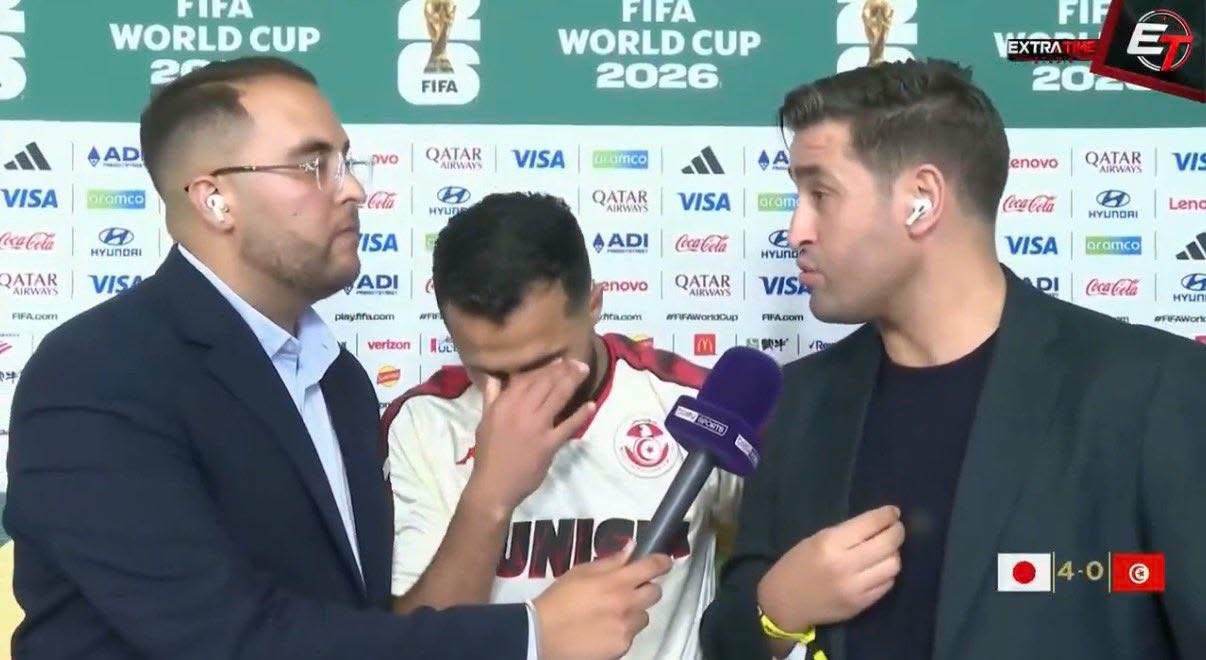
Tunisia defender Ali Abdi delivered one of the most emotional post-match interviews of the 2026 FIFA World Cup after the Eagles of Carthage were eliminated following a humiliating 4-0 defeat to Japan. Fighting back tears, the OGC Nice left-back apologized to supporters while launching a scathing attack on the instability surrounding Tunisian football.
According to comments reported by Foot Mercato, Abdi argued that Tunisia’s problems go far beyond what happened on the pitch. He criticized the constant cycle of rumors, internal turmoil, and structural changes that, in his view, prevent the national team from building continuity and long-term progress.
His frustration comes amid a chaotic tournament for Tunisia. The North Africans opened their campaign with a crushing 5-1 defeat to Sweden, prompting the Tunisian Football Federation to dismiss head coach Sabri Lamouchi after just one World Cup match. The federation then appointed Hervé Renard in an emergency move, leaving the veteran manager with only a few days to prepare for the decisive clash against Japan.
The managerial upheaval appeared to validate Abdi’s concerns. Following the defeat to Japan, Renard admitted he could not perform miracles in such a short period, while observers noted that Tunisia looked disorganized and lacked defensive cohesion throughout the match. Japan exposed those weaknesses ruthlessly in a dominant 4-0 victory that officially ended Tunisia’s hopes of reaching the knockout rounds.
Abdi’s remarks also highlighted another recurring criticism of Tunisia’s preparation. He argued that too many players arrived at the World Cup without sufficient experience playing together as a unit. FIFA’s official squad announcement in May had already pointed to major changes within the Tunisian roster, with coach Lamouchi selecting a significantly altered squad compared to previous tournaments.
The defender’s comments carry particular weight because he is one of Tunisia’s most experienced internationals. Having become a key figure for both club and country in recent years, Abdi was widely viewed as one of the leaders expected to guide a squad blending established internationals with newer faces.
For many Tunisian supporters, Abdi’s emotional outburst reflected broader frustrations with a national team that has struggled to establish stability despite consistently qualifying for major tournaments. Tunisia arrived at the World Cup with hopes of reaching the knockout stage for the first time in their history, but instead suffered two heavy defeats, conceding nine goals in just two matches.
As Tunisia heads toward its final group-stage match, Abdi’s message is likely to intensify scrutiny of the federation’s decision-making. His central argument was clear: sustainable success requires continuity, patience, and long-term planning—not constant resets every time setbacks occur.