

By Kazeem Ajibola Shoyebo
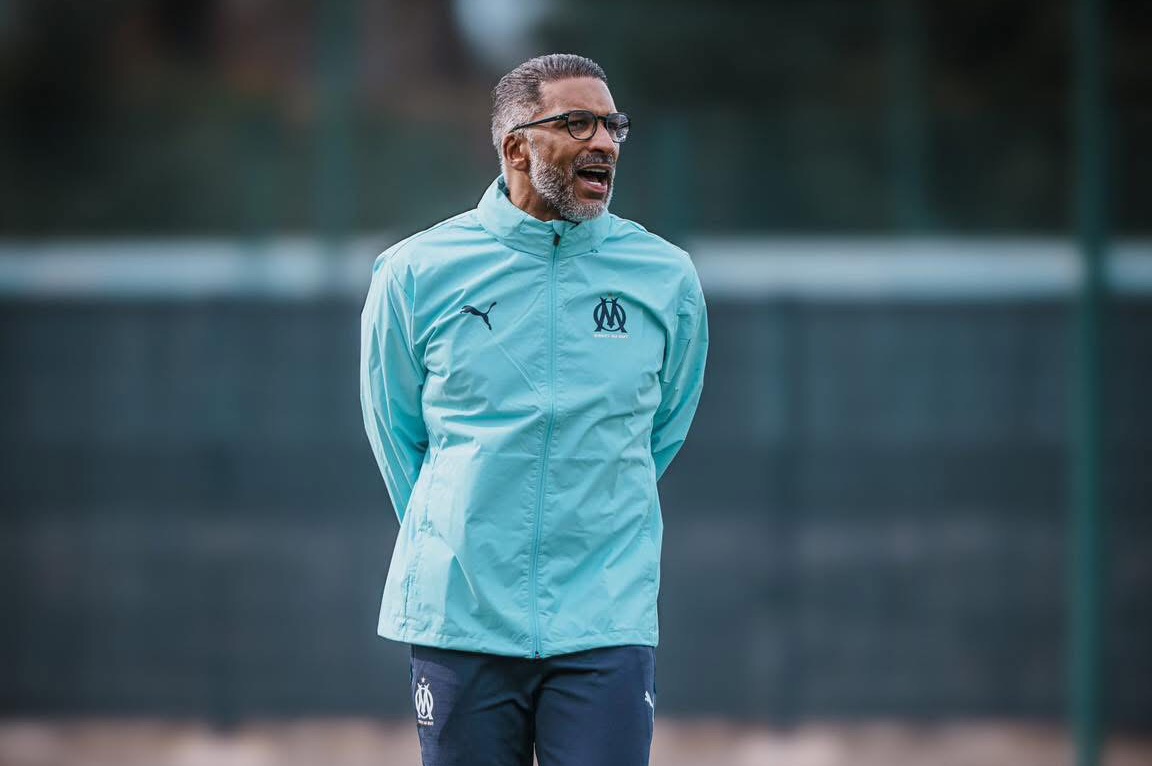
Football management salaries vary enormously worldwide, shaped by club wealth, league revenue, national federation budgets, performance expectations, and market forces. A fresh debate has erupted after recent reports that Habib Beye, the newly appointed head coach of Olympique de Marseille, will earn significantly less than his predecessor—prompting questions about how coaches of African descent are valued in elite football.
Beye at Marseille: What the Numbers Say
According to French media reporting, former Senegal international and coach Habib Beye signed a contract as Marseille’s manager paying around €90,000 per month. This figure represents a substantial pay reduction compared to outgoing coach Roberto De Zerbi, who reportedly earned approximately €550,000 per month before his departure—making him one of Ligue 1’s highest-paid managers.
If accurate, this means Beye’s salary is roughly one-sixth of what De Zerbi was paid—a stark contract contrast within the same club and league.
Context: European Coaching Salaries
Elite European managers routinely command seven-figure annual contracts. For example:
- De Zerbi’s €550,000 per month equates to about €6.6 million per year at Marseille.
Elsewhere in Europe, top national team bosses draw significantly higher salaries. Reports from football associations ahead of Euro tournaments list managers such as:
Gareth Southgate (England) earning €5.8 million annually. This contrasts sharply with many African coaches, both domestically and abroad.
African Coaches: Pay Scales and Disparities
Within African football—particularly at the national team level—there is wide variance in pay, but the scale remains far below elite European club compensation:
Top-Paid in Africa
Reports from AfricaSoccer.com and related outlets show that some of the highest-paid national team coaches on the continent (including those leading African squads in the 2025 Africa Cup of Nations) are earning:
- Vladimir Petkovic (Algeria) – approx. €135,000 per month
- Hugo Broos (South Africa) – approx. €75,000 per month
- Emerse Faé (Ivory Coast) – around €75,000 per month
- Walid Regragui (Morocco) – about €70,000 per month
- Aliou Cissé (Libya) – newly reported around €76,000 per month
These figures place some African national team coaches reasonably high by continental standards—yet still well below salaries at top European clubs.
Mid and Lower Tiers
Further down the spectrum, many African national team coaches earn considerably less:
- Coaches like Hossam Hassan (Egypt) around €30,000 per month and Tom Saintfiet (Mali) around €20,000 per month.
- Some lesser-funded African federations reportedly pay coaches as little as €4,000 per month (e.g., teams like Madagascar or Eswatini) or €1,600 per month (e.g., Djibouti).
Comparing African Coaching Salaries to Global Norms
When set against global examples, even Africa’s highest-paid coaches lag behind their counterparts:
- A national team coach in Europe (e.g., England’s Southgate) earns ~€5.8 million per year.
- At elite club level, managers in top European leagues (e.g., Serie A, Premier League) routinely draw multi-million euro salaries annually.
By contrast, even top African national team coaches often remain below €1 million annual compensation—indicating a significant gap in earnings potential.
Why the Discrepancies Exist
Several factors help explain the disparities:
1. Revenue Differences: European clubs and major national associations have vastly higher commercial, broadcast, and sponsorship income, enabling them to offer premium contracts.
2. Market Demand: Managers with elite club or World Cup experience command top pay because they are in global demand; African-born or Africa-based coaches often face different market valuations.
3. Budget Constraints: Many African federations operate with tighter budgets, limiting their ability to offer competitive salaries—even for successful coaches.
Academic and industry analysis also point to broader structural inequality in global football economics, where African leagues and federations simply cannot match the financial firepower of Europe or North America.
Is There Bias in Salary Valuation?
Beyond pure economics, the pay differences raise questions about perceived value and opportunity. Coaches of African descent working in top-tier European football often face added barriers to entry and progression compared to their European peers—a topic widely discussed within football governance circles. While direct salary discrimination based on ethnicity cannot be definitively proven purely by contract figures, the disproportion between comparable roles at the same clubs (e.g., Marseille’s regression from De Zerbi to Beye) stimulates debate over representation, valuation, and investment in diverse managerial talent.
Conclusion: Evidence Points to Economic Gaps with Social Implications
The available data shows that while top African coaches can command high salaries within the African football context, they remain far behind European counterparts both at national and club levels. The case of Habib Beye’s reported €90,000 per month at Marseille—if accurate—accentuates this divide when juxtaposed with De Zerbi’s €550,000 figure at the same club.
These patterns reflect broader financial disparities in global football economic structures and contribute to ongoing discussions about recognition, investment, and equity for African managerial talent.
Leave feedback about this