


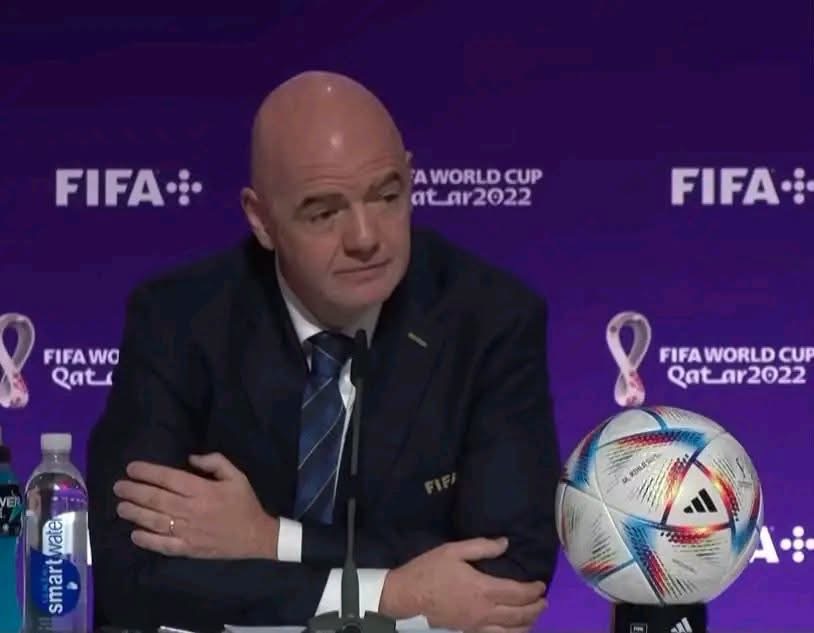
Opposition to FIFA President Gianni Infantino’s controversial plan to bring private investment into the commercial rights of the FIFA World Cup has intensified after the European Leagues formally rejected the proposal, describing it as “reckless and divisive” and warning that football’s governance must never become a private equity asset.
The statement was issued after a virtual meeting of the European Leagues Board on 29 July, making the organisation—which represents more than 40 professional leagues across Europe—the latest major football body to publicly oppose FIFA’s proposed creation of FIFA Forward Enterprise (FFE), a new commercial subsidiary expected to manage the World Cup and other FIFA competitions.
Earlier this week, FIFA confirmed it intends to establish the new company, valued at approximately $20 billion, and sell minority, non-controlling stakes of up to 20 percent to long-term investors. According to FIFA, the move could unlock more than $10 billion in additional football development funding while preserving FIFA’s complete authority over governance, competitions, regulations and the international match calendar.
The proposal has, however, triggered unprecedented resistance across European football.
In its statement, the European Leagues said FIFA’s latest initiative “represents a reckless and divisive development for world football.”
It added:
“The World Cup should not be for sale. It is not FIFA President’s private equity asset. Its value is created day in and day out by leagues, clubs, players and supporters who are being left without a voice or a vote on this matter. European Leagues firmly reject this proposal.”
The organisation argued that football’s commercial success has always depended on an open pyramid structure linking domestic leagues, clubs, national associations and international competitions.
“Commercial opportunities must support these foundations, not risk altering them,” the statement continued.
The European Leagues also linked the controversy to its ongoing legal dispute with FIFA over the international match calendar.
The organisation reminded stakeholders that it has already lodged a complaint with the European Commission, alleging FIFA abused its dominant market position by expanding international competitions without adequate consultation or consideration for domestic football. That complaint remains under review.
Citing the Court of Justice of the European Union’s 2023 Super League judgment, European Leagues argued that major decisions affecting football’s future must be developed through “transparent, accountable and inclusive processes” involving meaningful consultation with all affected stakeholders.
European Leagues President Claudius Schäfer warned that the proposal could permanently reshape football’s financial and governance model.
“FIFA’s latest proposal to sell stakes in the World Cup would give private investors a permanent claim on football tomorrow.
This would put at risk the foundations on which football has developed and prospered for generations.
Responsible football leaders have a duty to stand together in opposing this proposal—not only for today’s game, but for future generations of players and supporters.”
Support for the position quickly spread.
Spanish league LaLiga, one of the founding members of European Leagues, immediately endorsed the statement, insisting football’s value is generated collectively by leagues, clubs, players, supporters and every stakeholder involved in the sport.
LaLiga stressed that decisions affecting football’s future must be based on “transparency, responsibility and good governance,” rather than being taken unilaterally.
The backlash comes just days after UEFA accused FIFA of attempting to “sell the soul of football,” while FIFPRO Europe also voiced concerns that transforming FIFA competitions into investable assets could fundamentally alter incentives surrounding player welfare, governance and the international calendar.
Despite the criticism, FIFA maintains that the proposal would not privatise football governance.
The governing body insists FIFA would retain majority ownership of FIFA Forward Enterprise, exclusive control over sporting decisions and regulatory authority, while external investors would hold only minority, non-operational stakes. FIFA says every one of its 211 member associations would also have the opportunity to receive increased development funding if the proposal secures the necessary approvals later this year.
With UEFA, European Leagues, LaLiga, national associations and player representatives now openly opposing the plan, FIFA President Gianni Infantino faces mounting resistance to what was intended to become the most ambitious commercial restructuring in the governing body’s history.
Rather than uniting world football around new investment, the proposal has instead exposed one of the deepest governance divides the sport has witnessed in recent decades.