


Centenary Tournament Could Welcome 16 More Nations if FIFA Approves Radical Proposal
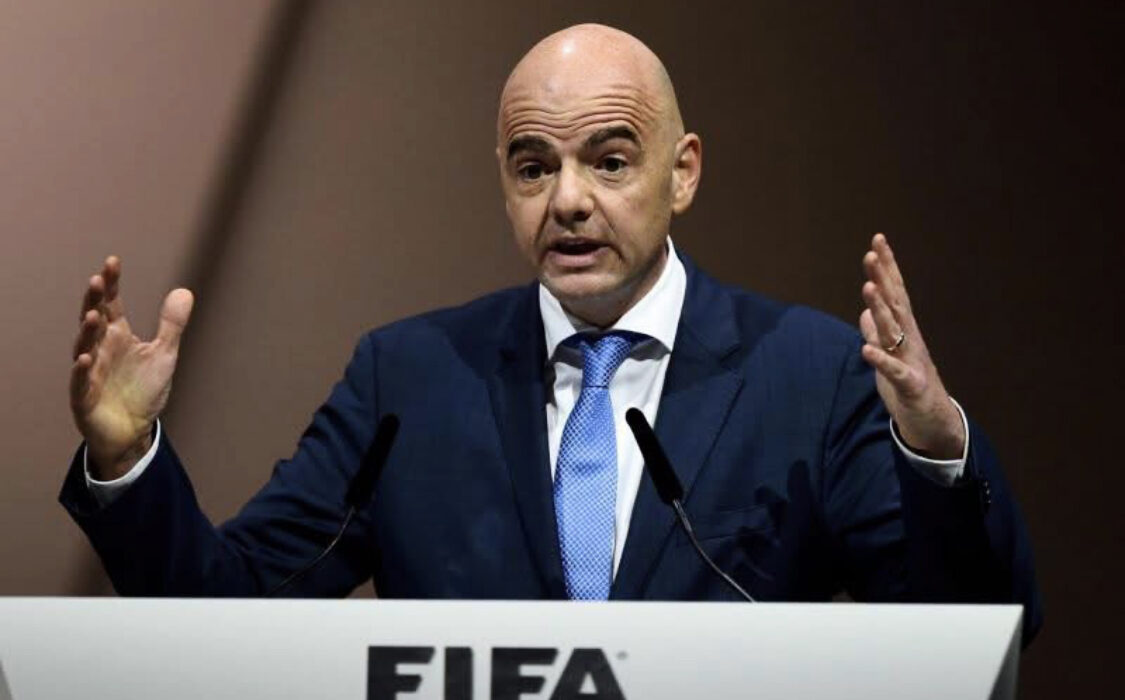
FIFA President Gianni Infantino has confirmed that world football’s governing body will examine a proposal to expand the 2030 FIFA World Cup from 48 to 64 teams, a move that would make the tournament the largest in the competition’s 100-year history.
The proposal would add 16 more participating nations to the centenary edition of the World Cup, which is already set to be staged across three continents and six host countries.
Under the current plan, Uruguay, Argentina and Paraguay will each host one opening match to commemorate the inaugural FIFA World Cup held in Uruguay in 1930. The remainder of the tournament will then be played in Morocco, Portugal and Spain.
Speaking as the 2026 FIFA World Cup enters its closing stages, Infantino said FIFA would analyze the feasibility of the expansion after what he described as the successful introduction of the 48-team format.
“We will analyze it,” Infantino said, stressing that no final decision has been taken while emphasizing FIFA’s desire to make football more inclusive and provide greater opportunities for nations from every confederation.
The 2026 tournament, jointly hosted by the United States, Canada and Mexico, is the first World Cup to feature 48 teams, increasing participation from the previous 32-nation format and expanding the competition to 104 matches.
Infantino pointed to the performances of emerging football nations as evidence that expanding the competition has strengthened, rather than weakened, the tournament. He highlighted the improved competitiveness of teams from Africa and other confederations, arguing that broader participation accelerates football development worldwide.
If approved, the 64-team tournament would likely feature 16 groups of four teams, producing 128 matches—24 more than the 2026 edition. Such a format could also allow Uruguay, Argentina and Paraguay to host complete group-stage matches instead of only the ceremonial opening fixtures currently allocated to each nation.
The proposal, however, is expected to generate significant debate within global football.
Supporters argue that expanding the World Cup would give more countries the opportunity to compete on football’s biggest stage, accelerate investment in developing football nations and make the tournament even more representative of FIFA’s 211 member associations.
Critics, meanwhile, warn that another expansion could dilute the quality of qualification campaigns, increase fixture congestion, place additional strain on players and clubs, and create even greater logistical challenges for organizers.
Calls for a 64-team World Cup are not entirely new. South America’s governing body, CONMEBOL, has previously supported the idea as a one-off celebration of the tournament’s centenary, although FIFA had until now stopped short of committing to formally examine the proposal.
Any expansion would require approval through FIFA’s decision-making processes before becoming official.
For now, the governing body has made clear that the proposal remains under evaluation rather than adopted policy.
If ultimately approved, the 2030 FIFA World Cup would become not only the first tournament staged across three continents but also the largest World Cup ever held, further reshaping the landscape of international football as FIFA continues its drive toward greater global participation.