


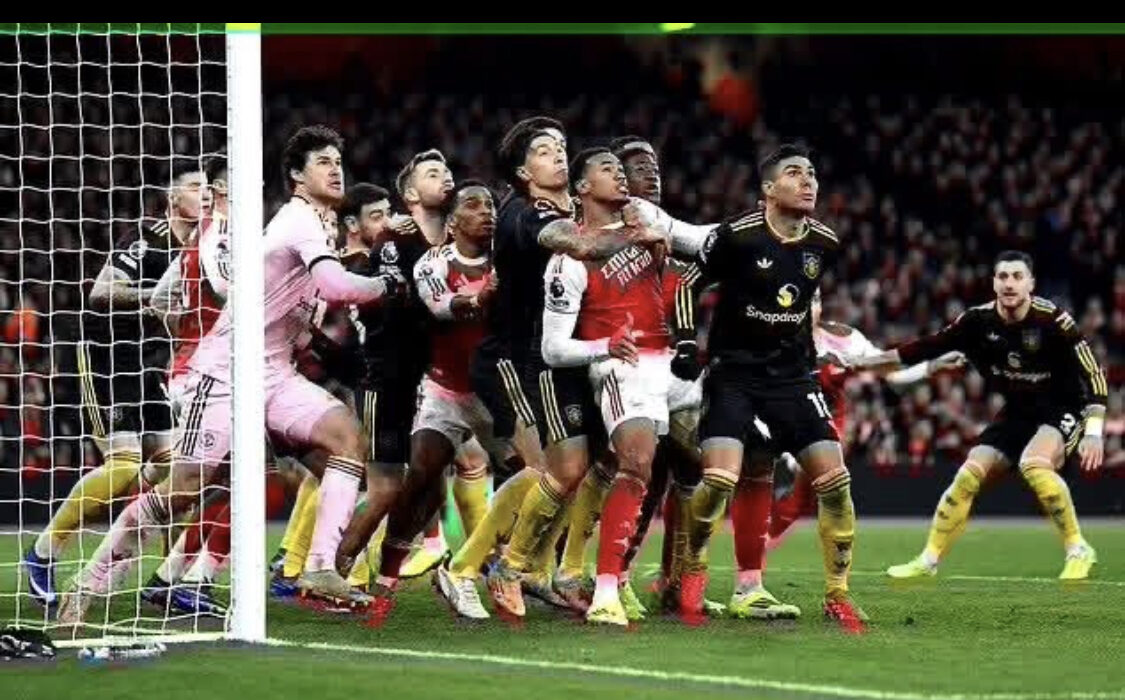
FIFA and the International Football Association Board (IFAB) have approved a major expansion of VAR authority ahead of the 2026 FIFA World Cup, introducing stricter regulations targeting obstruction tactics during set-pieces in what Spanish outlet Diario AS has labelled an “anti-Arsenal law.”
The new rule will allow Video Assistant Referees to intervene before a set-piece is taken if attacking players are judged to have deliberately blocked, impeded or restricted the movement of goalkeepers or defenders inside the penalty area. If a goal is subsequently scored from the play, VAR will now have the authority to disallow it.
The regulation represents one of the most significant VAR expansions since the technology was introduced to elite football and is expected to heavily impact modern set-piece strategies used across Europe’s top clubs.
According to Diario AS, the rule has informally been dubbed the “anti-Arsenal law” because of Arsenal’s aggressive and highly coordinated blocking movements during corners and free-kicks under manager Mikel Arteta this season. (
Arsenal’s routines — frequently involving attackers crowding goalkeepers, screening defenders and creating traffic inside the six-yard box, became one of the Premier League’s most discussed tactical weapons during the 2025-26 campaign.
Several opposition managers and pundits publicly questioned whether some of the movements crossed the line between legal screening and illegal obstruction, particularly after Arsenal scored multiple decisive goals from set-pieces in domestic and European competition.
Under existing rules, referees could punish such actions only after reviewing incidents once play had already developed. However, the updated protocol now empowers VAR officials to intervene before the restart itself if they detect deliberate obstruction likely to create an unfair advantage.
FIFA refereeing officials said the change is designed to protect goalkeepers and defenders while reducing “manufactured contact” during dead-ball situations.
Pierluigi Collina, FIFA’s chairman of referees, has repeatedly stressed in recent months that the governing body wants the 2026 World Cup to feature faster, cleaner and more transparent officiating.
The updated rule forms part of a broader package of disciplinary and anti-gamesmanship reforms approved for the tournament in the United States, Canada and Mexico.
Other changes include restrictions on tactical stoppages, stricter punishment for time-wasting and expanded disciplinary measures for player confrontations.
Reaction across football has already been intense.
Supporters of the amendment argue it will restore fairness to penalty-area defending and reduce chaos during corners and indirect free-kicks. Critics, however, fear the law could over-police physical battles that have long been considered part of football’s tactical complexity.
Arsenal have not publicly commented on the characterization of the new measure as an “anti-Arsenal law,” though Arteta’s side were widely regarded as among the most innovative set-piece teams in Europe this season.
The Premier League runners-up scored more than 20 goals from corners and indirect free-kicks across all competitions during the campaign, with specialist coach Nicolas Jover receiving widespread praise for Arsenal’s routines.
The rule will officially debut at the 2026 FIFA World Cup before likely being introduced into domestic competitions globally afterward.
And with clubs increasingly relying on highly choreographed dead-ball systems, football’s tactical battleground may now be entering an entirely new era.