


By Kazeem Ajibola Shoyebo
On most nights, a quarter-final in the CAF Champions League promises drama, tension and elite football. But when Espérance Sportive de Tunis hosted Al Ahly SC in Radès, the story began long before the first whistle. It started in the stands, where thousands of supporters transformed the stadium into a canvas for history, memory and ideals that go far beyond the game.
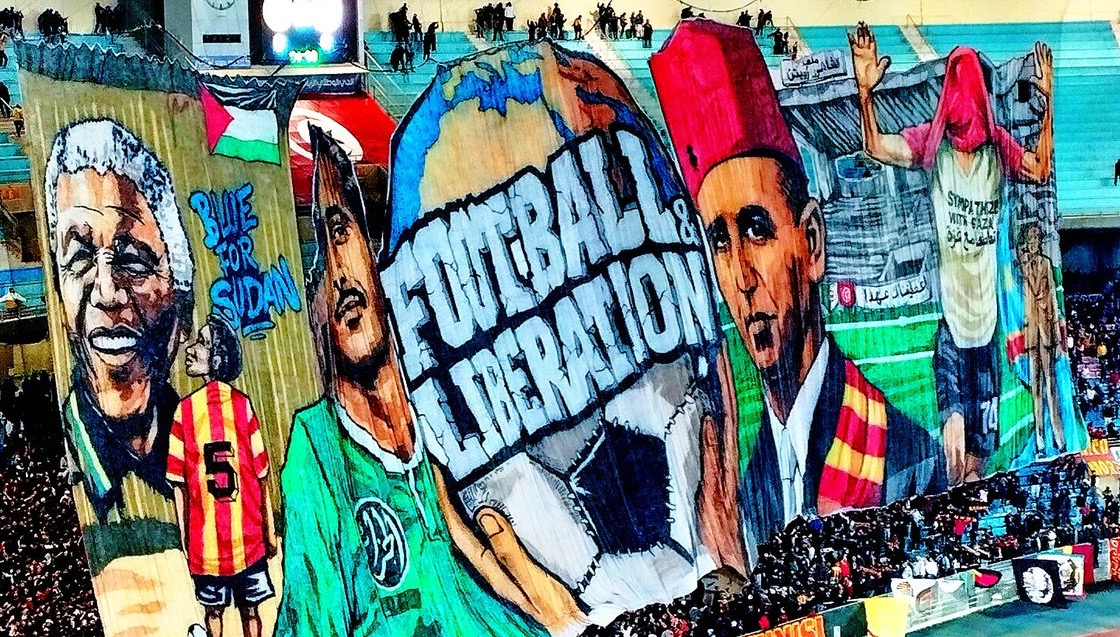
As the teams prepared to walk onto the pitch at the Stade Olympique Hammadi Agrebi, a massive choreography unfolded across the Espérance supporters’ section. The tifo carried a powerful message: “Football & Liberation.” In bold imagery and symbolism, the display paid tribute to figures whose lives bridged sport, resistance and the struggle for dignity.
At the centre of the tribute stood Nelson Mandela, the South African icon whose fight against apartheid reshaped global history and whose legacy continues to echo across sport and politics alike. Around him were other figures whose stories intertwine football with the quest for freedom.
One of them was Rachid Mekhloufi, the Algerian footballer who abandoned his professional career in France to join the FLN team during Algeria’s war of independence—turning football into a vehicle for political resistance. Another was Chedly Zouiten, a historic figure in Tunisian football and a former Espérance president who helped shape the club’s identity in its formative years.
The choreography also included Mohamed Aboutrika, the legendary Egyptian footballer whose career with Al Ahly and the Egyptian national team elevated him to iconic status across the continent. Known not only for his brilliance on the pitch but also for his outspoken humanitarian gestures, Aboutrika’s presence in the display reflected the deep emotional and cultural connections that football figures often carry in North African society.
For Espérance supporters, the display was not merely about aesthetics. It was a reminder that football stadiums across North Africa have long served as spaces where identity, politics and collective memory intersect. Choreographies and tifos often carry messages about freedom, justice and national pride—messages that resonate deeply with the communities that fill the terraces.
The moment also reflected the scale and passion of one of African football’s fiercest rivalries. Encounters between Espérance and Al Ahly are rarely just matches; they are spectacles steeped in history, pride and continental prestige. Both clubs have dominated African football for decades, meeting repeatedly in decisive stages of the Champions League and building a rivalry that stretches from Tunis to Cairo.
Yet on this night in Radès, before the ball even began to roll, the supporters had already delivered a statement. Through colour, imagery and symbolism, they reminded the world that football can be more than a competition for trophies. It can also be a language—a way to remember the past, honour those who fought for freedom, and celebrate the enduring bond between sport and society.
For a few minutes before kickoff, the roar of the crowd blended with history itself. And in that moment, the message was unmistakable: football, at its best, is not only about winning games—it is about the stories and ideals that give the game its meaning.