


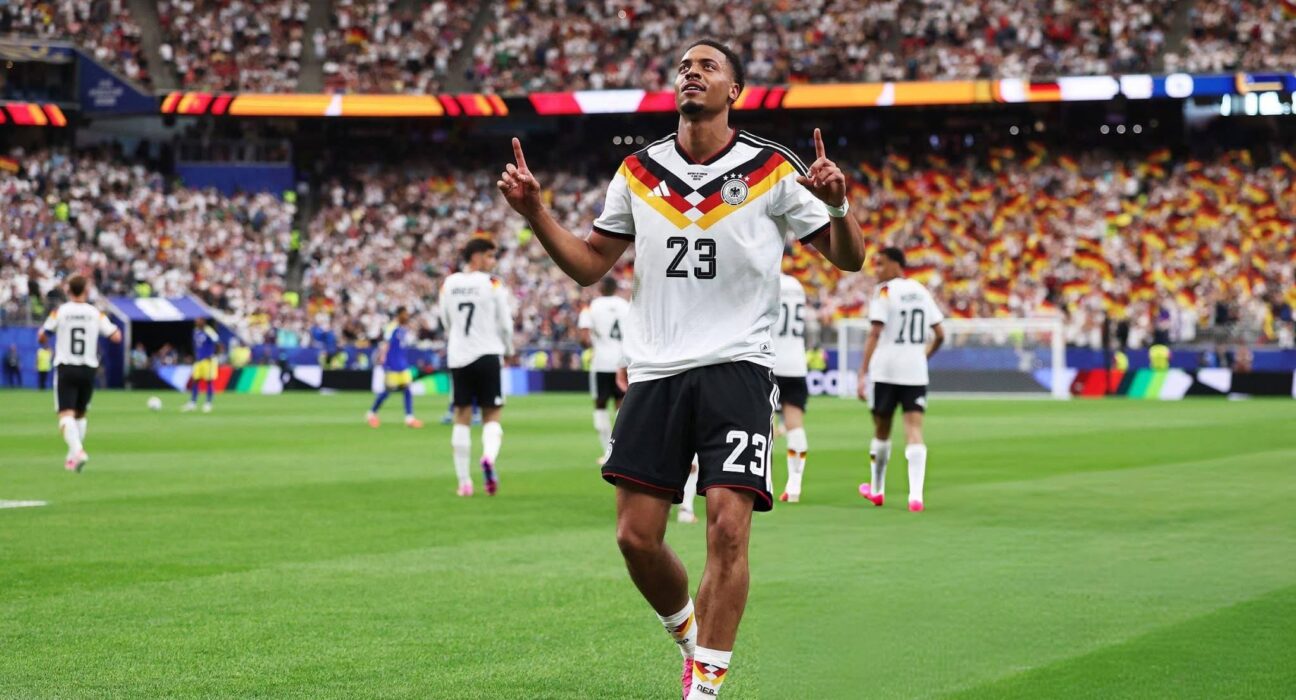
Germany delivered a ruthless, record-tilting performance at the FIFA World Cup, dismantling debutants Curaçao 7–1 in a devastating display of attacking power that recalled their most iconic tournament nights.
The result goes down as only the fourth time in FIFA World Cup history that a match has ended 7–1, joining legendary scorelines involving Italy (1934 vs USA), Brazil (1950 vs Sweden), and Germany’s own infamous 7–1 demolition of Brazil in 2014.
From the opening whistle, Germany imposed their authority. Félix Nmecha struck inside six minutes, finishing clinically to register one of the fastest German World Cup goals in recent memory and immediately signalling a long night for the Caribbean debutants.
Curaçao, however, refused to be overwhelmed early. Against all expectations, they responded with courage and direct attacking intent, eventually carving out a historic breakthrough. Livano Comenencia scored Curaçao’s first-ever World Cup goal, briefly stunning Germany and igniting celebrations for the underdogs.
That moment, though, only appeared to sharpen Germany’s focus.
Nico Schlotterbeck restored control for the European giants, adding a composed finish from a set-piece situation as Germany’s aerial dominance began to tell. Curaçao struggled to contain Germany’s physical presence and movement in the final third.
Just before half-time, Kai Havertz converted from the penalty spot after VAR intervention confirmed a foul in the box. The strike extended Germany’s lead and reflected their growing authority across all phases of play.
The second half turned into a showcase of German efficiency and depth.
Musiala orchestrated attacks with increasing influence, while Germany’s tempo rose sharply after the restart. Havertz added his second goal of the match, confirming his role as the focal point of the attack and underlining Germany’s sharpness in the final third.
Curaçao, despite moments of resistance, were gradually worn down by sustained pressure. Defensive gaps widened as Germany rotated players and continued to attack relentlessly.
Further goals arrived through Nathaniel Brown and Deniz Undav, both capitalising on space and fatigue in the Curaçao back line. Each strike reinforced Germany’s ability to score from multiple sources, not relying on a single attacking outlet.
By the final whistle, Germany had reached seven goals — their highest World Cup total since the 7–1 win over Brazil in 2014 — sealing a performance that reasserted their status as one of the tournament’s most dangerous attacking sides.
The result also places Germany in rare statistical territory, as they now account for a significant share of all 7–1 scorelines in World Cup history.
For Curaçao, the defeat was heavy, but not without significance. Their first-ever World Cup goal, and moments of fearless attacking play, will remain a landmark achievement in their football history.
Germany, meanwhile, leave a clear message to the rest of the tournament: when their attacking rhythm clicks, history tends to follow.