


Rising geopolitical tensions between the United States and European Union over U.S. interest in Greenland have thrown an unconventional topic into the spotlight: the potential impact on the 2026 FIFA World Cup, co-hosted by the United States, Canada and Mexico.
The issue has surfaced in German political circles after U.S. President Donald Trump renewed his controversial campaign for Greenland, a semi-autonomous territory of Denmark. Trump’s remarks have included threats of tariffs on European countries opposing his plan, and discussions about Greenland’s strategic value — framing it as vital to U.S. defense interests and global security.
Some German lawmakers have suggested that, should U.S. actions escalate to coercive measures or a trade conflict with the EU, Germany — and potentially other European nations — might reconsider participation in the World Cup. Prominent CDU security policymaker Roderich Kiesewetter said it would be “hard to imagine” European participation if President Trump’s threats materialize into a full-blown trade war or aggressive policy shift.
Other voices, including within the SPD and Germany’s parliamentary sports leadership, have echoed concerns that sporting events could be overshadowed by geopolitical tensions, though they emphasized that decisions about participation rest with responsible sports organizations — notably the German Football Association (DFB) and FIFA.
Public opinion appears divided: an INSA poll suggests nearly half of Germans would support a boycott in the event of a direct U.S. annexation of Greenland, while a significant minority oppose such action.
Beyond national governments, the broader European football community is also monitoring the situation. According to reporting in The Guardian, discussions are taking place among European football leaders about how to respond if transatlantic tensions escalate over Greenland — a territory with historical and political significance for several UEFA members. These discussions have not produced formal decisions, but contingency planning and dialogue are reportedly underway ahead of UEFA’s executive meetings.
Several European governments are distancing themselves from calls to politicize the World Cup. For instance, France’s sports minister has made clear that no official boycott plans are in place, urging separation of sport from geopolitical dispute even as criticism of U.S. policy grows.
Political leaders have instead emphasized efforts to address the Greenland controversy through diplomatic channels and coordinated EU responses. German Chancellor Friedrich Merz has stated that Europe seeks to avoid escalation and is preparing to negotiate with U.S. counterparts at forums such as the World Economic Forum in Davos.
The Greenland issue has prompted heightened transatlantic tensions beyond football — including threat of tariffs on EU nations opposing U.S. pressure, plans for an EU emergency summit, and military posture adjustments in the Arctic region. European responses have ranged from condemnation of what some leaders describe as coercive tactics to warnings that unilateral moves could undermine established international law and NATO solidarity.
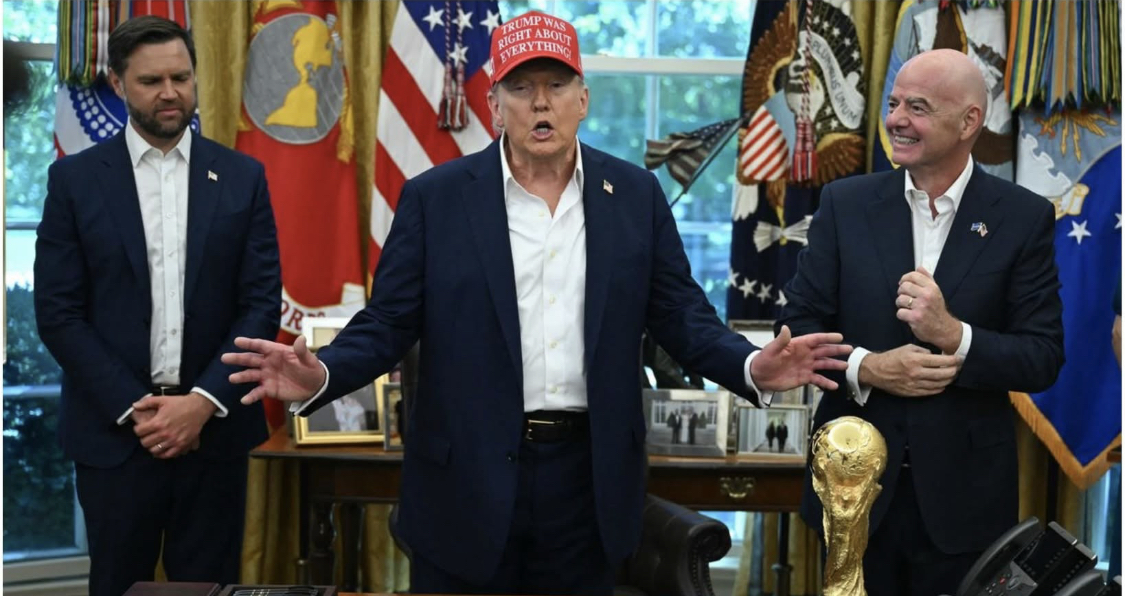
While football’s global governing body FIFA has not issued a formal stance on the political dispute, the organization’s president has attracted attention for previously presenting a peace-oriented award to Trump — a decision now scrutinized amid the controversy. European football federations are expected to reassess the situation at upcoming policy meetings, but no formal directive on World Cup participation has been announced.