


By Yomi Kuku, Toronto, Canada
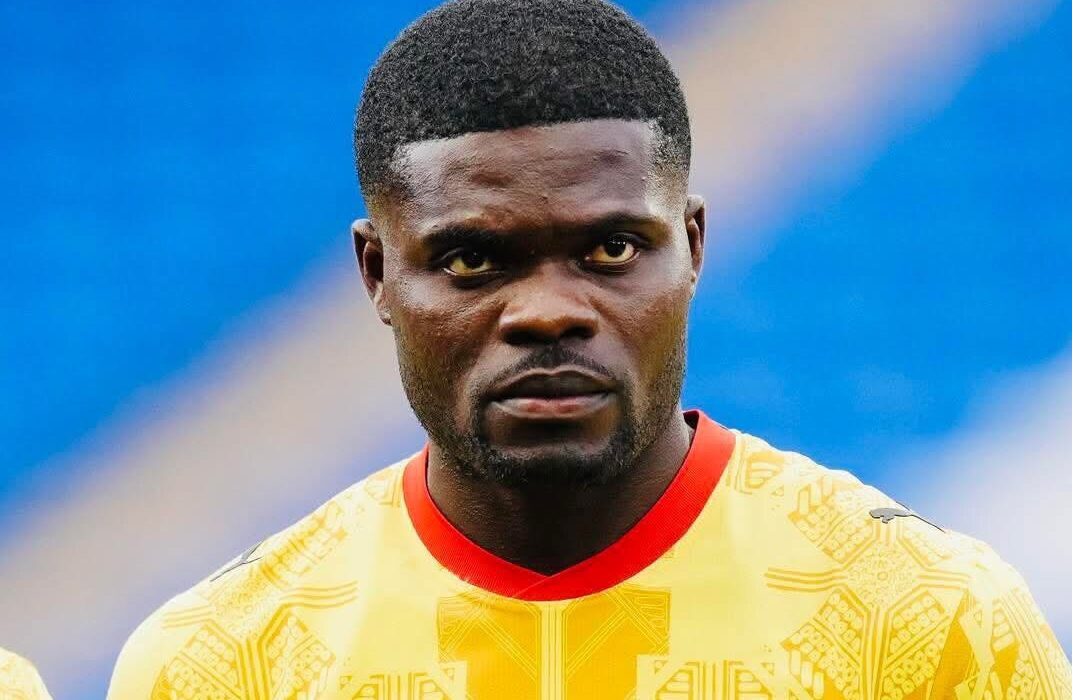
The Government of Ghana has formally protested Canada’s decision to deny midfielder Thomas Partey entry for the Black Stars’ opening match of the 2026 FIFA World Cup, describing the move as “high-handed and extremely unfair” and raising concerns over the use of unresolved criminal proceedings as grounds for exclusion.
In a strongly worded statement issued by Ghana’s Ministry of Foreign Affairs, authorities confirmed that they had lodged an official note of protest with the Canadian government and were pursuing diplomatic engagement aimed at reversing the decision before Ghana’s tournament campaign progresses further.
The dispute stems from Canada’s refusal to grant a temporary residence visa to Partey, a key member of Ghana’s World Cup squad, preventing him from travelling from the team’s training base in Boston to Toronto for the Group L opener against Panama. FIFA confirmed that the application had been rejected by Canadian authorities, ruling the midfielder out of the match.
Ghanaian officials argue that the decision was based on ongoing criminal proceedings in the United Kingdom that have not resulted in a conviction or judicial finding of guilt. Partey, who currently plays for Villarreal and previously starred for Arsenal, has denied all allegations against him and has pleaded not guilty to the charges he faces in Britain.
In its statement, Ghana emphasized the principle of the presumption of innocence, describing it as a cornerstone of democratic justice systems and due process.
While acknowledging Canada’s sovereign right to enforce its immigration laws, the Ghanaian government questioned whether denying entry on the basis of unresolved allegations was consistent with principles of fairness and proportionality.
“The Government of the Republic of Ghana expresses strong reservations following the high-handed and extremely unfair decision by Canada,” the ministry said in the statement, adding that it had requested a review of the ruling through diplomatic channels.
According to Ghana, an official diplomatic protest was submitted to Global Affairs Canada on June 11, requesting reconsideration of the visa refusal and outlining concerns about the legal basis for the decision.
The government also indicated that it is prepared to explore every available avenue under Canadian and international law, including potential judicial review proceedings before the Federal Court of Canada if necessary.
The controversy has placed FIFA and tournament organizers in the spotlight once again as immigration policies increasingly intersect with the logistics of a World Cup jointly hosted by Canada, the United States and Mexico.
FIFA has maintained that it does not participate in host-country immigration decisions and has reiterated that visa approvals remain the responsibility of national governments.
Canadian authorities have likewise defended their position, stressing that immigration laws remain fully applicable during major sporting events and that all applicants are assessed individually under existing legislation.
For Ghana, however, the issue extends beyond football.
Officials view the case as a matter of legal principle and equal treatment, arguing that individuals should not face punitive consequences before judicial proceedings have been completed.
The timing is particularly significant for the Black Stars, who face a challenging Group L campaign that includes Panama, England and Croatia. Partey’s absence deprives Ghana of one of its most experienced midfielders for a critical opening fixture.
Despite being barred from entering Canada, Partey remains with Ghana’s squad in the United States and is expected to be eligible for the team’s subsequent group-stage matches against England in Boston and Croatia in Philadelphia, both of which will be played on American soil.
As diplomatic discussions continue, the dispute has evolved into one of the most politically sensitive controversies of the early stages of the 2026 World Cup.
For Ghana, the objective is clear: secure what it considers a fair review of the decision and defend the rights of one of its most prominent footballers.
For Canada, the case represents a test of its commitment to enforcing immigration laws consistently, even amid the global spotlight of the world’s biggest sporting event.
Whether the matter is ultimately resolved through diplomacy, legal proceedings or administrative review, it has already become one of the defining off-field stories of the tournament.