


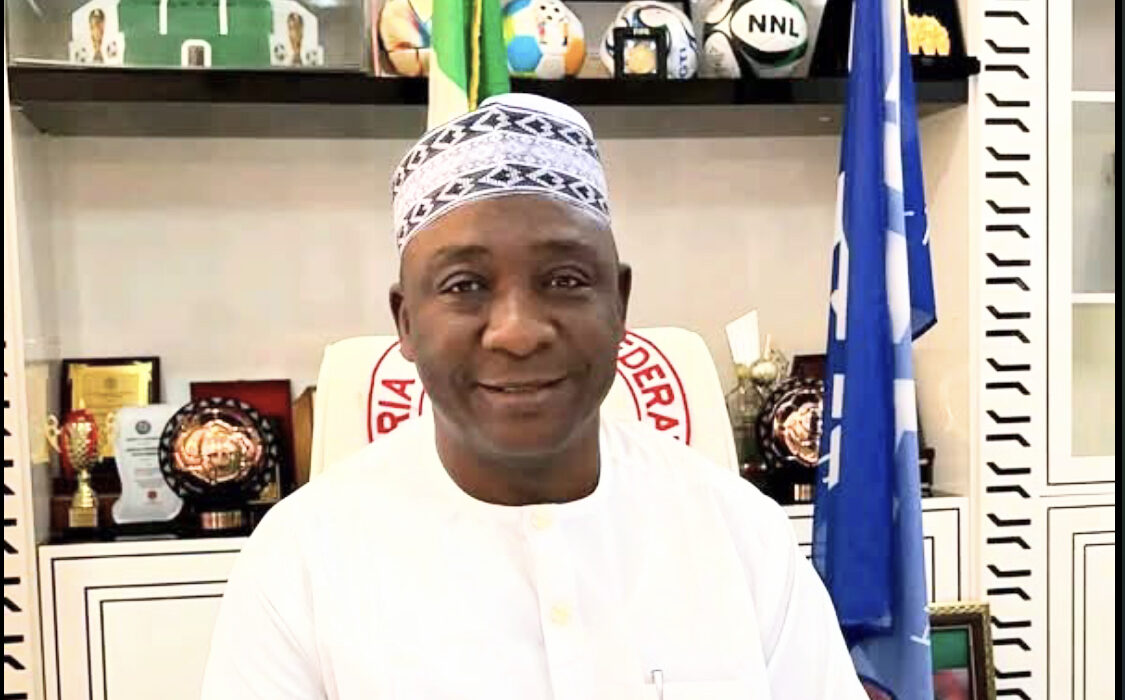
The Nigeria Football Federation has been plunged into another dramatic leadership crisis following reports that President Ibrahim Musa Gusau, General Secretary Dr Mohammed Sanusi and several members of the federation’s Executive Committee have resigned their positions.
The development, which emerged in the early hours of Thursday, August 27, has yet to receive a formal statement from the NFF itself. However, several Nigerian media organisations have reported the alleged resignations, with reports citing sources within the National Sports Commission and the NFF Congress. Peoples Daily also reported that Sanusi personally confirmed his resignation in a telephone conversation, although he declined to provide further details.
The reported shake-up comes at one of the most turbulent moments in the history of Nigerian football. The NFF leadership has faced mounting criticism following the Super Eagles’ failure to qualify for the 2026 FIFA World Cup and the Super Falcons’ historic failure to qualify for the 2027 FIFA Women’s World Cup.
The pressure intensified further following the release of a fact-finding committee report into Nigeria’s deteriorating football fortunes. The committee, chaired by former international and respected football administrator Fanny Amun, raised questions about governance, player selection, national-team preparation, remuneration, league administration and alleged financial inducements surrounding player invitations.
Amun subsequently disclosed that Gusau failed to honour the committee’s invitation to appear before it and answer questions. The revelation added another dimension to the growing dispute over accountability within the federation.
Against that backdrop, reports of a mass resignation represent a potentially seismic development.
The timing is particularly significant because the NFF has been preparing for an elective process amid an increasingly contentious battle over the future structure of Nigerian football. The federation’s own March 2026 Electoral Code states that members of the Executive Committee ordinarily continue exercising their functions until the completion of the electoral process. It also provides that where more than 50 per cent of Executive Committee positions become vacant, the General Secretary is required to convene an Extraordinary Congress, while the remaining members handle the federation’s daily affairs pending new elections.
If the reported mass resignation is formally confirmed, that provision could become central to determining what happens next.
There is already evidence that the crisis has moved beyond the NFF itself. The National Sports Commission has been involved in discussions over the future administration of Nigerian football, while the Senate has also summoned relevant football and sports authorities over the deteriorating state of the game.
The financial dimension has added another layer of pressure, with security and anti-corruption agencies reportedly examining the utilisation of Federal Government funds released for national-team obligations. Those investigations and allegations remain matters for the relevant authorities to establish and should not be treated as proof of wrongdoing by any individual.
For now, however, Nigerian football is waiting for clarity. Gusau is scheduled to address sports journalists in Abuja at 12 noon today, according to reports. The briefing is expected to provide answers to the biggest questions surrounding the federation: whether the reported resignations have actually taken effect, who remains in charge, what happens to the planned electoral process and whether a broader restructuring of Nigerian football is imminent.
The NFF’s official website has not, at the time of publication, carried a formal resignation announcement. That makes the noon briefing potentially decisive.
After years of mounting sporting disappointment and administrative controversy, Nigerian football may now be approaching a defining institutional moment.
If the resignations are confirmed, the issue will no longer be whether the NFF needs restructuring. The question will be how Nigeria rebuilds the football administration from here.