


By Rasheed Adewuyi, New York
Gianni Infantino has signalled his intention to seek a fresh mandate, setting the stage for what would effectively amount to a fourth spell in charge of FIFA.
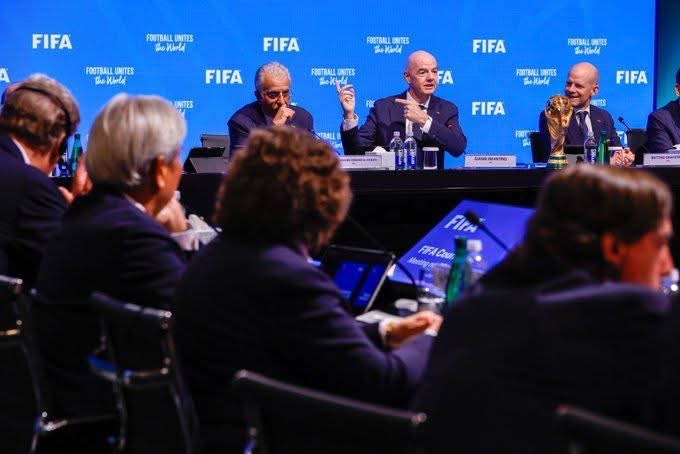
The move, while widely anticipated, has reignited debate over leadership tenure and governance within global football. Speaking at a FIFA Congress in Bangkok, Infantino told delegates he remains committed to continuing his leadership beyond his current term.
“I remain fully committed to serving football,” he said, adding that there is “more progress to be made for the global game.”
Supporters of Infantino point to significant financial growth and expanded global engagement during his presidency. FIFA has launched new competitions and pursued broader commercial strategies aimed at increasing the sport’s global footprint.
A senior official within one member association noted that football’s influence and scale have grown under his leadership, reflecting a deliberate push toward expansion and revenue generation.
However, the prospect of an extended tenure has drawn criticism from governance experts. Reforms introduced after FIFA’s past scandals included term limits designed to enhance accountability and prevent long-term concentration of power.
Infantino remains eligible due to his initial period in office being classified as a partial term—an interpretation that complies with the rules but continues to spark debate.
“It follows the written rules, but challenges the principle behind them,” one governance analyst observed.
The timing of the decision is significant. Football’s calendar is becoming increasingly congested, with mounting concerns over player welfare, scheduling and the balance between sporting integrity and commercial expansion.
FIFA’s leadership will be central to navigating these competing demands in the coming years.
At present, there appears to be no strong challenger emerging ahead of the next election cycle. Infantino’s established relationships across regional confederations and voting members place him in a commanding position.
For some observers, this raises concerns about the competitiveness of the electoral process itself.
As attention turns toward the next vote, the implications of another term are coming into sharper focus. Supporters argue continuity offers stability and sustained growth, while critics warn it may limit opportunities for reform and renewal.
Either way, Infantino’s decision is set to shape the direction of world football governance for years to come.