


By Paul Lucky Okoku
-
How the Flying Eagles of 1983 broke decades of heartbreak and opened FIFA’s doors for Nigerian football.
-
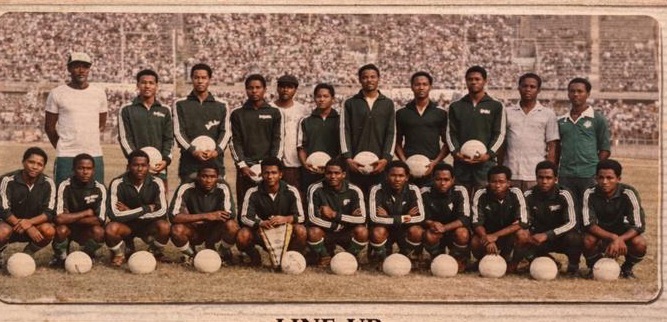
FLYING EAGLES, Class of 1983.
The Team That Put Nigeria on the FIFA World Map
Why We Must Tell Our Own Story…
January 8 stands as one of the most important dates in Nigerian football history—a day destined to be permanently etched into the nation’s sporting record.
On this day, a young Nigerian team ended decades of heartbreak, disappointment, and near-misses that had haunted Nigeria at every level of World Cup qualification—from the Junior Eagles (later known as the Flying Eagles) to the Super Eagles. For years, Nigerian football carried the pain of coming close but falling short on the global stage.
January 8, 1983., changed that narrative forever. It was the day the Flying Eagles of Nigeria, Class of 1983, broke the cycle, opened the World Cup door for the nation, and laid a foundation that future generations would build upon. What follows is not just a match report—it is the story of how a curse was broken, history was made, and Nigerian football found its turning point.
There are moments in life when silence becomes a form of loss.
Not because the story is unimportant, but because time moves on, generations change, and truth quietly slips into misunderstanding. That is where Nigerian football history has found itself today.
Recently, after sharing a simple photograph and brief historical note about the 1983 Flying Eagles, I received a message that surprised me but also affirmed something deeply important:
“Paul, once I posted your message, others began sharing it.”
That moment said everything.
It meant that people—especially the younger generation—are hungry for the truth, hungry for context, and hungry for a history that has not been properly told.
When the Truth Shocked Even Journalists
Years ago, during a live internet radio program hosted by a sports veteran journalist in Ikeja, Lagos, Nigeria, I sat beside Tajudeen Disu, discussing our role as the first Nigerian national team to ever qualify Nigeria for any FIFA World Cup tournament.
After we spoke, a younger journalist sitting between us paused, turned to the
sports veteran journalist, and asked plainly:
“Is that true?”
When the sports veteran journalist confirmed it, the young man shook his head and said something that still echoes in my mind:
“The sports veteran journalists have failed us. I always thought it was the 1994 Super Eagles. I’m sitting next to legends, and their story has never been told in the mainstream media.”
That was not an accusation.
It was a revelation.
Why the Confusion Exists
For Decades, Nigeria Endured Heartbreak
For generations, World Cup qualification was not just a goal—it was a dream deferred.
Hope rose with every campaign, only to fall again. The wait was long. The wounds were cumulative.
The Nigeria Football Federation (NFF)—originally known as the Nigeria Football Association (NFA)—was formally launched in 1945, though it had taken shape as early as 1933. In 1949, Nigeria’s first national team embarked on a historic tour of the United Kingdom. They played barefoot—on foreign soil—against English sides. It was a statement of raw talent, courage, and identity.
Yet from 1945 to 1961, despite passion and promise, Nigeria did not qualify for the FIFA World Cup.
• 1962 FIFA World Cup (Chile) — Nigeria did not qualify.
In 1960, Nigeria gained independence from British rule, with Princess Alexandra of Kent presenting the constitutional instruments on behalf of Queen Elizabeth II, and Sir Abubakar Tafawa Balewa becoming Nigeria’s first Prime Minister. Political freedom arrived—but football’s ultimate validation did not.
• 1966 FIFA World Cup (England) — Nigeria did not qualify.
• 1970 FIFA World Cup (Mexico) — Nigeria did not qualify.
• 1974 FIFA World Cup (West Germany) — Nigeria did not qualify.
The heartbreak was fierce. Emotions overflowed. After a decisive loss to Ghana in February 1973, anger spilled beyond the pitch—Ghana’s team bus was burned. It took the intervention of the Nigerian Police, led by then Lagos State Governor Brigadier Mobolaji Johnson, to protect the Ghanaian players and escort them safely through the stadium tunnel.
Out of that painful episode, something constructive emerged: the Nigeria–Ghana Sports Festival, which later expanded into the WAFU football competition, fostering unity through sport. At the time, Nigeria was under the leadership of General Yakubu Gowon.
•1978 FIFA World Cup (Argentina) — Nigeria fell short again.
•1982 FIFA World Cup (Spain) — Algeria eliminated Nigeria, right there in Lagos.
On home soil. In front of the nation. Another door closed.
•1986 FIFA World Cup (Mexico) — Nigeria fell short again.
•1990 FIFA World Cup (Italy) — Nigeria did not qualify.
•1994 FIFA World Cup (United States) — Finally.
Nigeria qualified again. Following the 1983 Flying Eagles’ breakthrough, which opened Nigeria’s first-ever door into FIFA competition in Mexico, it took 13 additional years after first breaking into FIFA’s doors for the nation to return and secure its place on football’s greatest stage.
Each failure deepened the longing. Each campaign added weight to a collective belief: Nigeria belonged on football’s greatest stage—yet something always stood in the way.
Even at Youth Level, the Struggle Continued
The pain was not confined to the senior team. It echoed through the youth ranks as well.
•1977 Flying Eagles — Did not participate.
This was the inaugural FIFA World Youth Championship (U-20), hosted in Tunisia, the first time an African nation staged the tournament.
1979 Flying Eagles — Did not qualify; eliminated by Guinea.
•1981 Flying Eagles — Lost to Cameroon in a decisive qualifier.
I was in that stadium in 1981.
I saw the bottles.
I saw the stones.
I was there, in the stands.
Bottles and stones flew—not out of hatred, but heartbreak. The crowd was not cruel; it was wounded. The fans descended on the players and officials. Nigerians were desperate—desperate—to see their country finally take its rightful place on the FIFA stage.
That hunger.
That frustration.
That collective ache.
It was real. It was heavy. And it was shared by millions.
And it was that pain—decades in the making—that set the stage for what would finally come next.
That is why January 8, 1983 was different.
The Day the Jinx Was Broken
That Saturday morning—the day of reckoning—the newspapers spoke with one voice.
Across Lagos, across Nigeria, the message was unmistakable:
Historic Match: Nigeria 2 – 0 Guinea
1983 FIFA World Cup Championship Qualifier
Date: Saturday, January 8, 1983
Venue: National Stadium, Surulere, Lagos
SIGNIFICANCE: The first Nigerian national football team in history—at any level—to qualify for a FIFA World Cup tournament*: Mexico 1983
TEAM LEADERSHIP
• Captain: Ali Jeje
• Vice-Captain: Paul Okoku
TECHNICAL TEAM
• Chief Coach: Chris Udemueze
• Assistant Coach: Isiaka Yakubu
GOALS SCORED BY
• Humphrey Edobor
• Tarila Okoronwanta
Chris Udemueze (Coach); Chibuzor Ehilegbu; Bright Benson; Paul Okoku (Vice Captain); Isiaka Yakubu (Asst. Coach); Sunday Benson; Wilfred Agbonabare; Wahab Adesina; Tajudeen (Taju) Disu; Malam Lagos (Team Manager); Segun Olukanni
Squatting (L–R):
Humphrey Edobor; Otti Amaechi; Christopher Anigala; Samson Siasia; Ali Jeje (Captain); Dehinde Akinlotan; Femi Olukanni; Tarila Okoronwanta; Patrick Udoh
Other members of the 1983 Flying Eagles team:
Dahiru Sadi, Manu Garba, Alphonsus Akhahon, Atume Hamba, Terfa Kpako, Yemi Adebanjo, Muyiwa Motajo, Mukaila Buraimoh, Isa Shofoluwe, Raymond King, Mike Egbeka.
Backroom & Support Staff
• Officer Balogun — Training & Fitness
• Officer Oneh — Training & Fitness
• Team Medical Director
• Mr. Oladipo Odunuga — Team Physical Therapist
“All Roads Lead to the National Stadium.”
Punch newspaper carried it on the front page: a photograph of Wahab Adesina and myself, jogging in training.
On my jersey, one word stood out—MEXICO—bold, prophetic, unmistakable.
We knew exactly what was at stake.
We had left Ibadan the day before, Friday, January 7, 1983, departing from Bembo Games Village, Ibadan, Oyo State, with quiet resolve.
Not for money.
Not for fame.
But for pride.
In that camp, far from distractions, deep in the woods, our late coach Chris Udemueze kept us focused—intentionally so. And even in the tension, there was humanity, humor, belief.
That morning, as he knocked on the door of teammates who were still praying, he said—half-joking, half-serious—words we still laugh about today:
“Make una pray o… bottles dey, stones dey o.”
We understood exactly what he meant. The bottles and stones that had rained down from angry crowds and disappointed fans on players and officials two years earlier were still vivid in Coach Chris Udemueze’s memory—memories he used as fuel to jolt us into action, awaken our self-belief, and remind us that this moment was bigger than all of us.
Nigeria had waited too long.
The nation had suffered too much heartbreak.
And on that day, there would be no hiding place—from expectation, from history, or from destiny.
That was the morning the jinx was ready to fall.
When the final whistle blew against Guinea, Nigeria had done something it had never done before.
We broke the jinx.
We broke the curse.
We qualified Nigeria—for the first time ever—for a FIFA World Cup tournament.
What Followed That Night
On that Saturday, January 8, 1983, history was made—a day that moved Nigeria from knocking on FIFA’s door to finally being inside FIFA’s room, from dream to reality.
Earlier that day, we departed Kilo Hotel, Masha, Surulere, Lagos, en route to the National Stadium under police escort—nearly a dozen mobile police motorcycles clearing the road. We were headed to face Guinea, the same team that had defeated us 2–1 in Conakry two weeks earlier, and the same Guinea that had knocked Nigeria out four years before. As we moved through Marsha, fans trooped toward the stadium from every direction. Inside our bus, we were singing, sweating, praying—focused.
After the match, later that night at Kilo Hotel, surrounded by officials during dinner—Minister of Sports Buba Ahmed; Yinka Craig, sports presenter with the Nigerian Television Authority (NTA); Chief Ajibade Fashina-Thomas, PRO Director of the National Sports Commission (NSC); Retired Nigerian Navy Commodore Edwin Kentebe; Yinka Okeowo, Secretary-General of the Nigerian Football Association (NFA); Nigerian Air Force Group Captain Tony Ikazoboh (Chairman of the Nigeria Football Federation, 1983–1987); Barrister Shola Rhodes; Ibikunle Armstrong; and others—the 12 Wise Men, members of the Nigeria Football Association (NFA) and the National Sports Commission, I stood and spoke on behalf of the team in the dining room.
I thanked the officials for their leadership, support, and I spoke about our achievement as an omen for Nigerian football—positive signs, indicators of future success—without fully realizing the weight of those words. In that moment, we had opened the floodgates. Years later, the 1994 Super Eagles would ride on that pathway. Our nation’s flag would fly on the world stage. The blue skies would open for the world to see Nigeria.
I can still picture it clearly—in the cities of Monterrey, Mexico, against Russia and Holland, and in Guadalajara against Brazil: the placard bearing the inscription “Nigeria”, carried proudly at the front, with our green–white–green flag raised high behind it.
High in the stands, at the very summit of the stadium sky, Nigeria’s flag flew freely, while we stood with hands pressed to our chests, voices united, singing our national anthem in glory. It felt surreal—like a dream, or something even greater than one.
Today, filled with joy, dignity, and gratitude, we stand as the first. History has been kind to us. Nigeria has been a blessing to us.
It was more than a victory—it was a declaration.
We spoke because history had just been made, and someone had to mark the moment.
Soon after:
• President Shehu Shagari made a national pronouncement
• We were awarded Member of the Order of the Niger (MON)
• Scholarships were announced
• Our achievement was later ratified into law by the National Assembly
That is not rumor.
That is record.
History does not repeat itself.
It records it.
——
From Crisis to Brotherhood: How Leadership, Football, and Courage Helped Birth WAFU
There are moments in football that transcend results—moments that quietly reshape history.
One such moment occurred on February 25, 1973, at the National Stadium, Lagos, during a fiercely contested 1974 FIFA World Cup qualifying match between Nigeria and Ghana.
Nigeria led twice. Ghana responded twice. When George Alhassan scored his second goal of the match to give Ghana a 3–2 victory, Nigeria’s hopes of qualifying for the 1974 World Cup ended on home soil.
What followed was chaos.
Angry and heartbroken Nigerian supporters stormed the pitch, directing their fury toward the Ghanaian players. In those tense minutes, the situation threatened to spiral into violence—one capable of staining Nigeria’s sporting image permanently.
Mobolaji Johnson’s Defining Moment
At that critical moment, Brigadier Mobolaji Johnson, then Military Governor of Lagos State, chose leadership over protocol.
He did not delegate.
He personally led Nigerian police officers onto the pitch, placing himself between the crowd and the Ghanaian players. Under his direct command, the Ghanaian team was shielded and escorted safely through the stadium tunnel.
That act of calm authority prevented a national embarrassment—and possibly a tragedy.
Johnson’s leadership that day remains one of the most courageous acts in African football history.
Match Record (Historical Reference)
• Date: February 25, 1973
• Competition: 1974 FIFA World Cup Qualifier (Second Leg)
• Venue: National Stadium, Lagos
• Final Score: Ghana 3 – Nigeria 2
• Aggregate: Ghana 3 – Nigeria 2
Goals
• Ghana: George Alhassan (2), Opoku Afriyie
• Nigeria: Yakubu Mabo, Kunle Awesu
From Retaliation to Reconciliation
While calm was restored inside the stadium, violence spilled outside.
The Ghanaian team bus was set ablaze, burning fiercely near the stadium—a devastating sight that shocked the nation.
Nigeria’s response was swift and statesmanlike.
The then Head of State, General Yakubu Gowon, personally intervened. He purchased a brand-new bus to replace the destroyed vehicle and ensured the Ghanaian team was flown home safely.
It was an unmistakable act of responsibility—one that chose reconciliation over resentment.
The Birth of Sporting Diplomacy
From that painful episode emerged a powerful idea: sport as peace-building.
Nigeria and Ghana agreed to establish the Nigeria–Ghana Sports Festival, with:
• The first edition held in Lagos in 1974
• The second edition hosted by Accra in 1975
What began as reconciliation became talent incubators.
From the Nigerian Academicals—then composed of secondary-school and college students competing in the Principals’ Cup—the Green Eagles coach Father Tiko identified outstanding players and promoted them to the senior national team. Among them were:
• Godwin Odiye
• Adokiye Amiesimaka
• Thompson Usiyan
• Sylvester Oriakhi
• Chris Ogu
• Otoroma
Notably, Godwin Odiye paired with Otoroma in defense as numbers 5 and 6.
Many emerged from Lagos State and the old Mid-Western State, under Governor Samuel Ogbemudia, whose administration invested deeply in sports development.
As other West African nations witnessed the success of the Nigeria–Ghana model, discussions expanded—and from those discussions emerged the West African Football Union (WAFU).
1983: History Comes Full Circle
A decade later, that vision matured.
In *October 1983*, Nigeria won the *WAFU Nations Cup*, defeating Ghana in the final. I was privileged to be part of that team—*captained by Ali Jeje*, with me serving as *Vice-Captain.*
Nigeria’s victory stood on foundations laid ten years earlier—foundations built not merely on football, but on *leadership, restraint, and vision.*
That same tournament was graced by the presence of *President Shehu Shagari,* further affirming the national importance of what WAFU had become.
*Legacy Beyond the Pitch*
This is how West African football was shaped—not only by goals and trophies, but by moments when leaders chose *courage over chaos, responsibility over retaliation, and unity over division.*
It is a legacy worth remembering—and teaching.
*If this article added value or offered perspective, you’re welcome to share it with others.*
*Paul Lucky Okoku*
Former International Footballer | Football Analyst
Published Online
*Former Nigerian Super Eagles International*
• CAF Africa Cup of Nations (AFCON) 1984 — *Silver Medalist*
• WAFU Nations Cup 1983 — *Gold Medalist*
• CAF Tesema Cup (U-21) 1983 — *Gold Medalist*
• FIFA U-21 World Cup, Mexico 🇲🇽 1983 — *Vice-Captain*, Flying Eagles of Nigeria 🇳🇬 (Class of 1983)