


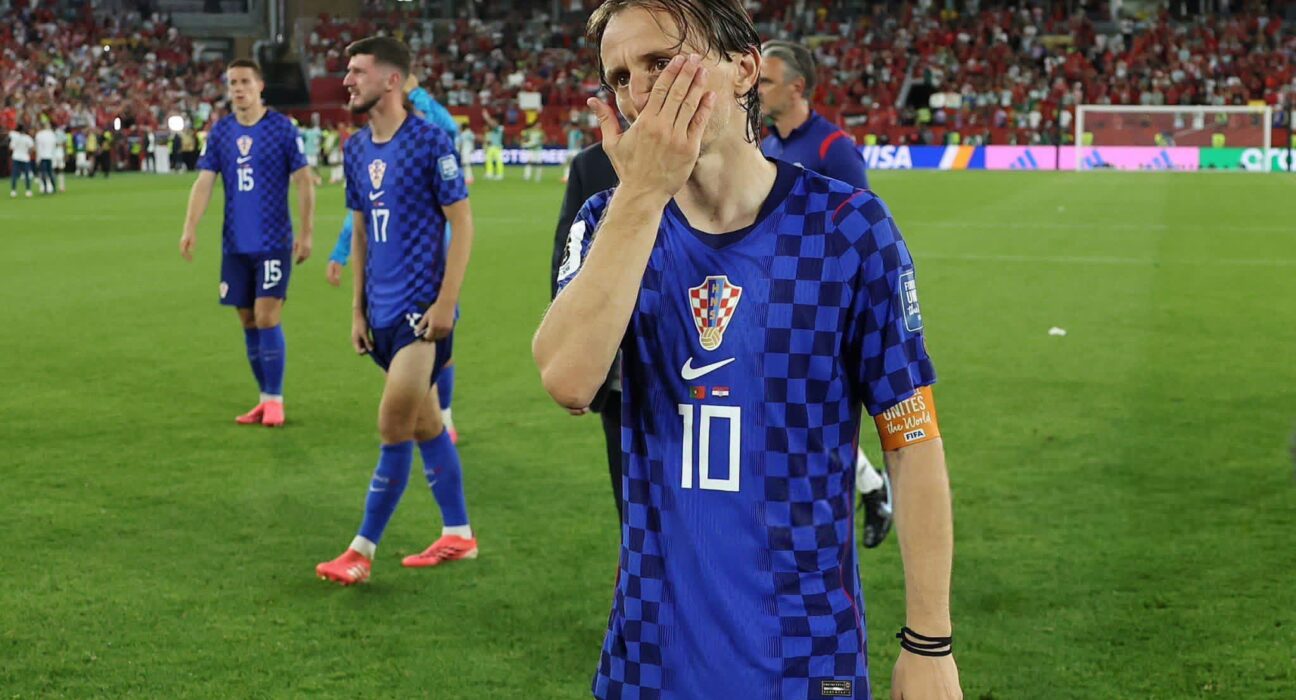
Croatia captain Luka Modrić has launched a scathing criticism of VAR after his country’s heartbreaking FIFA World Cup elimination, insisting the technology was used “incorrectly or selectively” and arguing that the controversial penalty which decided the match should never have been awarded.
The veteran midfielder cut a frustrated figure after Croatia’s defeat, with the decisive moment coming from a VAR intervention that led to a penalty for their opponents. While accepting that football often hinges on fine margins, Modrić questioned both the consistency and application of video review, claiming Croatia had been denied the benefit of similar decisions.
“We deserved much more. Some things didn’t go our way. If the situation had been reversed, VAR would never have intervened.”
The 2018 Ballon d’Or winner has long been a vocal critic of the way VAR is implemented, and he reiterated his reservations after the match, stressing that the technology should only be used to correct obvious officiating errors rather than subjective decisions.
“I said from the beginning, when VAR was introduced, that I didn’t like it. It’s useful for some things, but it’s being used incorrectly or selectively. VAR should only intervene if it’s a 200% clear mistake.”
Modrić’s comments reflect a broader debate that has intensified throughout the 2026 FIFA World Cup, with several teams questioning the consistency of VAR decisions in crucial knockout matches. While FIFA has maintained that video review exists to reduce clear and obvious refereeing errors, players, coaches and supporters have continued to raise concerns over the interpretation of incidents involving physical contact inside the penalty area.
The Croatia captain was particularly critical of the incident that ultimately settled the contest, insisting the challenge involved normal physical contact between two players rather than a foul worthy of a penalty.
“Today’s incident was never a penalty. They were both holding each other and both fell. You can’t decide a match like this with a penalty like that.”
His remarks are likely to fuel further discussion over the threshold for VAR intervention, particularly in high-stakes knockout matches where a single decision can determine a nation’s fate. Critics of the current system have frequently argued that referees are encouraged to re-officiate subjective incidents rather than correcting only clear and obvious mistakes, while supporters of VAR contend that consistency and accuracy have improved since its introduction.
Despite the disappointment of elimination, Modrić urged his teammates to remain proud of their efforts, believing Croatia produced a performance worthy of a better outcome. The Real Madrid legend, who has been the heartbeat of Croatia’s golden generation for more than a decade, suggested the result would be remembered less for the football played and more for the controversial decision that overshadowed it.
The latest controversy adds to a growing list of debates surrounding VAR at this year’s World Cup, where several coaches and players have publicly questioned the consistency of officiating. Modrić’s forceful criticism is certain to intensify calls for FIFA and the International Football Association Board (IFAB) to reassess how and when VAR should intervene in decisive moments.
For the Croatian captain, the issue extends beyond one match. His argument is that technology should enhance fairness, not become the defining factor in football’s biggest occasions. As Croatia’s World Cup journey came to a painful end, Modrić made it clear he believes the decisive penalty fell well short of the standard required for VAR intervention, leaving him convinced that his side deserved much more.