

By Kazeem Ajibola Shoyebo
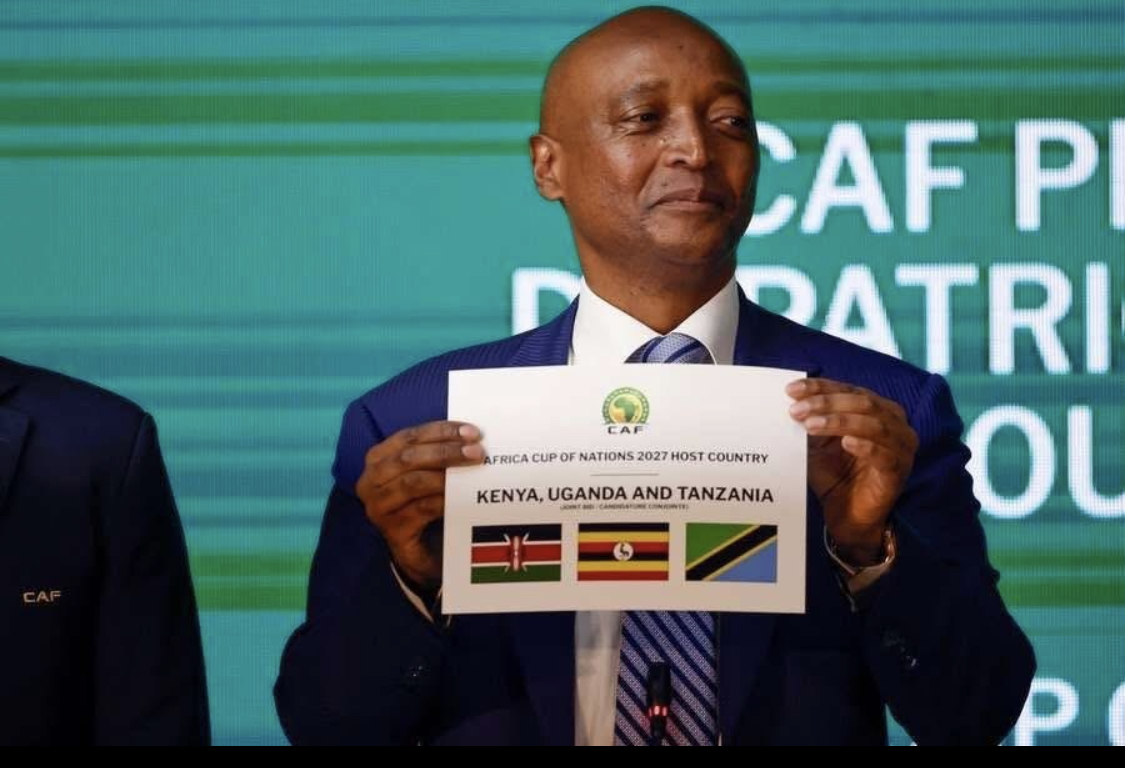
In the humid heat of Dar es Salaam, CAF President Patrice Motsepe made one thing crystal clear: East Africa’s AFCON dream is still alive.
Despite swirling doubts about infrastructure readiness, the “Pamoja” project remains intact. Kenya, Uganda and Tanzaniawill host AFCON 2027 — and there is no backup plan.
For the first time in history, three East African nations will unite to stage Africa’s biggest football spectacle, a bold political and sporting statement of regional unity.
But this was more than a hosting confirmation. It was a blueprint for the future.
CAF plans to expand AFCON to 28 teams, lock the tournament into a four-year calendar cycle, launch a biennial African Nations League.
The aim? More revenue. More competitiveness. More modern stadiums. More global respect.
CAF wants AFCON to stand shoulder-to-shoulder with the biggest tournaments in the world.
Motsepe did not shy away from criticism. He admitted that refereeing levels dipped at the last tournament in Moroccocompared to the previous edition in Cote d’Ivoire.
Reforms are coming. Stronger disciplinary codes are coming. Violent incidents and walk-offs will carry heavier consequences.
Ironically, while refereeing came under scrutiny, Morocco’s infrastructure was hailed as a continental gold standard. The North African nation will also host the 2026 Women’s AFCON, reinforcing its position as one of Africa’s premier football destinations.
Motsepe revealed he had hoped to stage the CAF Confederation Cup final in Tanzania. But the Benjamin Mkapa Stadium did not meet CAF requirements, and Zanzibar was ruled out as a viable alternative.
CAF is attempting something ambitious: modernize African football while protecting its identity. Expand opportunity without sacrificing quality. Increase revenue without alienating clubs.
If Motsepe delivers, AFCON won’t just be Africa’s pride — it will be a global force.
Leave feedback about this