


By Rasheed Adewuyi, New York
Gianni Infantino has thrown his weight behind fresh efforts to stop players from covering their mouths during on-field exchanges, declaring the practice incompatible with football’s fight against discrimination and respect for officials.
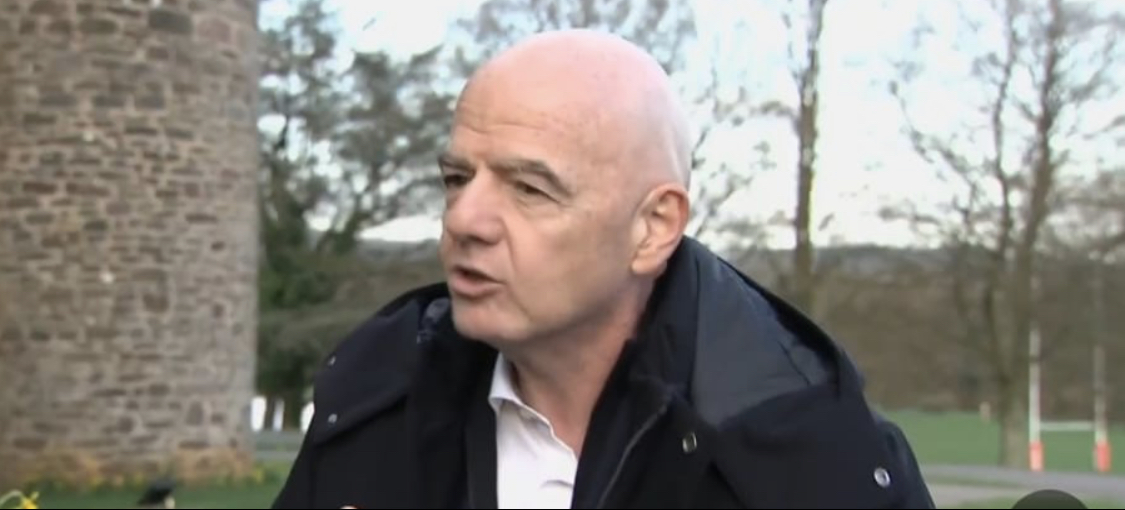
Speaking after the 140th Annual General Meeting of The International Football Association Board (IFAB) in Wales on Saturday, the FIFA President said football’s global image depends on transparency and accountability, particularly during heated in-game moments.
“It is important that we protect the respect of football,” Infantino said. “Respect of the match officials, of the referees, [and] of the public… when it comes to incidents such as discrimination, we will not allow players to cover their mouths when they speak to an opponent anymore.”
The proposal, part of a broader IFAB-led consultation, could see players barred from obscuring their mouths with jerseys, hands or other objects while addressing opponents. The measure is being examined ahead of the 2026 FIFA World Cup™, which kicks off on 11 June 2026.
The push gained urgency following a high-profile case earlier this season involving Vinícius Júnior of Real Madrid CF, who alleged racial abuse during a match. The accused player was said to have covered his mouth during the exchange, complicating efforts by match officials and investigators to verify what was said.
Infantino stressed that players and coaching staff serve as role models to millions worldwide, adding that open communication on the pitch strengthens accountability and reinforces football’s zero-tolerance stance on discrimination.
Beyond mouth-covering, the consultation also addresses other forms of conduct deemed disrespectful, including players or coaches walking off the pitch in protest of refereeing decisions. Infantino signaled that such actions would face stricter scrutiny.
IFAB is expected to submit formal proposals by 30 April 2026, leaving room for potential rule changes to be adopted in time for the expanded 2026 World Cup.
With the sport’s governing bodies under increasing pressure to clamp down on discriminatory behavior, the message from football’s top office is clear: transparency on the pitch is no longer optional.