


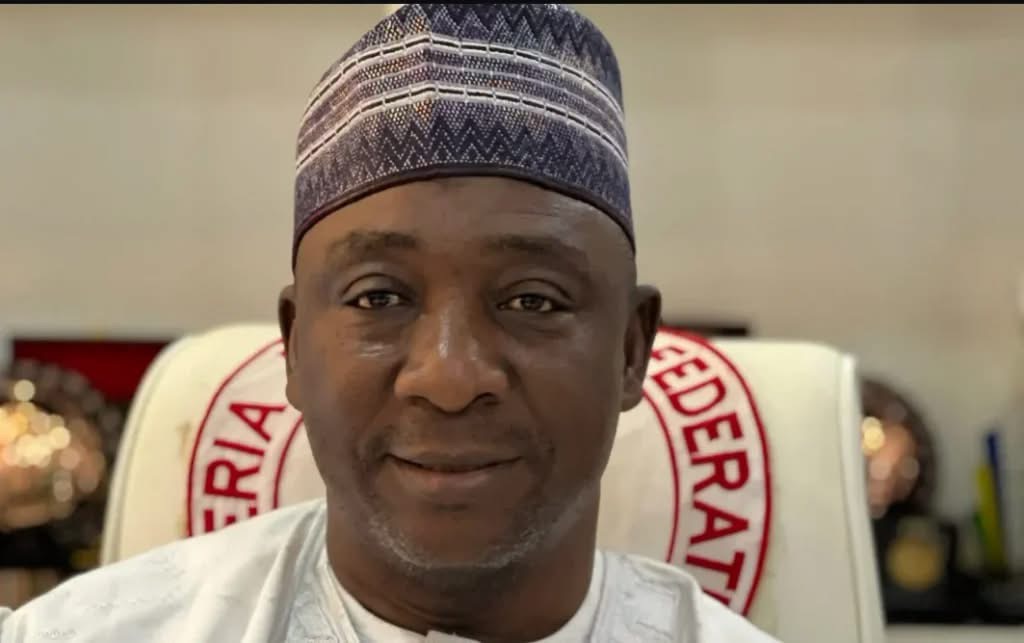
By any serious measure, replacing the leadership at the NFF Secretariat without confronting the entrenched structures that have governed football at state level would be an incomplete reform. Nigeria does not need another administrative reshuffle; it needs a fundamental reset of the football system.
The resignation of former Nigeria Football Federation president Ibrahim Musa Gusau, General Secretary Mohammed Sanusi and members of the NFF Executive Committee should not mark the end of Nigeria’s football reform conversation. It should be the beginning.
The national federation has endured a period of profound disappointment. The Super Eagles failed to qualify for the 2026 FIFA World Cup, while the Super Falcons missed qualification for the 2027 FIFA Women’s World Cup, ending Nigeria’s uninterrupted participation in every edition of the women’s global tournament since 1991. The decline has also been visible through the youth development pathway, with Nigeria suffering qualification setbacks at U17 and U23 level.
These failures did not suddenly appear at the NFF headquarters in Abuja. They are the product of a football system that has been allowed to weaken progressively, from grassroots development and youth competitions to coaching, scouting, administration, domestic leagues and ultimately the national teams. And at the foundation of that system are the State Football Associations.
The forgotten power brokers
The State FAs are responsible for a substantial part of the football activity closest to the grassroots. They are expected to nurture local competitions, discover talent, develop coaches and referees, support youth football and create the pathways through which future professional and national-team players emerge.
Yet the people controlling many of these structures have remained in office for extraordinarily long periods. This is where Nigeria’s reform conversation must become uncomfortable.
How can a country expect a new generation of footballers to emerge from a grassroots system controlled by administrators who have occupied the same positions for 10, 15 or even 20 years without producing a corresponding transformation in the football ecosystem Long tenure is not the problem by itself. The problem is long tenure without demonstrable institutional progress. And Nigeria has examples that demand scrutiny.
Niger: 24 years of continuity
Few examples demonstrate the longevity problem more starkly than Ahmed Yusuf ‘Fresh‘ in Niger State. Yusuf has been at the head of the Niger State FA for approximately two decades, with public records showing his return to office for a fifth consecutive term in 2019.
Twenty years is an entire generation of football. Players who were children when such administrators first took office are now old enough to have children of their own. If an administrator can remain in charge for two decades, the standard for judging that tenure must be correspondingly high. There must be measurable evidence of institutional development, infrastructure, competitions, talent production and administrative reform.
Nigeria should no longer accept longevity as an achievement in itself.
Ogun: 15 years and counting
Ganiyu Majekodunmi has been chairman of the Ogun State Football Association since 2011 — approximately 15 yearsin the position.
He has repeatedly returned to office, including an unopposed re-election in 2023. Public records also show that he has occupied prominent positions within NFF structures, including chairing the Youth Football Committee.
Fifteen years is not a short administrative experiment. It is long enough to build an enduring grassroots football architecture, establish sustainable youth competitions, produce a deep coaching pool, develop scouting systems and create a recognizable pipeline from school and community football into professional football.
The question is therefore no longer simply how long has Majekodunmi been there?
The question is: what has Ogun football become after 15 years?
Rivers: another long-running administration
In Rivers State, Barr. Chris Green has been a major figure in State FA administration since 2011, giving him roughly 15 years at the centre of the state’s football structure.
Green has also occupied influential positions within the NFF system. His longevity illustrates the wider problem: Nigerian football has developed an administrative class whose influence extends across state and national structures, often surviving changes in individual NFF administrations.
The reform must therefore examine not only who sits at the top of the Glass House, but the network of structures that repeatedly feeds leadership into it.
Kano: 15 years at the centre of power
Sharif Rabiu Inuwa Ahlan has also been a fixture in Kano football administration since around 2011, giving him approximately 15 years in the position.
His influence extends beyond Kano. He has served on important NFF committees and has been part of the federation’s broader administrative structure. Public records show that he was returned as Kano FA chairman with 55 votes out of 55 in 2019.
That level of electoral dominance raises an obvious question about competition and renewal within State FA politics. The issue is not whether an unopposed election is automatically illegitimate.
The issue is whether a football administration can continue producing uncontested or overwhelmingly uncontested outcomes year after year while the football environment around it remains in need of serious development.
Borno: another entrenched structure
Babagana Kalli has also been part of Borno State football administration since 2011, placing his tenure at roughly 15 years. His continued presence represents another example of the remarkable durability of State FA leadership in Nigeria.
Again, the question is not whether an individual should be condemned merely because he has served for a long time. The question is whether 15 years in charge has produced 15 years’ worth of measurable football development. That must become the standard.
Bayelsa: approximately 11 years
In Bayelsa, Poubeni Ogun has been a central figure in the State FA since at least 2015, giving him approximately 11 years in office. He was re-elected in 2019 in a contest involving FIFA Match Agent Ebi Egbe, winning 12 of the 17 votes cast. The Bayelsa example is particularly important because it demonstrates that the reform conversation must be based on performance, not simply tenure.
A long-serving administrator should be assessed against tangible outcomes: grassroots competitions, coach development, referee development, women’s football, facilities, player production and financial accountability. That should be the rule everywhere.
Ebonyi: more than a decade of influence
Senator Obinna Ogba has also spent many years at the head of football administration in Ebonyi, having first assumed the State FA chairmanship around 2009 and subsequently securing further terms. His continued influence illustrates how deeply entrenched State FA leadership has become across the country.
A decade and a half in any institution should trigger institutional succession planning and performance evaluation — not automatic continuation.
Ondo, Oyo, Enugu, Taraba, Kwara and others
The pattern is not restricted to a handful of states. Dele Ajayi has been a prominent figure in Ondo State football administration since at least 2017.
Oba James Oluyemi Odeni has headed football administration in Oyo since approximately 2015.
Tony Ugwu has been associated with Enugu State FA leadership since approximately 2019.
In Bauchi, former international Patrick Pascal emerged as FA chairman in 2019. Aminu Kurfi Balele has headed Katsina football administration since 2019, while Yakubu Sarma has led Gombe’s FA since 2019.
In the FCT, Adam Mouktar Mohammed assumed the FA chairmanship in 2019 and has since remained a major figure in the territory’s football administration.
In Jigawa, Sabo Abdullahi Dutse has been a long-standing figure, with public records placing him in the leadership structure since at least 2011.
And in Zamfara, the former NFF president himself, Ibrahim Musa Gusau, has long held the position even while serving in broader national football administration roles.Ibrahim Gusau, had been deeply involved in State FA administration for over a decade.
The picture is unmistakable: Nigeria’s football administration has developed a culture of prolonged incumbency at state level.
The power to choose the NFF
This becomes even more important because State FAs are not merely grassroots administrators. They are also major players in the politics of the NFF. The 36 State Football Associations and the FCT remain the largest single constituency within the NFF Congress. Under the revised 54-vote structure, they account for 37 votes, giving the State/FCT bloc approximately 68.5 per cent of Congress voting strength. That is enormous political influence.
It means the people running football at state level have a decisive role in determining who ultimately runs Nigerian football nationally.
The implication is straightforward: If the State FA system is weak, the national football leadership will inevitably be influenced by a weak foundation.
If the grassroots administrators are more interested in maintaining political alliances than building football institutions, the national system will reproduce the same priorities. If incumbency is rewarded more readily than performance, stagnation becomes institutionalized. And if State FA elections repeatedly produce the same administrators with little meaningful competition, then Nigeria must ask whether its football democracy is producing renewal or merely preserving established interests.
This is bigger than Gusau
It would be convenient to blame everything on Ibrahim Gusau. It would also be wrong. Gusau’s administration must be judged by its record, just as every administration must. But Nigeria’s football decline predates him and will outlive him unless the underlying architecture changes. The same applies to the administrations before him. Amaju Pinnick did not create every structural weakness in Nigerian football. Gusau did not inherit a perfect system. And the next NFF president will not magically repair it by occupying the same office. The system itself must be rebuilt.
That means examining the State FAs with the same intensity now being directed at the NFF. Every State FA should be subjected to a comprehensive performance and governance audit.
How many grassroots competitions does it organise annually? How many players does it identify and develop? How many coaches and referees does it train? What is its women’s football programme? What facilities has it developed? How much sponsorship does it attract? What happens to its youth teams after competitions? How transparent are its finances? How competitive are its elections? How long has its chairman been in office? And most importantly what measurable improvement can the chairman point to after years — and in some cases decades — in charge?
The time for cosmetic reform is over
President Bola Ahmed Tinubu has already directed a comprehensive reform of Nigerian football, including governance, administration, stakeholder representation, development pathways, domestic competitions and accountability. The National Sports Commission has also been directed to work with the NFF Secretariat and relevant stakeholders while engaging FIFA and CAF appropriately.
That intervention presents Nigeria with a rare opportunity. The country must not waste it by simply finding another name to occupy the NFF presidency. The reform must go to the foundation. State FA leadership must be audited. Their elections must be scrutinised. Their performance must be measured. Their finances must be transparent. Their development records must be published. And where administrators have remained in office for extraordinary lengths of time, their tenure must be judged against concrete results rather than political connections or electoral survival.
The State FA chairman should no longer be measured by how many elections he has survived. He should be measured by how many footballers he has developed, how many competitions he has built, how many coaches he has produced, how many referees he has trained, how many communities he has reached and how much stronger his state’s football system is because he was there. That is the standard Nigeria needs.
Because changing the NFF president while leaving the same entrenched grassroots power structure untouched would amount to changing the driver while leaving the defective engine intact. Nigeria football does not need another cycle of promises. It needs a clean break with the culture of permanent incumbency, weak accountability and administrative stagnation.
The Gusau resignation has opened the door. The reform must now walk through it — all the way down to the State Football Associations.