


By Rasheed Adewuyi, New York
The New York–New Jersey region is bracing for an unprecedented transportation test as it prepares to host matches at the 2026 FIFA World Cup, with millions of fans expected to flood the area.
In response, officials have rolled out a bold strategy that prioritizes public transit over private vehicles, signaling a major shift in how large-scale sporting events are managed. Rather than expanding highways or parking, the focus is on moving crowds efficiently through trains and buses.
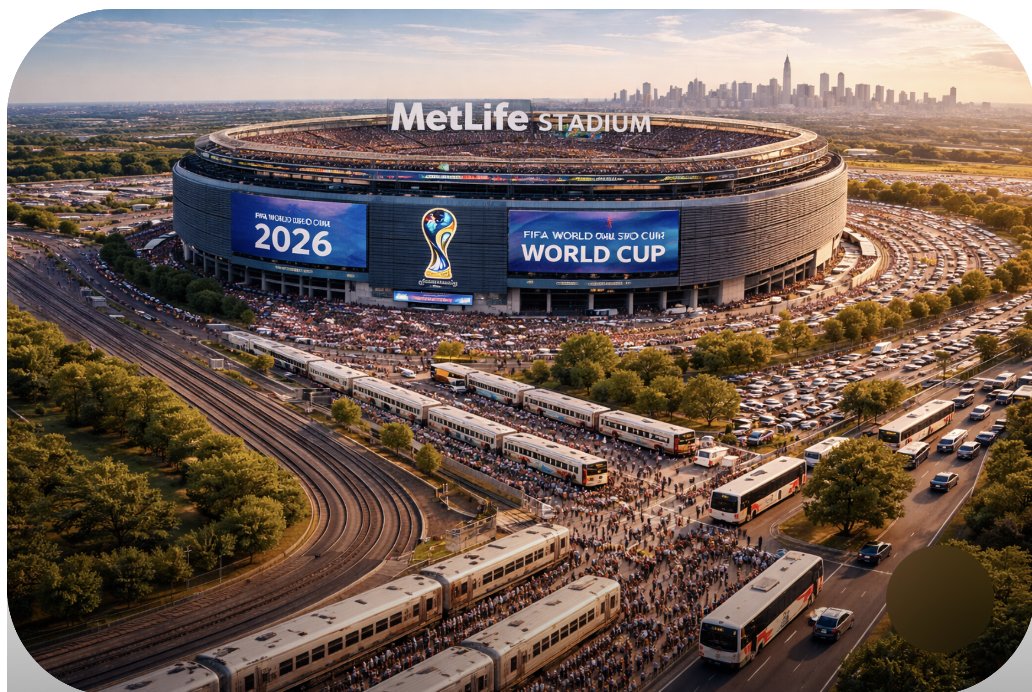
At the heart of the plan is MetLife Stadium, the region’s main World Cup venue. Authorities have made it clear: driving will be strongly discouraged due to limited parking and the high risk of congestion.
Instead, fans are being urged to rely on an upgraded regional transit network designed to handle the surge in demand.
NJ Transit will serve as the backbone of operations, with enhanced rail services transporting fans across the region. A key hub will be Secaucus Junction, where passengers will transfer to stadium-bound connections.
On match days, trains will run at increased frequency, with some routes potentially restricted to ticketed fans to manage crowd flow.
To bridge the gap between Secaucus and the stadium, officials are introducing a high-capacity shuttle bus system.
A dedicated transitway will allow buses to move thousands of passengers per hour, with services running at extremely short intervals before and after matches. The goal is to create a continuous, high-volume flow that minimizes delays and reduces bottlenecks.
On the New York side, the approach focuses on dispersing visitors across the city’s transit network before directing them toward New Jersey.
Subways and commuter rails will spread crowds across multiple lines, reducing strain on any single route. From there, fans will be funneled toward key transfer points linking to NJ Transit services.
Officials say the plan builds on lessons from past large-scale events that were marred by overcrowding and delays. This time, the emphasis is on coordination, communication, and controlled access.
Measures such as timed entry and ticket-linked transit access are expected to play a critical role in maintaining order and reliability.
Infrastructure upgrades, including improved roadways, designated bus lanes, and enhanced traffic management systems, will further support the expected surge in transit activity.
Authorities stress that the plan’s success will depend heavily on public cooperation. By encouraging fans to avoid driving, officials aim to create a smoother, safer experience for both visitors and residents.
If successful, the strategy could become a blueprint for managing transportation at future global events in densely populated cities.