


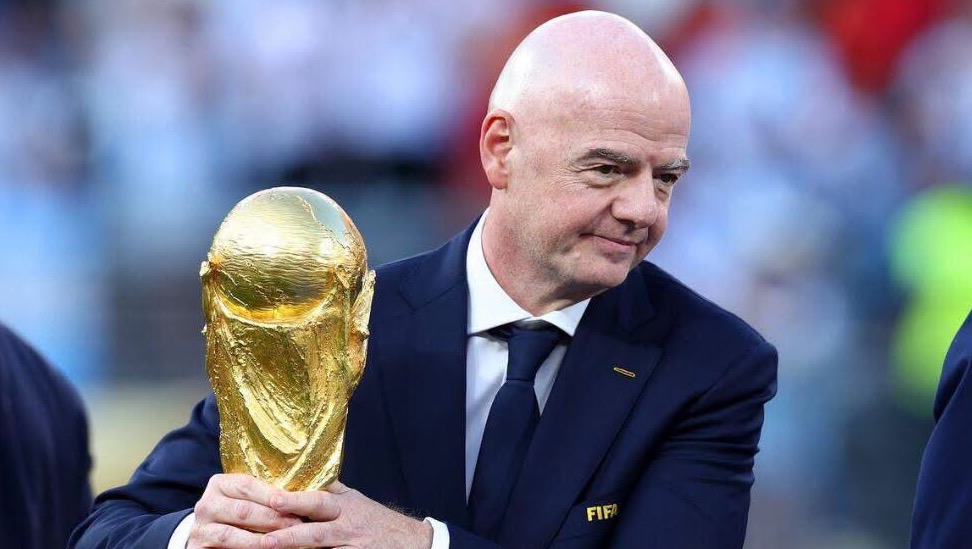
European football has escalated its confrontation with FIFA after UEFA and its 55 member associations unanimously voted to boycott all FIFA competitions if President Gianni Infantino proceeds with plans to open the commercial rights of the FIFA World Cup to private investors, marking the most serious governance crisis in world football for decades.
The extraordinary decision, announced in a joint statement on Thursday, follows an emergency meeting of UEFA’s national associations and represents a dramatic escalation of opposition to FIFA’s proposed FIFA Forward Enterprise (FFE) project, a new FIFA-owned commercial subsidiary that would consolidate the governing body’s commercial and event operations while selling minority equity stakes to outside investors.
UEFA’s statement leaves little room for compromise.
“UEFA and its 55 member associations stand as one. We unanimously and unequivocally reject FIFA’s proposal to transfer ownership interests in the World Cup and other FIFA competitions to private investors.”
The organisation declared that the FIFA World Cup “cannot be treated as an investment product” and insisted that “the World Cup is not for sale.”
The vote represents an unprecedented show of unity among all 55 UEFA member associations, who warned that football’s greatest competition belongs collectively to generations of players, national teams and supporters, not investors seeking financial returns.
According to FIFA, the proposed FIFA Forward Enterprise would remain majority-owned and controlled by FIFA while attracting minority investment that could unlock more than US$10 billion in additional development funding for football worldwide. The governing body has maintained that investors would have no influence over football governance, competition formats, regulations or the international calendar. FIFA also says each of its 211 member associations could benefit from increased Forward Programme funding and an optional one-off US$20 million development allocation if the project is approved.
UEFA, however, argues that ownership itself fundamentally changes football’s governance.
In one of the strongest passages of its statement, European football warned that the moment private investors acquire ownership interests in FIFA competitions, “commercial return becomes a permanent obligation” and future decisions on competition formats, scheduling and international football would inevitably be influenced by shareholder expectations rather than the interests of the game.
The governing body also condemned the manner in which the proposal emerged, accusing FIFA of developing the plan without meaningful consultation.
“It is both irresponsible and indefensible that a proposal of such significance for football was conceived in secret and brought to the brink of approval without any meaningful consultation,” UEFA said, describing the process as “a profound failure of leadership” and “an abdication of FIFA’s duty as the custodian of world football.”
Perhaps the most consequential element of the statement was UEFA’s ultimatum.
The confederation announced that no UEFA national team will participate in any FIFA competition for as long as the privatisation proposals remain active, unless the initiative is abandoned entirely and FIFA provides binding guarantees that football’s governance and competitions will never again be opened to private ownership.
That threat would place future FIFA tournaments—including the men’s and women’s World Cups—under enormous pressure, as UEFA nations account for many of football’s strongest national teams and commercial markets.
UEFA’s position also reflects growing concern over FIFA’s broader governance model. The organisation argued that football is built upon an open pyramid structure linking domestic leagues, clubs, national associations and international competitions, warning that investor-driven decision-making could gradually undermine those foundations.
The confrontation follows several days of mounting opposition across Europe.
Earlier this week, UEFA criticised FIFA’s investment proposal as crossing “a line that football’s governing institutions should never cross,” while the European Leagues—representing more than 40 professional competitions—described the initiative as “reckless and divisive.” Spain’s LaLiga subsequently endorsed that position, insisting that football’s value is created collectively by leagues, clubs, players and supporters rather than by financial investors.
FIFA has not indicated any intention to withdraw the proposal.
Instead, the governing body continues to argue that the new commercial structure would generate unprecedented resources for football development while preserving FIFA’s exclusive authority over governance, sporting regulations and international competitions. Final approval would ultimately require the backing of FIFA’s member associations at a future FIFA Congress.
With Europe’s football establishment now threatening an outright boycott, the dispute has evolved far beyond a commercial disagreement.
It has become a battle over who controls football’s future—and whether the FIFA World Cup should remain a global sporting institution held in trust for future generations or become, even in part, an investable commercial asset.