


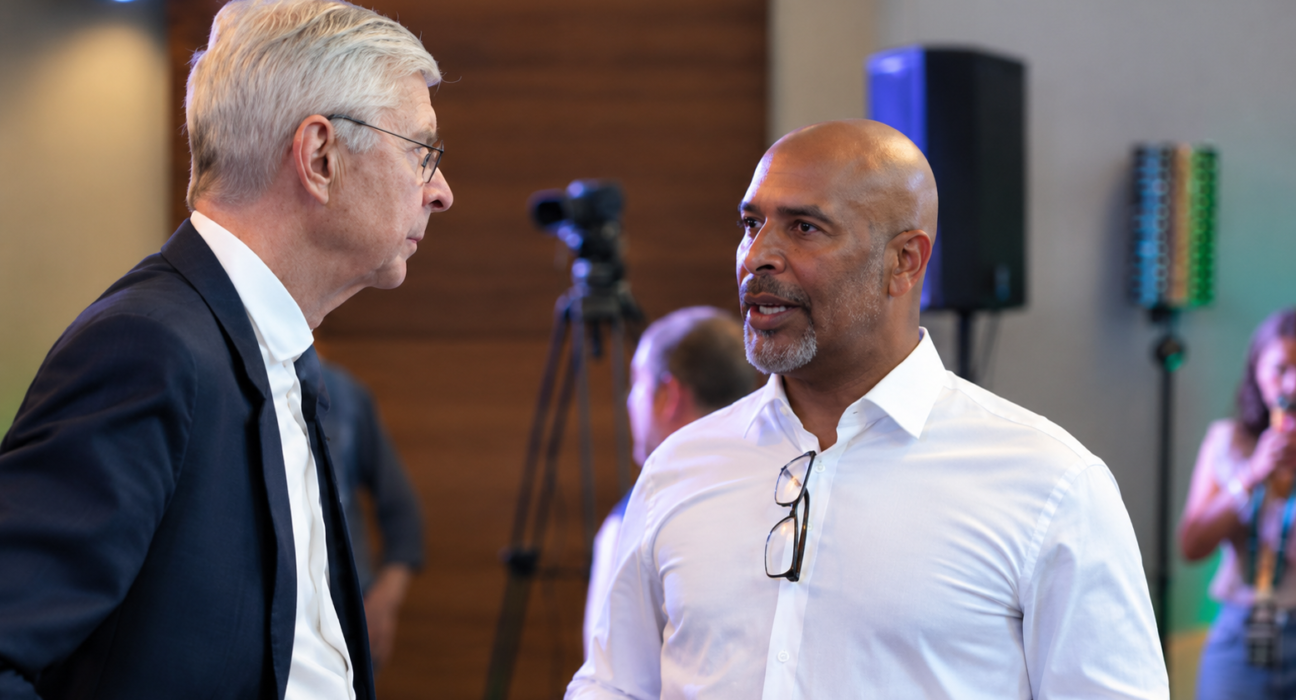
Arsène Wenger believes an African nation can win the FIFA World Cup, insisting the continent has made significant progress but must improve further to compete for football’s biggest prize.
The FIFA Chief of Global Football Development made the assessment at the CAF Strategy Conference in Santa Maria, Cabo Verde, where football leaders and technical experts reviewed Africa’s record performance at the 2026 World Cup and discussed preparations for the 2030 tournament.
“Africa has made a fantastic step forward. There is still another step to make. We want to see an African team win the World Cup, and the numbers show that it is feasible,” Wenger said, according to the Confederation of African Football (CAF).
His comments reflected the central message of the three-day conference: Africa has demonstrated that it can compete consistently at the highest level, but further tactical, technical and organisational improvements are needed to turn that progress into a realistic challenge for the world title.
Africa’s 2026 campaign provided substantial evidence for Wenger’s optimism. A record 10 African nations competed at the expanded 48-team tournament, with nine progressing from the group stage to the Round of 32 — the highest progression rate achieved by the continent in World Cup history.
Morocco continued to lead the way by reaching the quarter-finals for a second consecutive tournament, while debutants Cabo Verde also advanced to the knockout stage. The collective performance strengthened the argument that African teams are narrowing the gap with established football powers.
However, Wenger cautioned that the difference between competing and winning at the highest level can be extremely small. He highlighted improvements in tactical discipline, team organisation and concentration as major reasons African sides proved more difficult to beat in 2026.
“In the past, African teams sometimes lost because of a lack of compactness, too much distance between the lines and inconsistent concentration,” Wenger said. “At this World Cup, it was difficult to beat any African team because the discipline and organisation were at the top level.”
He added that matches at the elite level are often decided by fine margins, making attention to detail essential if African teams are to progress further in future tournaments.
“We are very close, but a small percentage can cost you the game,” he said, stressing the importance of improving chance creation, counter-pressing, penalty-box presence and late-game management.
Wenger also warned against relying exclusively on statistics, arguing that attitude, mental strength, unity and a strong value system remain important components of success.
The conference brought together CAF officials, national-team coaches and football development specialists to translate the lessons of 2026 into practical measures ahead of the 2030 World Cup. The discussions covered coaching, preparation, youth development, tactical flexibility and the structures required to sustain progress across African football.
CAF President Patrice Motsepe has also reiterated his belief that an African nation will eventually become world champions, calling for the continent to build on its recent progress through investment and measurable improvements.
For Wenger, the challenge is no longer simply to prove that African teams can compete. The next objective is to convert their growing competitiveness into the consistency and precision required to win the tournament.
With the 2030 World Cup approaching, Africa’s record showing has strengthened its ambitions. Whether that progress can produce the continent’s first men’s World Cup champion will depend on how effectively its football nations address the remaining gaps..