


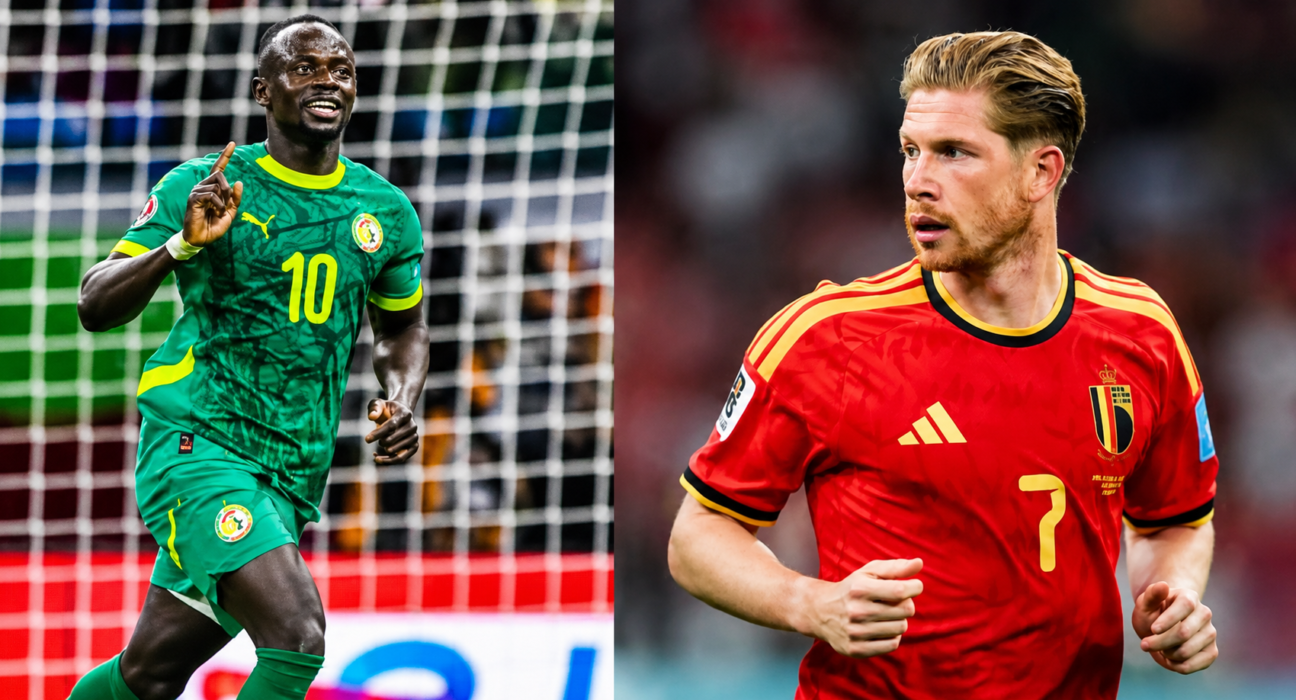
-
A Shakespearean Tale of Momentum, Belief, and the Latest Winning Goal in FIFA World Cup History
By Paul Lucky Okoku
“There is a tide in the affairs of men, which, taken at the flood, leads on to fortune.”
— William Shakespeare, Julius Caesar
Momentum is football’s most dangerous player. Once it changes jerseys, history often changes with it.
Football is never over until destiny blows the final whistle.
There are football matches.
There are unforgettable football matches.
Then there are matches that become theatre before they become history.
Belgium versus Senegal belonged to that final category.
For eighty-six minutes, Senegal appeared destined to write one of Africa’s most memorable World Cup stories.
Disciplined.
Fearless.
Organized.
Clinical.
The Lions of Teranga had Belgium where they wanted them. Habib Diarra gave Senegal the deserved first-half lead. Ismaïla Sarr doubled it early in the second half with a finish that seemed to push Belgium toward the edge of elimination.
At 2-0, the Cinderella story was already being written.
Then football did what only football can do.
It tore up the script.
Belgium, beaten for most of the match and seemingly out of ideas, found life through Romelu Lukaku in the 86th minute. Suddenly, belief returned. Then Youri Tielemans equalized in the 89th minute. In just a few dramatic moments, Senegal’s comfort became panic, Belgium’s frustration became faith, and a match that seemed finished entered extra time.
Then came the final twist.
A VAR-awarded penalty deep in extra time.
Tielemans stepped forward.
Nerveless.
Composed.
Certain.
His penalty in the 120+5th minute sent Belgium into the last 16 and ended Senegal’s brave World Cup dream.
Shakespeare understood centuries ago what football continues to teach today.
Momentum is never permanent.
Victory is never secure.
Destiny belongs to the team that recognizes the tide before it disappears.
On this night, Belgium caught the tide.
Senegal were swept away by it.
The Lions Roared First
Senegal did not play like underdogs.
They played like a team that understood the assignment.
They pressed with intelligence, defended with discipline, and attacked with purpose. Their first goal was not an accident. It was a reward for early aggression and belief.
Diarra’s goal gave Senegal the platform.
Sarr’s second goal gave them the dream.
For long stretches, Belgium looked disjointed. Kevin De Bruyne was quiet. Jeremy Doku struggled to impose himself. Romelu Lukaku began on the bench. Belgium’s body language suggested frustration, not control.
By the time Senegal led 2-0, the story appeared clear.
Africa was about to celebrate.
Europe was about to mourn.
But football does not always respect what appears obvious.
Then Came Lukaku
When Lukaku scored in the 86th minute, it felt like either a consolation or a warning.
It became a warning.
That goal changed the emotional temperature of the match.
Before Lukaku scored, Senegal were managing the game.
After Lukaku scored, Senegal were surviving the game.
That is the difference only players truly understand.
One goal can change tactics.
One goal can change body language.
One goal can change belief.
Belgium, who had looked defeated, suddenly looked dangerous. Senegal, who had looked secure, suddenly looked vulnerable.
The tide had begun to turn.
*One Hundred and Sixty-Two Seconds*
Then came the second Belgian blow.
Tielemans.
Eighty-ninth minute.
Belgium 2.
Senegal 2.
Just like that, the Cinderella story was no longer a celebration. It had become a test of survival.
For eighty-six minutes, Senegal had held the pen.
Then Belgium grabbed the manuscript and began rewriting the ending.
This is why football remains the greatest unscripted drama in sport.
No lead is safe.
No script is final.
No match is over until the final whistle.
Extra Time and the Cruelty of Knockout Football
Extra time became a battle of legs, lungs, nerves and memory.
Senegal kept going and kept going until they could go no more.
They still attacked.
They still chased.
They still believed.
But Belgium had found something deeper than tactics. They had found momentum.
As a former international midfielder, I have learned that knockout football asks one final question after a team believes it has already answered all the others:
Can you survive the moment when everything begins to unravel?
Senegal tried.
Belgium endured.
Then came the handball appeal.
Then came the VAR decision.
Then came the penalty.
And then came Tielemans.
Tielemans and the Tide
A penalty in the 120+5th minute is not just a kick.
It is a nation’s breath held in silence.
It is a career compressed into a few steps.
It is courage measured from twelve yards.
Tielemans did not blink.
Belgium, once nearly buried, had found fortune at the flood.
Shakespeare’s words could not have been more fitting:
There is a tide in the affairs of men, which, taken at the flood, leads on to fortune.
Belgium took that tide.
Senegal were left with heartbreak.
What Paul Okoku Saw
Television follows the ball.
Former players also watch the space, the shoulders, the communication, movement off the ball, man-to-man marking, and the silence between passes.
What I saw was a match transformed by psychology.
Before Belgium’s first goal, Senegal were proactive.
After Belgium’s first goal, Senegal became reactive.
That was not because they lacked courage. It was because the burden of protecting history can become heavier than the ball itself.
Belgium’s passes became quicker.
Their movement became sharper.
Their belief became louder.
Senegal, meanwhile, began to feel the weight of the moment. Every clearance became desperate. Every Belgian attack became dangerous. Every whistle felt like destiny.
This was not merely a tactical comeback.
It was an emotional comeback.
The Tactical Lesson
Senegal’s plan worked for most of the match because they compressed space, attacked Belgium’s defensive gaps, and forced Belgium’s stars into uncomfortable areas.
But Belgium’s substitutions changed the rhythm.
Lukaku gave Belgium presence.
Tielemans gave Belgium composure.
The late pressure forced Senegal deeper and deeper until the match was no longer being played on Senegal’s terms.
That is the brutal lesson of knockout football.
You can be the better team for eighty-five minutes and still lose the match in the final moments.
The Human Lesson
Senegal deserve respect.
They were brave.
They were organized.
They were ambitious.
They came close to giving Africa another unforgettable World Cup night.
But Belgium deserve credit too.
They were nearly gone.
They argued.
They struggled.
They substituted some of their biggest names.
They looked finished.
Then they refused to die.
That is what great tournament teams do.
They survive the night when survival looks impossible.
*When the Clock Struck Midnight*
It was supposed to be Senegal’s Cinderella story.
It was supposed to be the night Africa looked at one of Europe’s giants and whispered, “how are the mighty fallen.”
But football, like Shakespearean tragedy, does not always obey the script.
Just when the fairy tale seemed complete, the clock struck midnight.
The tide turned.
Belgium refused to surrender.
Senegal refused to yield.
Yet football demanded one final twist.
Belgium squeezed through to the Round of 16.
Senegal walked away heartbroken, but never disgraced.
One team advanced.
The other earned the admiration of the football world.
And the FIFA World Cup gained another unforgettable chapter.
There are matches won by tactics.
There are matches won by talent.
And then there are matches won by timing, nerve, resilience, and destiny.
Belgium found all four.
On a night when Senegal seemed destined to make history, Belgium found the tide.
And, taken at the flood, it led them to fortune.
Football had delivered another reminder that no lead is safe, no script is final, and no dream is fulfilled until the referee blows the final whistle.
Paul Lucky Okoku
Published Online
FIFA Legend | CAF Silver Medalist | Former Nigerian Super Eagles & Flying Eagles International | Former Olympic Qualifying Team Member | Football Analyst | Founder, GTCF