


-
Why John Obi Mikel’s television analysis matters beyond the studio
-
Football intelligence is not measured only by how much you know—it is measured by how clearly you can explain what you know.
By Paul Lucky Okoku
The modern game needs more than former players. It needs interpreters who can teach the game.
The highest level of football knowledge is not complexity. It is clarity.
A great analyst does not show the audience how much he knows. He helps the audience understand what they are seeing.
Most football supporters can recognize a good pass.
Far fewer can explain why it was good.
That is where football analysts become important.
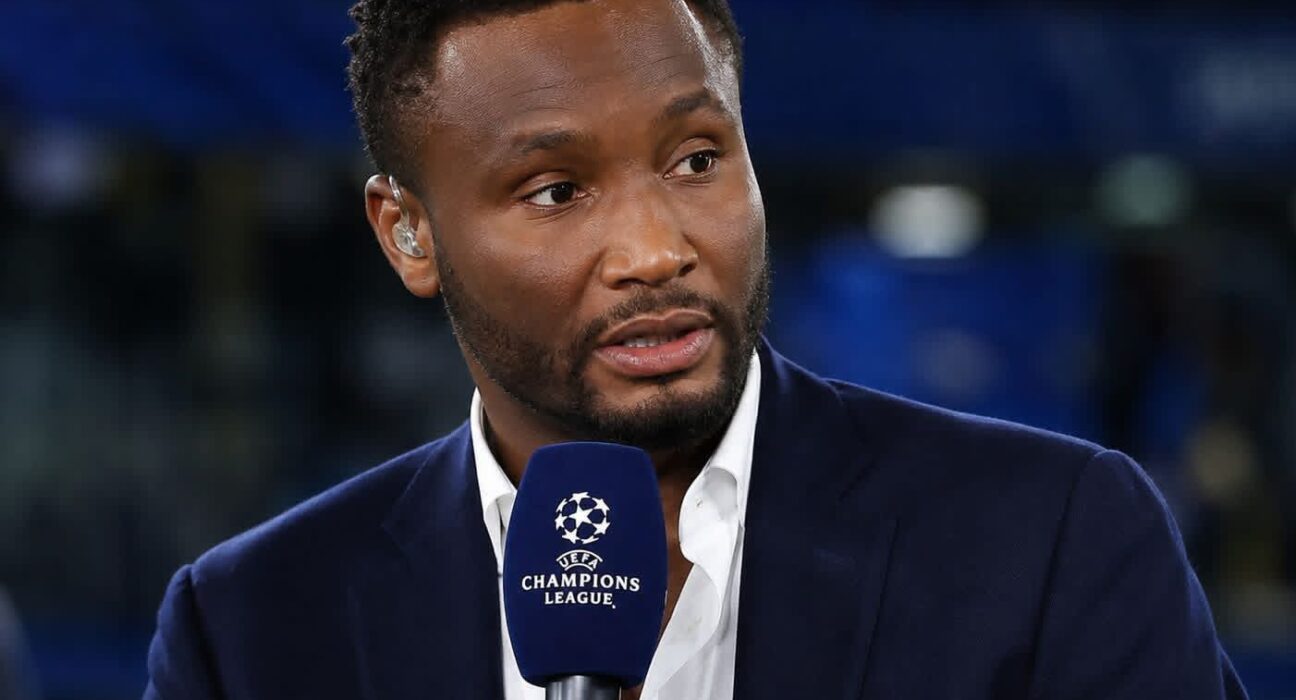
John Obi Mikel’s recent World Cup television appearances demonstrated that elite football experience alone is not enough. What separates exceptional analysts from ordinary commentators is the ability to translate complex football concepts into simple, understandable language without losing accuracy.
Watching The Game Through Different Eyes
While watching the World Cup analysis surrounding the matches between Brazil and Morocco and later Australia and Türkiye, I found myself paying close attention not only to the football but also to the analysts.
One person stood out.
John Obi Mikel.
What impressed me was not merely that he understood the game. That part was expected.
After all, this is a player who competed at the highest level, won major trophies, captained Nigeria, and helped lead the Super Eagles to AFCON glory in 2013 under the late Stephen Keshi.
Elite football knowledge comes with such a career.
What impressed me was something else.
His ability to communicate.
His ability to teach.
His ability to explain football in a way that a lifelong supporter, a casual viewer, and even a young child could understand.
That is a rare skill.
Knowledge Is Common. Communication Is Rare.
Many former players become television analysts.
Not all become effective communicators.
Some speak primarily to other football professionals.
Others rely on clichés.
Some assume viewers already understand tactical language.
The best analysts do something different.
They simplify without oversimplifying.
They educate without sounding arrogant.
They explain without talking down to the audience.
Watching Mikel, I noticed how naturally he broke down situations.
Why a team was pressing.
Why a defender was caught out of position.
Why a midfield structure was succeeding.
Why a coach’s adjustment mattered.
Most importantly, he explained the “why.”
The audience could follow his thinking.
That is the hallmark of effective analysis.
Football Analysis Is More Than Talking
Many people mistakenly believe football analysis is simply discussing what happened.
In reality, quality analysis involves several distinct skills.
*Observation*
The analyst must see details others miss.
Movement off the ball.
Defensive shape.
Transitions.
Pressing triggers.
Positional rotations.
The casual viewer often follows the ball.
The analyst follows the game.
Interpretation
Seeing something is one thing.
Explaining its significance is another.
Why did Morocco dominate portions of possession against Brazil?
Why did certain attacking spaces appear?
Why did defensive mistakes occur?
The analyst connects actions to outcomes.
Context
Football does not exist in isolation.
A good analyst understands historical context.
Team identity.
Player psychology.
Tournament pressure.
Coaching philosophy.
The best analysis tells viewers not only what happened but why it mattered.
Communication
Perhaps the most important skill of all.
An analyst can possess tremendous football knowledge.
Without communication skills, that knowledge remains trapped.
The greatest analysts are educators.
The Difference Between Intelligence And Displaying Intelligence
One of the most impressive aspects of Mikel’s performance was his restraint.
He did not appear interested in proving how intelligent he was.
Instead, he focused on helping the audience understand.
There is a difference.
Many people confuse expertise with complexity.
True expertise often appears simple.
A university professor who truly understands a subject can explain it to freshmen.
An experienced engineer can explain complicated systems to non-engineers.
A skilled football analyst can explain tactics to viewers who never played professionally.
Simplicity is often evidence of mastery.
Not the absence of it.
Why Former Players Do Not Automatically Become Great Analysts
Playing football and explaining football are different professions.
Likewise, football history has shown that outstanding players do not automatically become outstanding coaches. While some successfully make that transition, many discover that coaching requires a different set of skills—leadership, communication, organization, teaching, and man-management.
The same principle applies to broadcasting and football analysis.
A player may have enjoyed an extraordinary career and still find it difficult to communicate complex football concepts to a television audience.
Conversely, someone who never played professionally may become an exceptional analyst through study, observation, preparation, and communication skills.
In the United States, many respected sports analysts built successful careers without competing at the elite professional level of the athletes they cover. Their credibility comes not from championships won or matches played, but from their ability to research, interpret, communicate, and help audiences understand the game. This is why viewers continue to follow analysts and commentators across major platforms such as ESPN, Fox Sports, and USA Today Sports. The audience ultimately values insight, clarity, and understanding.
The ideal situation occurs when elite playing experience is combined with elite communication ability.
That is what audiences have witnessed from John Obi Mikel during the 2026 FIFA World Cup.
His playing career provides credibility.
His football intelligence provides insight.
His communication skills provide accessibility.
Together, they create value for viewers.
The lesson is straightforward: *great players earn admiration through what they accomplished on the pitch, while great analysts earn respect through their ability to help others understand the game. When both qualities exist in the same person, the audience benefits the most.*
The Globalization Of Football Broadcasting
Football television today serves a worldwide audience.
Analysts are no longer speaking exclusively to supporters in Lagos, London, Buenos Aires, or Madrid.
They are speaking to the world.
That requires clarity.
That requires cultural awareness.
That requires an understanding that millions of viewers may be watching football seriously for the very first time.
In that environment, clear communication becomes essential.
Mikel demonstrated an appreciation for this reality.
His analysis was informed enough for serious football followers yet understandable enough for newcomers.
That balance is difficult.
He achieved it.
The Stephen Keshi Legacy
Watching Mikel also reminded me of a quality often associated with the late Stephen Keshi.
Leadership.
Keshi possessed the ability to communicate across generations, backgrounds, and experiences.
I had the privilege of being in South Africa during Nigeria’s victorious AFCON campaign in 2013.
One reason that team succeeded was communication.
Players understood their responsibilities.
They understood expectations.
They understood the mission.
Communication creates clarity.
Clarity creates confidence.
Confidence creates performance.
The same principle applies in football broadcasting.
What Makes An Effective Football Analyst?
The true test of a football analyst is not whether viewers agree with every prediction or opinion.
Football is too dynamic and unpredictable for that.
The real test is whether the analyst helps viewers understand the game more deeply.
As the 2026 FIFA World Cup unfolds, John Obi Mikel has consistently demonstrated an ability to identify key moments, explain tactical decisions, and simplify complex football concepts without oversimplifying them.
His analysis reflects the perspective of someone who understands football at the highest level and can communicate that understanding to a global audience.
He does not rely on dramatic statements or sensational opinions to attract attention.
Instead, he relies on observation, experience, preparation, and clarity.
The best analysts help audiences see things they might otherwise miss.
They explain not only what happened, but why it happened.
In his World Cup appearances to date, Mikel has demonstrated that ability repeatedly.
His ability to combine elite playing experience with clear communication has enabled viewers from different football backgrounds and levels of understanding to follow and appreciate the finer details of the game.
Personally, this is my first time watching Mikel extensively in the role of a television analyst. What has impressed me most is not simply his football knowledge—which was never in doubt—but his communication skills, his diction, and his ability to teach the game in a clear and relatable manner.
Those qualities matter, particularly in the American media market, where football continues to attract new audiences. The ability to explain the game in a way that both seasoned supporters and newcomers can understand is a valuable skill, and Mikel appears to possess it naturally.
Based on what I have seen so far, he has a bright future in sports broadcasting. Success in television does not happen by accident. He has earned this opportunity by first making the transition into punditry and then developing the communication skills necessary to thrive in that environment.
I wish him continued success. More importantly, I believe he has positioned himself well for the future because he has done the work required to create those opportunities for himself.
That is one of the reasons his work as an analyst continues to earn respect from football audiences around the world.
The Future Of Football Analysis
Football is becoming increasingly sophisticated.
Data analytics.
Performance metrics.
Artificial intelligence.
Tactical innovations.
Sports science.
All of these continue to shape the modern game.
Ironically, as football becomes more complex, communication becomes more important.
The audience still wants clarity.
The audience still wants understanding.
The audience still wants trusted voices.
The future belongs to analysts who can bridge the gap between elite football knowledge and everyday understanding.
That bridge is where education happens.
That bridge is where audiences grow.
That bridge is where football becomes richer for everyone.
Conclusion: The Gift of Making Football Understandable
John Obi Mikel’s recent television appearances offer a valuable reminder.
The role of a football analyst is not merely to describe the game.
It is to interpret it.
To teach it.
To simplify it.
To illuminate it.
The best analysts help viewers see things they would not otherwise notice.
The very best help viewers understand why those things matter.
As the 2026 FIFA World Cup continues to unfold, John Obi Mikel has demonstrated that ability.
And in modern football broadcasting, that may be the most important skill of all.
*When knowledge meets humility and experience meets communication, football becomes more than a game—it becomes a classroom where the game is made accessible to everyone*.
Share Note
If this article added value or offered perspective, you’re welcome to share it with others. Thoughtful football conversations help deepen our understanding of the game and the people who shape it.
Paul Lucky Okoku
FIFA Legend | CAF Silver Medalist | Former Nigerian Super Eagles & Flying Eagles International | Former Olympic Qualifying Team Member | Football Analyst | Founder, GTCF