


By Yomi Kuku, Toronto Canada
Australia is facing growing controversy after Federation Square announced it would not host live screenings of Australia men’s national soccer team matches during the 2026 FIFA World Cup.
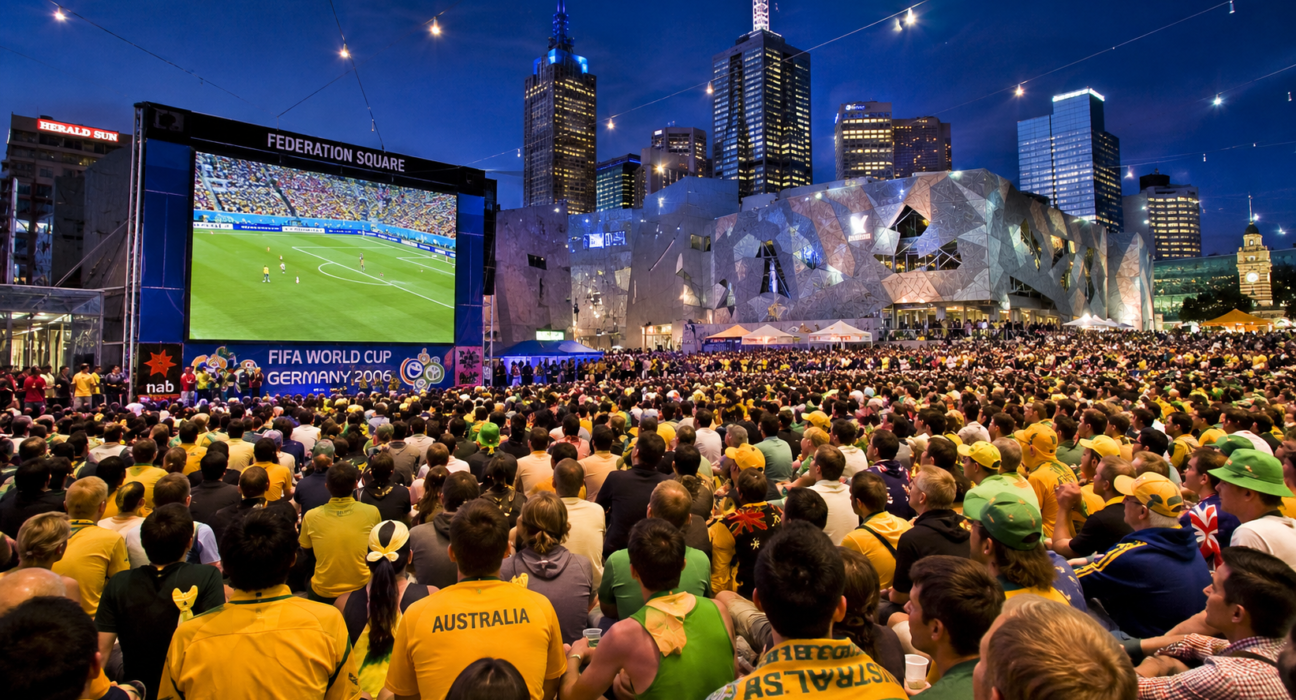
The Melbourne landmark has long served as a central meeting point for football supporters, drawing thousands of fans during previous World Cups to watch matches on giant outdoor screens.
Venue management said the decision was driven primarily by concerns over public safety and crowd behaviour. Officials cited past incidents involving flares, overcrowding and disruptive conduct, insisting that risk management had become a major factor in planning future public events.
Football Australia strongly criticised the move, arguing it would disappoint supporters and diminish the atmosphere surrounding the tournament. The organisation said Federation Square has become deeply connected to Australian football culture and should remain a place where fans can gather and celebrate together.
The decision has sparked divided reactions nationwide.
Some supporters argue football fans are being unfairly targeted compared with followers of other major Australian sports such as AFL and cricket, where crowd-related incidents have also occurred without leading to similar restrictions.
Others, however, support the venue’s stance, saying authorities have a responsibility to minimise risks associated with large public gatherings. Commentators backing the decision note that managing massive crowds in a single location presents serious security and logistical challenges.
The controversy comes as excitement builds ahead of the 2026 FIFA World Cup, with strong national support expected for the Socceroos. Federation Square became iconic during earlier tournaments—particularly in 2006—when emotional scenes of packed crowds helped cement football’s growing place in Australia’s sporting identity.
Political leaders and football officials are now facing mounting calls to reconsider the decision before the tournament begins.
What started as a venue management issue has rapidly evolved into a wider national debate over football culture, public space, fan identity and how Australia chooses to celebrate the world’s biggest sporting event.