


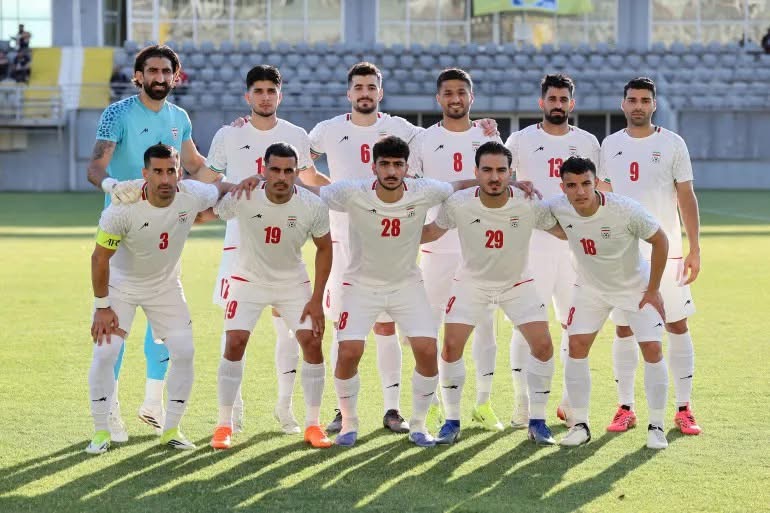
A growing diplomatic and sporting controversy has erupted at the 2026 FIFA World Cup after senior Iranian football officials accused FIFA President Gianni Infantino of failing to deliver on assurances that Iranian federation representatives would be granted access to attend the national team’s matches in the United States.
The dispute centers on the refusal of U.S. authorities to issue visas to 15 members of the Iranian Football Federation delegation, including veteran team supervisor Mahdi Mohammad Nabi, who says FIFA has failed to uphold commitments made to the federation ahead of the tournament.
Nabi, a senior official who also oversaw squad operations during Iran’s World Cup campaigns in Russia in 2018 and Qatar in 2022, voiced his frustration in an interview with Reuters after Infantino publicly highlighted Iran’s participation in the tournament as an example of FIFA’s ability to navigate complex geopolitical challenges.
“We hope Mr Infantino will indeed implement the words and promises he made to the Iran national team,” Nabi said.
“The FIFA regulations and protocols must be properly followed by both member federations and hosts.”
The controversy has cast an uncomfortable shadow over FIFA’s flagship tournament and intensified scrutiny of how immigration and security policies are affecting participating nations at a World Cup jointly hosted by the United States, Mexico and Canada.
The visa dispute has already had tangible consequences for Iran’s World Cup preparations.
Originally scheduled to establish its training base in Arizona, the Iranian national team was forced to relocate operations to Tijuana, Mexico, after uncertainty surrounding visas and travel arrangements made a U.S.-based camp impractical. The move has created additional travel demands for players and staff, who must now cross into the United States for matches before returning to Mexico.
While all Iranian players eventually received visas and were cleared to compete in the tournament, several federation executives, administrators and support personnel remain unable to enter the United States.
The absence of key officials has raised concerns within the Iranian camp, with players arguing that operational staff are essential to navigating the pressures and logistics of a World Cup campaign.
Midfielder Saeid Ezzatollahi told Reuters that FIFA had previously indicated federation personnel would be accommodated.
“We need all of our staff and especially our main guys that can help us through this tournament,” he said.
American authorities have defended the visa refusals on national security grounds.
According to statements cited by Reuters, U.S. officials rejected the applications because they would not allow the football delegation to “abuse this system to sneak terrorists into the U.S. under false pretenses.”
The decision comes amid heightened tensions between Washington and Tehran and follows broader restrictions affecting Iranian nationals seeking entry into the United States.
Iranian officials, however, have strongly rejected the allegations and accused U.S. authorities of politicizing sport. The Iranian Football Federation has previously described the visa denials as discriminatory and argued they undermine FIFA’s principles of equal access and fair competition.
The dispute has placed FIFA in a difficult position.
Although the governing body oversees the World Cup, it has limited authority over the immigration policies of host nations. FIFA has reportedly maintained that it cannot dictate visa decisions made by sovereign governments, even while acknowledging concerns raised by participating federations.
Critics argue that FIFA should have anticipated such complications when awarding hosting rights and should have secured stronger guarantees to ensure all accredited tournament personnel could participate without obstruction.
The issue has become part of a broader debate surrounding accessibility and immigration at the 2026 World Cup. Iran is not the only delegation to encounter visa-related challenges, with officials, referees and supporters from several countries reportedly facing difficulties obtaining travel authorization.
For Iran, the controversy highlights the unique political pressures surrounding its participation in a tournament partially hosted by a country with which it has had decades of strained diplomatic relations.
The team’s presence in North America has become one of the most politically sensitive storylines of the World Cup, with logistical complications, security concerns and visa restrictions often competing with football itself for attention.
Despite the challenges, Iran remains focused on its Group Stage campaign. Yet the federation’s public criticism of Infantino marks one of the strongest rebukes directed at FIFA during the tournament so far.
As the World Cup progresses, the visa dispute threatens to become a defining test of FIFA’s ability to balance global football governance with the realities of international politics.
For now, Iran’s message is clear: participation alone is not enough. The federation wants FIFA to ensure that every accredited member of its delegation receives the access and support it believes was promised before the tournament began.