

By Kazeem Ajibola Shoyebo
New technological tools and rule proposals are shaping up to be a major talking point ahead of the 2026 FIFA World Cup, with football’s rule-makers pushing innovations aimed at improving accuracy, speeding up play and enhancing the fan experience.
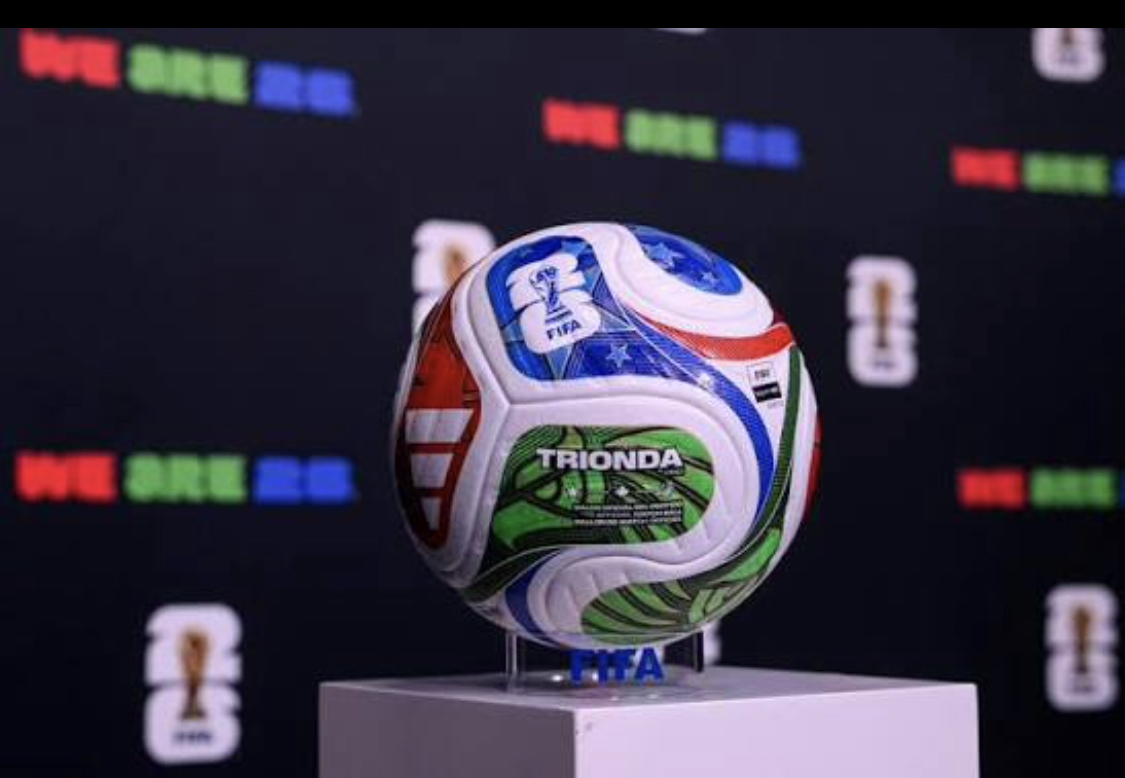
At the heart of the discussion is advanced ball technology that could be deployed at the World Cup to ensure corner kicks and other critical decisions are correctly awarded. The system, based on adidas’ connected ball technology already seen in previous tournaments, can automatically determine the last player to touch the ball before it goes out of play, enabling VAR officials to instantly notify referees and reduce errors on decisions such as whether a corner award is correct.
Football’s law-making body, the International Football Association Board (IFAB), is also weighing a range of other significant changes as part of an ongoing drive to tackle time-wasting and improve match flow.
Countdown clocks for throw-ins and goal-kicks: Referees could soon use a visible countdown to ensure teams take throw-ins and goal kicks more quickly, with potential sanctions for delays.
Substitution time limit: A proposal under discussion would limit the time a team has to complete a substitution to 10 seconds once the substitute enters the field.
Offside law trials: IFAB may launch formal trials for Arsène Wenger’s proposed “daylight” offside law — a variant aimed at clarifying offside decisions by focusing on visible space (or “daylight”) between attacker and defender, rather than current interpretation nuances.
These ideas reflect a broader push by IFAB to combat deliberate tempo disruption and time-wasting, building on earlier changes such as the expanded countdown visible to players and fans when goalkeepers must release the ball within eight seconds or risk conceding a corner — a rule already approved for the 2025/26 season.
Context and Technology Background
Connected or “smart” ball technology — including sensors embedded in the match ball — has been part of the semi-automated VAR framework used in recent major tournaments to help officials make faster, more precise offside and kick-point determinations. This system combines ball data with optical tracking to alert VAR officers to key moments almost instantly.
The potential deployment of such technology at the 2026 World Cup represents a continuation of FIFA’s push for accuracy and efficiency in important match decisions, drawing on years of development and testing in competitions like the FIFA Arab Cup and Club World Cup.
Bottom line: The 2026 World Cup could feature a suite of new technologies and law-change trials that would enhance officiating precision — from connected ball sensors correcting corner calls to countdown clocks for set pieces and substitutions — as football seeks to modernize its rules and reduce wasted time in play.
Leave feedback about this