

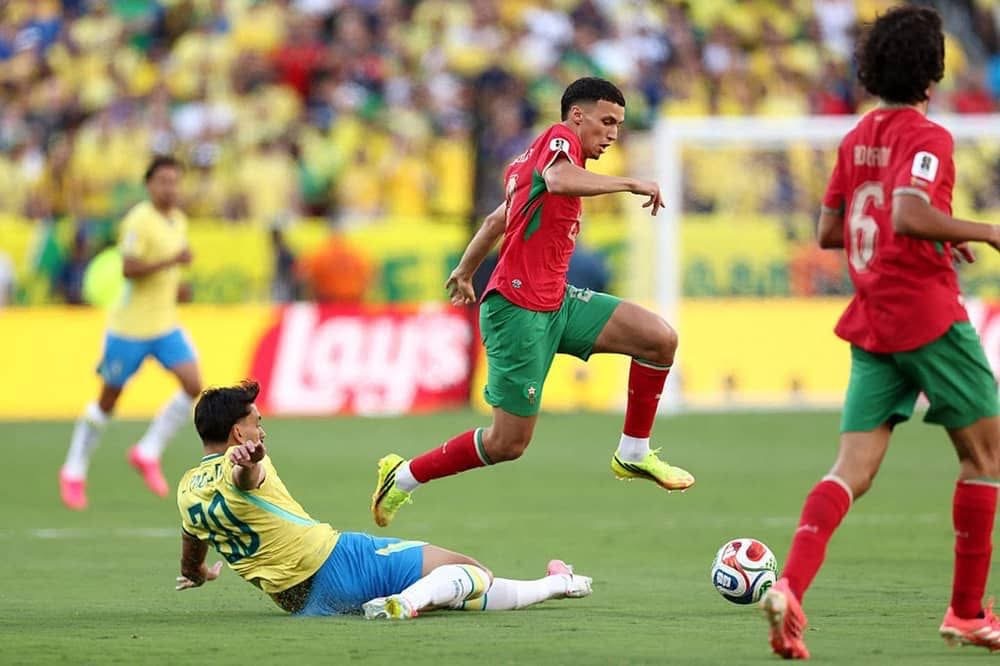
Brazil coach Carlo Ancelotti delivered a candid assessment of his team’s World Cup opener after the five-time champions were held to a 1-1 draw by Morocco, admitting that anxiety, poor ball retention and a lack of balance nearly derailed the Seleção’s campaign before it had properly begun.
While Vinícius Júnior’s stunning first-half equaliser rescued a point at MetLife Stadium, Ancelotti emerged from the match more concerned with Brazil’s overall performance than the result itself, acknowledging that Morocco exposed several weaknesses that must be corrected quickly if his side hopes to challenge for a sixth world title.
Morocco stunned Brazil in the 21st minute when Ismael Saibari capitalized on a swift counterattack to put the African champions ahead. The Atlas Lions looked sharper, more composed and tactically organized throughout much of the opening half, forcing Brazil into repeated errors and uncomfortable defensive situations.
For Ancelotti, the root of the problem was psychological as much as tactical.
“The team was anxious, gave the ball away and lacked balance on the field,” the Brazilian coach said after the match. He noted that his player appeared nervous in the early stages and struggled to establish control against a disciplined Moroccan side.
The Italian manager, appointed to lead Brazil into the 2026 World Cup after an illustrious club career that included multiple UEFA Champions League titles, admitted that the Seleção failed to reproduce the positive signs shown during their pre-tournament preparations and recent friendly victories.
Brazil’s midfield in particular came under scrutiny.
Morocco’s aggressive pressing repeatedly disrupted Brazil’s build-up play, forcing turnovers and preventing the South Americans from establishing sustained possession. Several analysts observed that Brazil struggled to maintain shape and cohesion in central areas, allowing Morocco to dictate long stretches of the contest.
Ancelotti acknowledged those shortcomings, pointing specifically to the number of unnecessary possessions his team surrendered during the first 45 minutes.
According to the coach, Brazil’s inability to protect the ball and maintain structural balance created many of the difficulties they encountered against Morocco’s energetic midfield and organized defensive setup.
If there was a positive takeaway for Brazil, it came after halftime.
Ancelotti’s tactical adjustments brought greater stability to the side, and Brazil looked considerably more dangerous after the break. The Seleção enjoyed more possession, attacked with greater purpose through the wide areas and spent extended periods in Moroccan territory.
“The second half was much better,” Ancelotti said, pointing to the improved intensity and organization shown after the interval.
Yet even with that improvement, Brazil were unable to find a winning goal.
Morocco’s defensive discipline, led by an experienced back line and goalkeeper Bono, frustrated repeated Brazilian attacks and ensured the Atlas Lions secured a valuable point from one of the tournament’s headline fixtures.
Despite the disappointing performance, Ancelotti stopped short of expressing alarm.
The veteran coach emphasized that opening matches at World Cups often present unique challenges and argued that the result itself was not catastrophic given the quality of the opposition and the stage of the competition.
Rather than focusing on the dropped points, Ancelotti highlighted the lessons Brazil must take from the encounter.
He stressed that the team needs to become more balanced, more aggressive in attack and significantly more secure in possession if it is to fulfill its championship ambitions in North America. (Football Italia)
The draw also served as a reminder of the scale of the challenge facing Ancelotti.
Although he arrived with one of the most decorated managerial résumés in football history, international tournament football presents a different environment from club management. Saturday’s match was his first World Cup game as a national-team head coach, and Morocco ensured it would be an uncomfortable introduction.
Questions are now emerging about Brazil’s midfield structure, defensive organization and overall tactical identity under the Italian. Commentators noted that while individual brilliance from Vinícius Júnior remains capable of changing matches, Brazil cannot rely solely on moments of inspiration if they are to compete with the tournament’s strongest teams.
For now, however, Ancelotti remains confident that improvement will come.
“The team will improve in the next match,” he said, expressing belief that Brazil’s opening-night nerves will fade as the tournament progresses.
Brazil’s next Group C assignment against Haiti now carries added significance. Another underwhelming display would intensify scrutiny on Ancelotti’s methods and team selection, while a convincing victory could quickly restore confidence inside the Brazilian camp.
For one night in New Jersey, though, the most successful nation in World Cup history left the stadium with more questions than answers, and a coach openly acknowledging that his team is still searching for the balance required to become champions.
Leave feedback about this