


By Kazeem Ajibola Shoyebo
The Confederation of African Football (CAF) has announced sweeping reforms to the continent’s football calendar, including the introduction of an African Nations League and the expansion of the Africa Cup of Nations (AFCON) from 24 to 28 teams, in a move set to redefine international football in Africa.
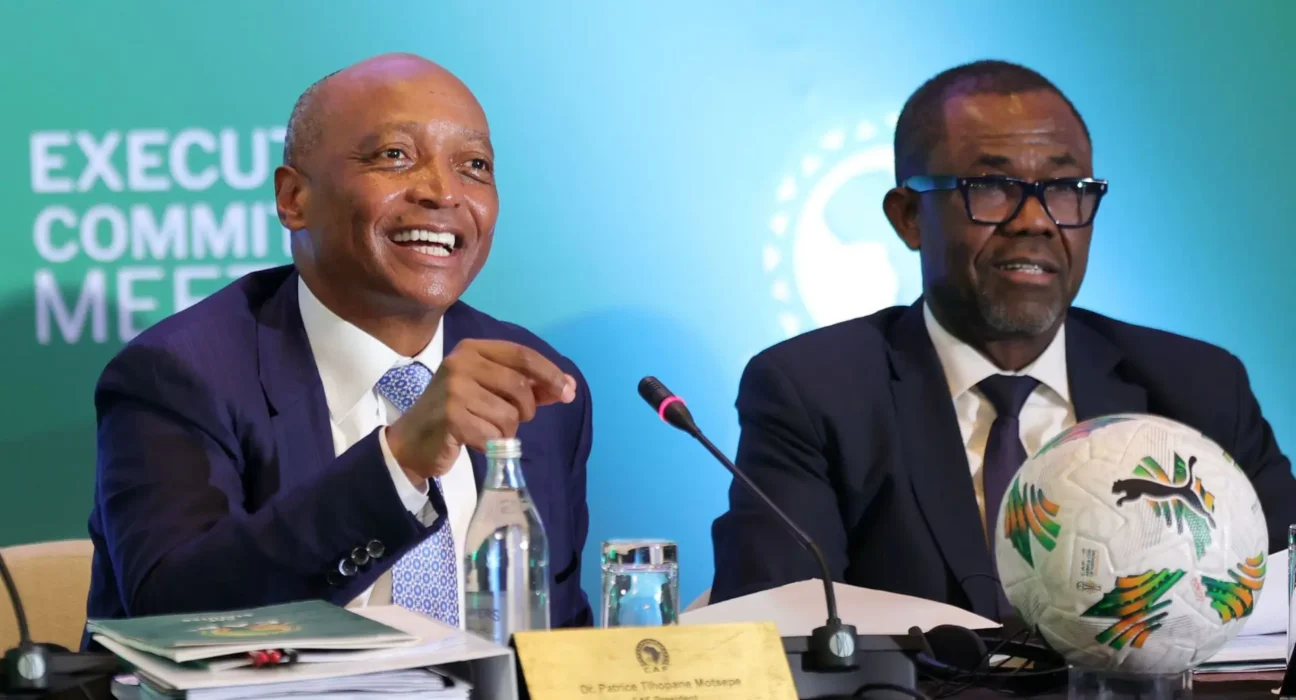
CAF President Patrice Motsepe confirmed the changes following an Executive Committee meeting, outlining a dual-competition structure designed to increase participation, improve scheduling consistency, and boost the global competitiveness of African football.
At the heart of the reforms is the creation of the African Nations League, a new annual competition expected to begin in 2029. The tournament will feature national teams competing within regional zones, with top performers advancing to a final tournament staged every two years at a neutral venue.
Motsepe said the initiative is aimed at ensuring regular, structured competition across the continent, addressing long-standing concerns about inconsistent international fixtures.
In parallel, CAF will expand AFCON to 28 teams, up from the current 24, allowing more nations to participate in Africa’s flagship tournament. The expansion builds on the previous increase from 16 to 24 teams in 2019 and reflects CAF’s ambition to broaden access and develop emerging football nations.
While specific details of the new 28-team format are yet to be fully disclosed, the change is expected to significantly alter qualification dynamics, with more than half of CAF’s 54 member associations potentially earning places at the finals.
CAF also confirmed that the 2027 AFCON, to be hosted by Kenya, Tanzania, and Uganda, will retain the existing 24-team format, with the expanded structure likely to take effect in subsequent editions.
Beyond expansion, the governing body plans to transition AFCON into a four-year cycle after a special 2028 edition, aligning it more closely with global tournaments such as the FIFA World Cup.
The introduction of the Nations League is expected to fill the competitive gap created by this scheduling shift, providing annual high-level matches and additional commercial opportunities for African football.
The reforms come at a turbulent time for CAF, following controversies surrounding recent AFCON decisions and growing calls for improved governance and transparency.
Despite the challenges, Motsepe insists the changes mark a bold step toward a more inclusive, competitive, and commercially viable future for African football.