

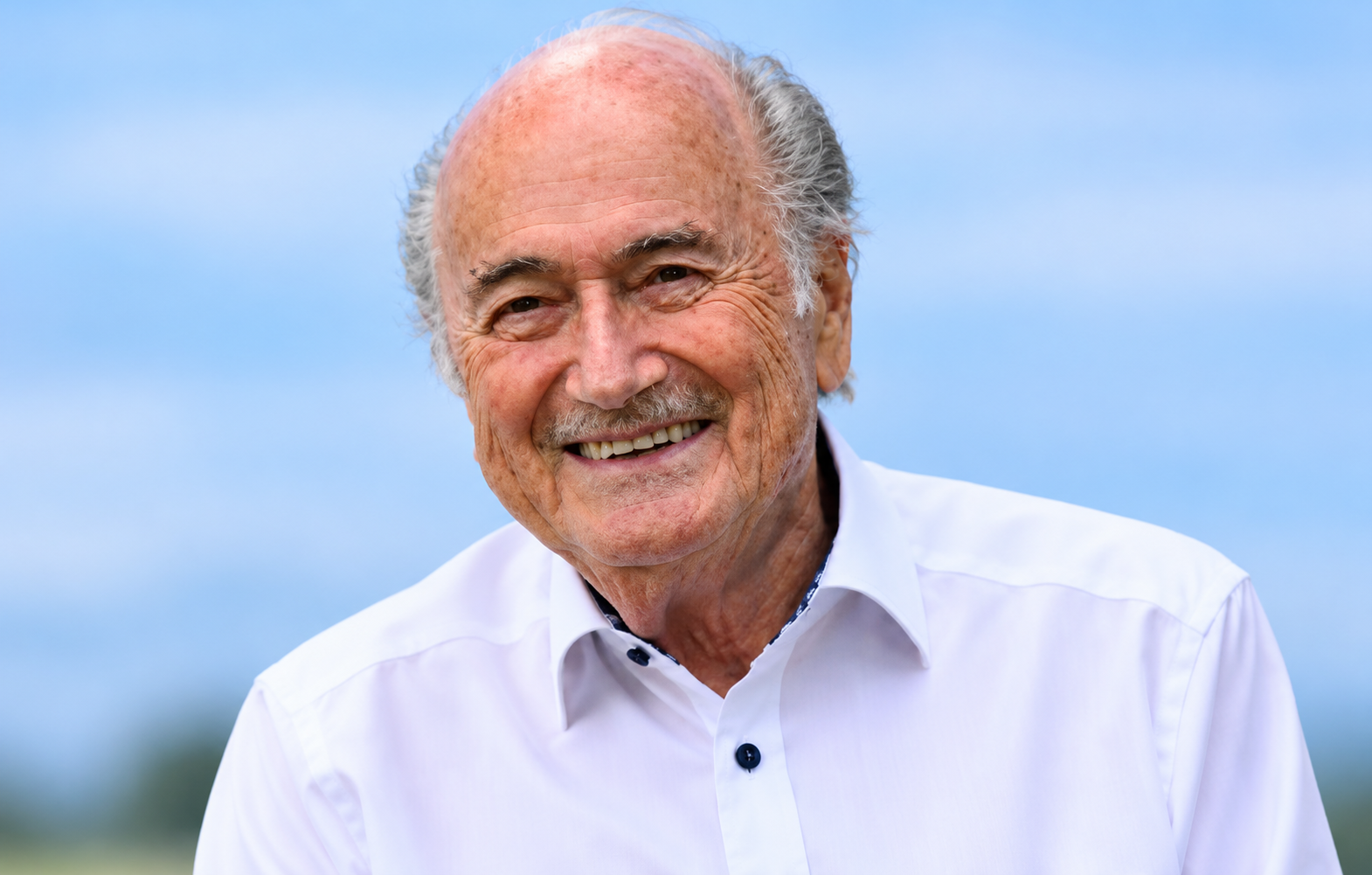
Former FIFA president Sepp Blatter has challenged Gianni Infantino’s eligibility to contest the 2027 FIFA presidential election, insisting that the incumbent has already exhausted the three-term limit stipulated in the governing body’s statutes.
Blatter maintained that Infantino’s election in February 2016, followed by his re-elections in 2019 and 2023, amounts to three presidential terms, making another re-election bid a fourth and therefore ineligible under FIFA’s rules.
The former FIFA chief reiterated his position in a statement published on his verified X account, @SeppBlatter, on Thursday, November 19, 2026.
“Simple question of facts – and of FIFA’s presidential term limits. On 2 June 2015, I announced that I was putting my mandate at the disposal. First Vice-President Issa Hayatou took over as interim FIFA President and organized an election congress.
“On 26 February 2016, Gianni Infantino was elected as FIFA President. This period, from February 2016 to June 2019, was Infantino’s first term. His subsequent re-elections in 2019 and 2023 brought him to the limit of three terms. He is therefore no longer eligible for re-election,” Blatter stated.
Infantino succeeded Blatter after the Swiss administrator announced his departure on June 2, 2015, following his re-election amid the corruption crisis that engulfed FIFA.
Issa Hayatou, then FIFA’s first vice-president, assumed interim leadership before an extraordinary FIFA Congress elected Infantino on February 26, 2016, in Zurich.
However, the interpretation of Infantino’s initial mandate remains at the centre of the controversy.
FIFA’s Council unanimously agreed in December 2022 that the 2016–2019 period should not count towards the presidential term limit because Infantino had completed the remainder of Blatter’s interrupted mandate.
Under that interpretation, Infantino’s 2019 and 2023 re-elections represent his first and second countable terms, respectively, leaving him eligible to seek another four-year mandate in 2027.
Nevertheless, the decision has attracted objections from former FIFA governance officials and human rights organisation FairSquare, which argue that the statutes do not provide an exemption for a shortened presidential term.
Article 33(2) of FIFA’s statutes states that no individual may serve as president for more than three terms, whether consecutive or not. The provision does not expressly distinguish between full and partial periods in office.
Former FIFA governance committee chairman Miguel Maduro has also questioned the governing body’s interpretation, arguing that Infantino’s three elections should count towards the statutory maximum.
The controversy comes as FIFA prepares for its 77th Congress, scheduled for March 18, 2027, in Rabat, Morocco, where the next presidential election will take place.
FIFA has announced Infantino, French Football Federation president Philippe Diallo and Japan Football Association honorary president Kozo Tashima among the proposed candidates whose nominations have been submitted for electoral review.
The dispute over the term-limit provision therefore presents a significant governance question ahead of the election: whether Infantino’s initial period in office should count as his first presidential term or be excluded as the completion of his predecessor’s mandate.
Leave feedback about this