

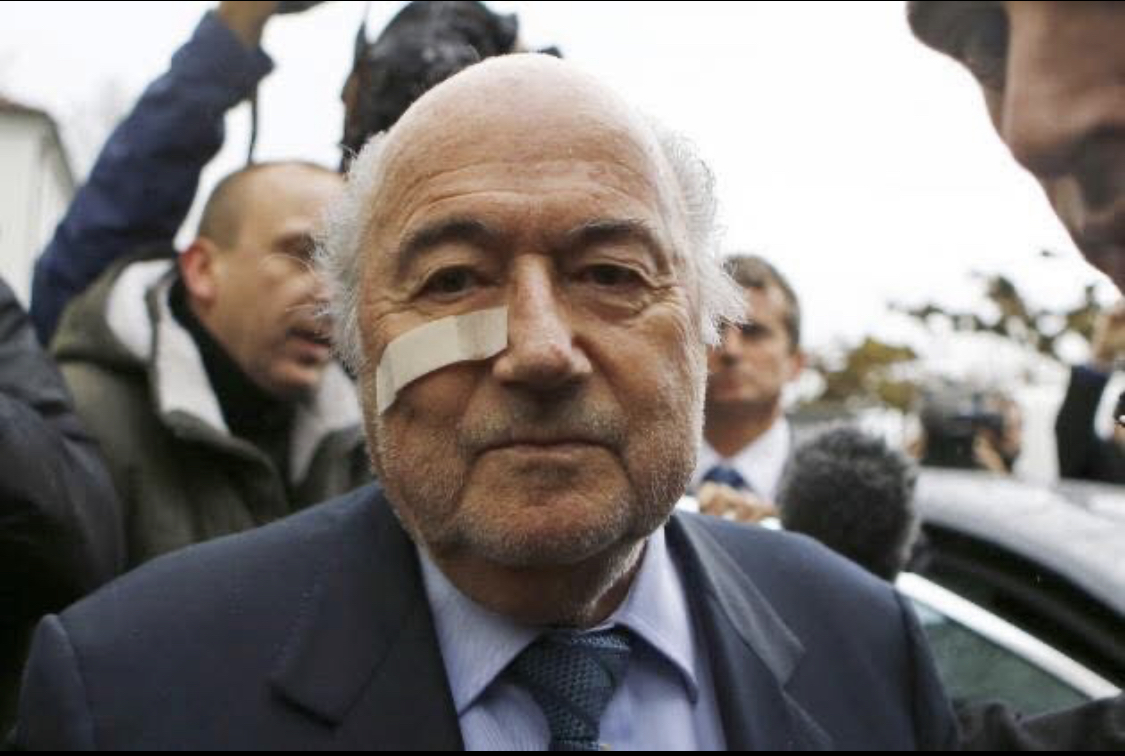
Former FIFA president Sepp Blatter has launched a scathing critique of current FIFA boss Gianni Infantino, warning that the 2026 FIFA World Cup is being reshaped by politics and commercial expansion at the expense of football’s traditional identity.
In remarks reported by multiple outlets, Blatter claimed the tournament, set to be hosted across the United States, Canada and Mexico, risks drifting away from its core sporting values, pointing specifically to the growing influence of political figures, including former U.S. president Donald Trump.
Blatter went as far as suggesting that political involvement is overshadowing the game itself, bluntly stating that “Trump is in charge,” in reference to the perceived proximity between political power and tournament organization.
The criticism comes amid broader scrutiny of FIFA’s relationship with political leadership in the United States, which will host the majority of matches in the expanded tournament. Analysts and previous reports have noted Infantino’s close alignment with Trump, raising questions about football’s independence from political influence.
Blatter warned that such entanglement risks undermining the neutrality that has traditionally defined the World Cup, arguing that football should remain separate from geopolitical interests.
Beyond politics, Blatter also took aim at structural changes introduced under Infantino’s leadership—most notably the expansion of the tournament from 32 to 48 teams, making it the largest World Cup in history.
The former FIFA chief argued that the drive to make the competition “bigger and better” has diluted its essence, echoing earlier concerns that the tournament risks losing its uniqueness amid increasing commercialization and scale.
Blatter’s central argument is that these combined factors, political proximity, commercial ambition, and structural expansion, are eroding what once made the World Cup distinctive.
He has previously cautioned that overexpansion and external influence could cause football to “lose its soul,” reflecting a broader debate within the sport about balancing growth with tradition.
The 2026 edition is already shaping up to be unprecedented, with 104 matches and a heavy concentration of games in the United States. While FIFA maintains that the changes will enhance global participation and revenue, critics, including Blatter, argue that the transformation risks prioritizing spectacle and politics over sporting integrity.
Blatter’s comments add to growing criticism surrounding FIFA’s direction under Infantino, particularly as the governing body prepares for its most ambitious World Cup yet.
With political influence, expanded formats, and commercial pressures all in play, the debate over whether the 2026 tournament represents progress, or a departure from football’s roots, is likely to intensify in the months ahead.
Leave feedback about this