

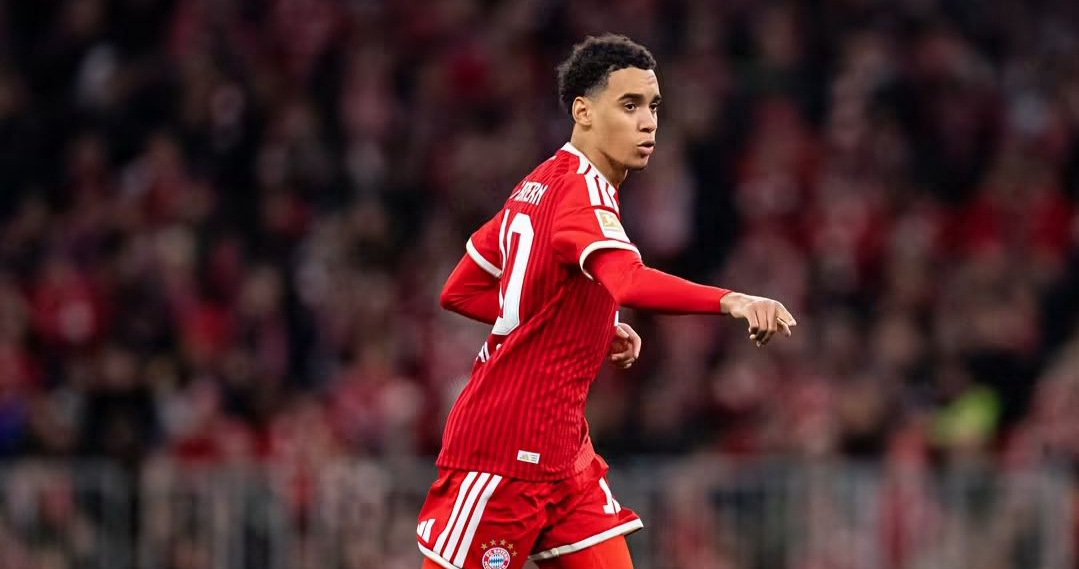
FIFPRO has criticised Bayern Munich’s leadership over repeated public comments questioning Jamal Musiala’s contract, accusing the German club of putting pressure on the injured midfielder and his representatives ahead of potential negotiations.
In a strongly worded statement, the global footballers’ union expressed concern that Bayern’s honorary president, chief executive and former chief executive had all made public remarks about Musiala’s contractual situation within a short period.
FIFPRO described the comments as a possible coordinated strategy to influence the player and his representatives, insisting that a club of Bayern’s stature should address contractual concerns privately rather than turning a player’s future into a public debate.
“Bayern has a duty of care to Musiala,” the statement said, warning that uncertainty surrounding a player’s future can affect their mental health, particularly during rehabilitation from injury.
The union argued that publicly discussing Musiala’s contract while he is recovering from injury adds unnecessary pressure at a time when the midfielder should be concentrating on regaining full fitness.
FIFPRO also defended the principle of contractual stability, maintaining that an injury or temporary dip in performance does not give a club the right to revisit terms it previously agreed with a player.
“Contracts are there to be respected,” the organisation stated, adding that the same principle applies in both directions: a player should not automatically expect improved terms simply because of a period of outstanding performances.
The intervention raises wider questions about the balance of power between elite football clubs and their players, particularly when contractual negotiations become entangled with injury concerns and long-term sporting plans.
One possible interpretation of Bayern’s approach is that the club wants to protect its investment and retain Musiala while avoiding a significant increase in his contractual value. Publicly questioning the existing agreement could also create negotiating pressure, although FIFPRO has not presented evidence of Bayern’s private intentions.
For Bayern, retaining a player of Musiala’s quality is undoubtedly important to its sporting ambitions. However, the manner in which the club handles his contractual situation could become just as significant as the eventual outcome of any negotiations.
FIFPRO concluded by expressing its support for Musiala and other players who honour their contractual commitments, urging clubs to demonstrate the same respect for agreements they have signed.
The statement adds another dimension to the growing debate surrounding Musiala’s future at the Allianz Arena, with the central issue now extending beyond his contract to questions of player welfare, professional respect and contractual security.
Leave feedback about this