

By Rasheed Adewuyi, New York
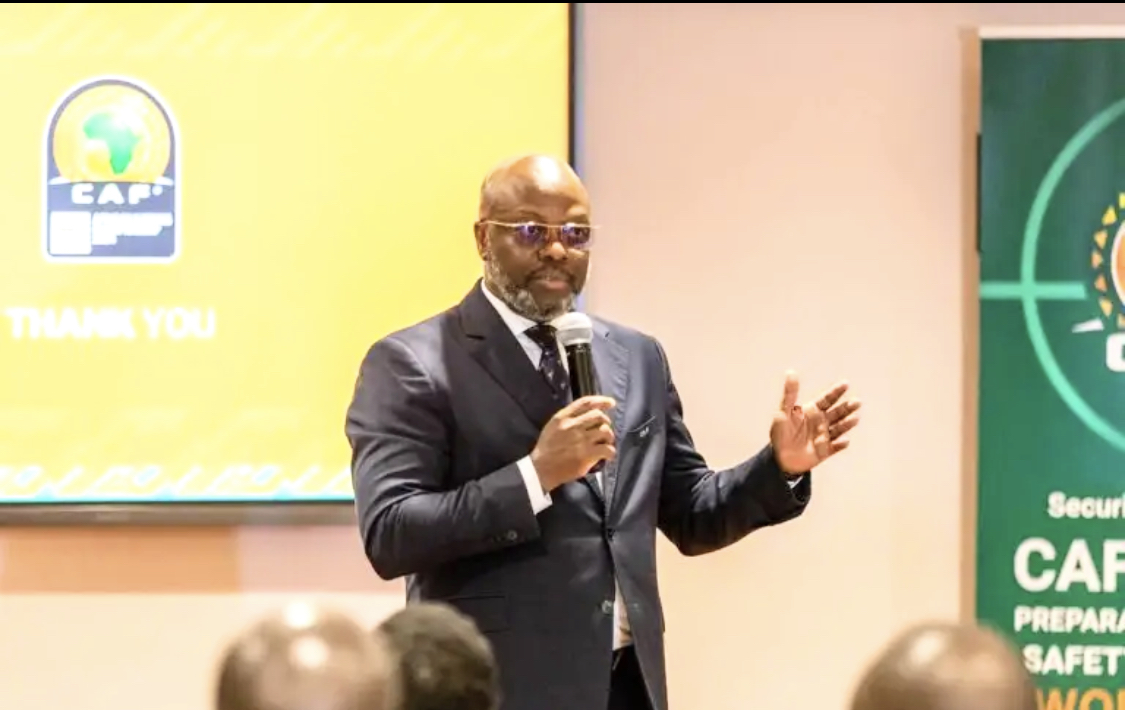
The Confederation of African Football (CAF) Head of Safety and Security, Dr Christian Emeruwa, has called on the Federal Government of Nigeria and the Nigeria Football Federation to immortalize late Super Eagles coach Adegboye Onigbinde in recognition of his enduring contributions to the development of Nigerian football.
Speaking in an exclusive interview with JerseyNumber12 on Saturday, Emeruwa described Onigbinde as a pioneering indigenous coach whose legacy was built on discipline, tactical innovation and the nurturing of young football talents across the country.
“Onigbinde was one of the few who advocated for the development of football at the grassroots level,” Emeruwa said. “He believed in homegrown coaches and players, and consistently defended that position while he was alive.”
Onigbinde made history when he became the first indigenous head coach of the Nigeria national football team in 1982, breaking the long-standing dominance of foreign managers and proving the technical competence of local professionals.
Beyond his achievements on the touchline, he later rose to prominence as a respected FIFA and CAF technical instructor, contributing to the development of modern coaching education, licensing systems and standardized training methodologies across African football.
Emeruwa noted that Onigbinde’s tenure with the national team was marked by discipline and orderliness, qualities he said helped restore structure and professionalism within the squad.
“He was a principled man who would never compromise his values just to achieve results,” Emeruwa said. “Onigbinde believed strongly in his principles because he was a man of integrity. He was very outspoken, which is why no one could manipulate him throughout his career.”
The FIFA Senior Safety and Security Officer also praised the late Modakeke High Chief for his commitment to personal development, noting that even in later years he continued to improve his educational background and technological knowledge in order to remain effective in his role.
“He went the extra mile to update himself in order to be at par with his colleagues,” Emeruwa said. “He could analyze the game using the computer and was very meticulous with his reports.”
According to Emeruwa, the late coach’s journey from humble beginnings to international recognition represents a remarkable chapter in Nigerian football history.
“I believe kudos should be given to a man who came from the local palace to achieve great things and leave an indelible mark on Nigerian football,” he added.
Onigbinde coached the Super Eagles at the 2002 FIFA World Cup and earlier managed the national team between 1982 and 1984, leading Nigeria to the final of the 1984 Africa Cup of Nations, where the team finished as runners-up.
Emeruwa said immortalizing the late tactician would be a fitting tribute to a man widely regarded as one of the pioneers who laid the foundation for the growth and professionalism of football in Nigeria.
Leave feedback about this