


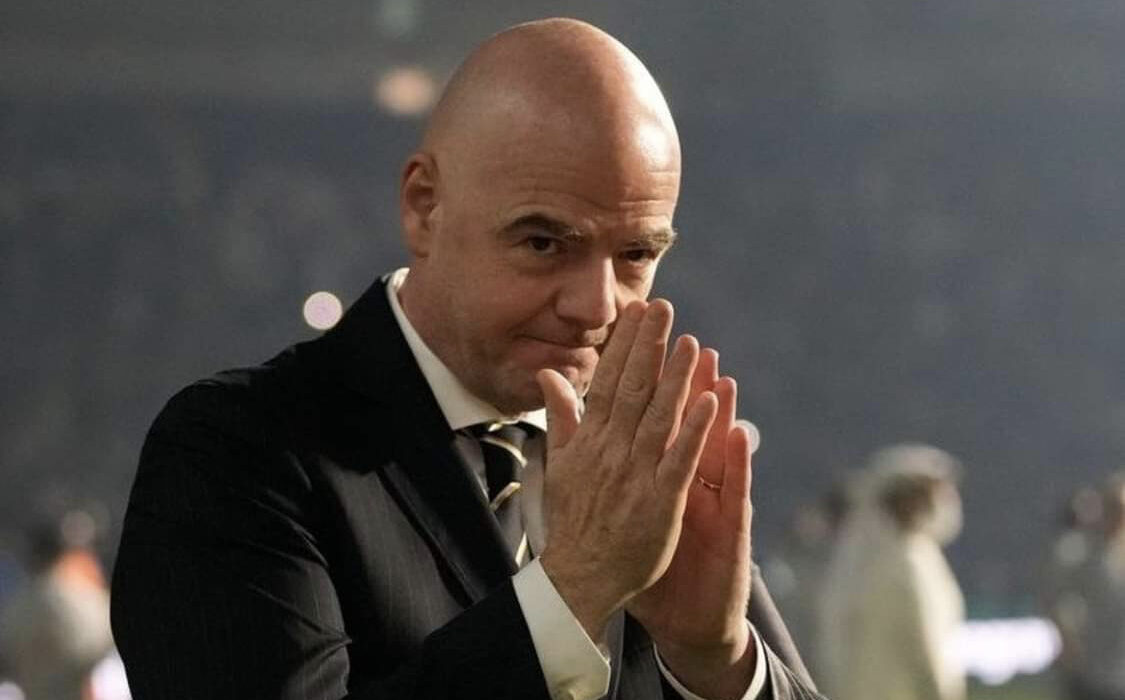
The collapse of the controversial FIFA Forward Enterprise (FFE) proposal has done little to ease the crisis engulfing FIFA President Gianni Infantino. Instead, the withdrawal of the plan has triggered fresh scrutiny after reports alleged that Infantino intended to become the head of the proposed commercial entity on an annual salary of US$30 million, more than five times his current remuneration as FIFA president. The allegations have intensified calls for accountability, with football’s governing bodies, sponsors and political leaders questioning not only the failed proposal but also FIFA’s governance under Infantino.
According to investigations by The Times, based on whistleblower claims, the original blueprint envisioned Infantino assuming the role of chief executive or commissioner of FIFA Forward Enterprise after the expiration of his presidential tenure. The reports alleged that the position would have come with a base annual salary of US$30 million before performance-related bonuses, making him one of the highest-paid executives in world sport. FIFA has publicly denied that any post-presidency role or remuneration package for Infantino was ever discussed.
The revelation has dramatically altered the narrative surrounding FFE.
Originally presented by FIFA as an innovative mechanism to unlock commercial value and increase football development funding for all 211 member associations, the proposal sought to establish a FIFA-owned commercial subsidiary responsible for media rights, sponsorships, ticketing and tournament operations while selling minority stakes to outside investors. FIFA argued that the structure would preserve governance while significantly increasing financial support through the FIFA Forward programme.
Instead, the proposal encountered fierce resistance across the football world.
UEFA was the first confederation to publicly reject the plan, describing the World Cup as “not for sale” and warning that private equity ownership would permanently alter football’s governance. CONCACAF followed by rejecting the proposal and questioning why FIFA required outside investment despite record revenues. The Asian Football Confederation (AFC) later aligned itself with UEFA and CONCACAF, arguing that the proposal had exposed serious weaknesses in FIFA’s consultation and governance processes. Those combined objections eventually forced FIFA to abandon the project altogether.
The controversy deepened after reports suggested that several commercial partners had privately contacted FIFA executives expressing concern over the reputational implications of the proposal. While no sponsor has publicly threatened to terminate its relationship with FIFA, reports indicate that corporate partners sought urgent clarification amid growing public criticism surrounding the governance of the organisation.
The allegations surrounding the proposed salary have become particularly controversial because Infantino already ranks among the highest-paid executives in international sport.
FIFA’s published financial disclosures have previously placed the president’s annual compensation at approximately CHF 4.7–5.2 million (around US$6 million), excluding benefits and allowances. Critics argue that the reported US$30 million package represented an extraordinary escalation at a time when FIFA insists its primary mission is global football development.
While opposition has intensified in Europe, North America and Asia, Africa has presented a more nuanced picture.
Unlike UEFA, CONCACAF and the AFC, the Confederation of African Football (CAF) has not issued a formal institutional statement either supporting or rejecting the FFE proposal. That silence has attracted considerable attention given Africa’s significance as FIFA’s second-largest voting bloc.
However, prominent African football officials have openly defended Infantino.
Former Nigeria Football Federation president Amaju Pinnick, who currently serves as Deputy Chairman of FIFA’s Men’s National Teams Competitions Committee and Special Adviser to the CAF President, publicly backed the proposal, arguing that it had the potential to strengthen football development globally and provide greater financial support for member associations.
Morocco has also emerged as one of Infantino’s strongest allies.
Royal Moroccan Football Federation president Fouzi Lekjaa, who also serves as CAF First Vice-President and a FIFA Council member, welcomed FIFA’s decision to withdraw the proposal but simultaneously reaffirmed his confidence in Infantino’s leadership. Lekjaa argued that FIFA’s recent development programmes had significantly benefited Africa and urged the football family to prioritise unity over institutional confrontation.
In addition, other African FIFA Council members—including Ahmed Yahya of Mauritania, Souleiman Waberi of Djibouti and Djibrilla Hamidou of Niger—have publicly voiced support for the FIFA president following the withdrawal of the proposal.
That divergence has highlighted an increasingly visible split within global football politics.
While European, North American and Asian leaders have focused on governance, transparency and institutional accountability, several influential African administrators continue to emphasise the unprecedented financial growth of FIFA Forward development funding under Infantino’s presidency.
Football governance experts argue that Africa’s position could prove decisive should Infantino’s leadership face a formal challenge. With 54 national associations, CAF represents one of FIFA’s most influential electoral constituencies, making its eventual institutional position likely to carry enormous political weight.
Pressure on Infantino nevertheless continues to grow.
Reports from Britain suggest that some football officials are discussing the possibility of an emergency FIFA Council meeting amid increasing dissatisfaction with the organisation’s governance. Although no formal resignation process has been announced, sources quoted by The Times indicate that opponents may attempt to unite behind a single challenger ahead of the next FIFA presidential election.
Among the names frequently mentioned as potential successors are Sheikh Salman bin Ibrahim Al Khalifa, president of the Asian Football Confederation, Victor Montagliani, president of CONCACAF, and Nasser Al-Khelaïfi, the influential chairman of Paris Saint-Germain and a leading figure within European football administration. None has formally declared an intention to challenge Infantino.
Whether those discussions ultimately translate into a genuine leadership contest remains uncertain.
What is increasingly clear, however, is that the FIFA Forward Enterprise controversy has evolved beyond a debate about commercial restructuring. It has become a referendum on governance, transparency and institutional trust inside world football.
Although FIFA has now withdrawn the proposal and pledged to work collaboratively with member associations on future reforms, critics argue that abandoning the project does not resolve the deeper questions surrounding how it was conceived, developed and presented to the football community.
For Gianni Infantino, the withdrawal of FFE may have ended one controversy.
It may also have begun the most significant political battle of his presidency.