

By Paul Lucky Okoku
Between Identity, Opportunity, and Performance: A Nation’s Football Dilemma
When selection becomes perception, the soul of a footballing nation is tested.
A national team must reflect not only the best players—but the system that produced them.
Football rewards performance—but nations are built on development.
There was a time when the journey to the national team jersey began on dusty pitches, in packed local stadiums, and through the unforgiving grind of Nigeria’s domestic league.
I remember conversations with Stephen Keshi, a leader both on and off the pitch, who would often remind me:
“Was it not our domestic league that produced you, Paul Okoku, me, Stephen Keshi, and generations of Nigerian football greats like Godwin Odiye, Segun Odegbami, Felix Owolabi, Adokiye Amiesimaka Mudashiru Lawal, Emmanuel Okala, Chibuzor Ehilegbu, Isa Shofoluwe, Christian Chukwu, and Henry Nwosu?”
That question was not rhetorical—it was foundational. It spoke to identity, pride, and a system that once worked.
Nigeria’s national team selection must strike a deliberate and fair balance between foreign-based professionals and home-based players, recognizing that sustainable football excellence depends not only on global exposure but also on the strength, dignity, and development of the domestic league.
The Debate: Meritocracy or Marginalization?
The argument often presented is simple: select the best players, regardless of where they play. On the surface, this sounds logical—football, after all, is a performance-driven sport.
But beneath that argument lies a deeper concern: when home-based players are consistently overlooked, the system begins to send an unintended message—that the local league is inferior, irrelevant, or merely a stepping stone with no real destination.
That perception is not just inaccurate—it is dangerous.
Because once a nation loses faith in its own development pipeline, it begins to outsource not just talent, but identity.
The Foreign-Based Advantage—And Its Limits
There is no denying that players in Europe and other top leagues benefit from advanced infrastructure, tactical exposure, and high-intensity competition. These advantages often translate into performance at the international level.
However, this does not automatically render home-based players incapable or unworthy.
In fact, many foreign-based players began their journeys in the *Nigeria Premier Football League*. The question then becomes:
If the foundation is local, why is the finished product valued only when exported?
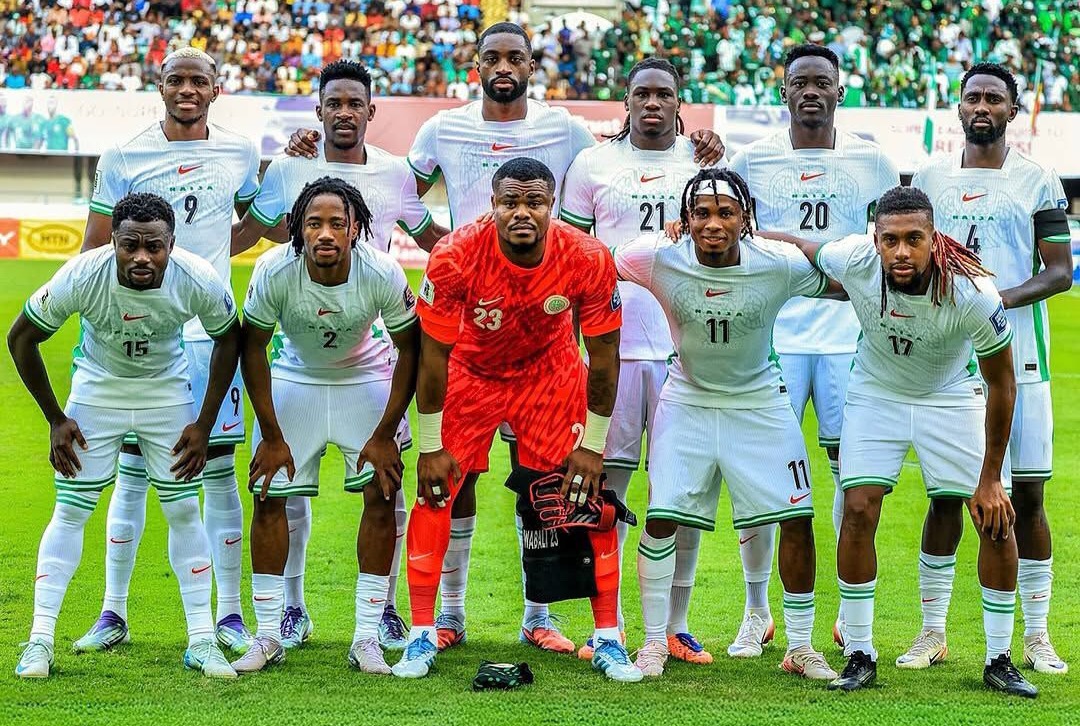
Eric Chelle’s Approach: A Step Toward Balance
The recent initiative by Super Eagles head coach Eric Chelle to scout and integrate players from the NPFL is a welcome development.
His strategy—combining domestic scouting with international selection ahead of the Unity Cup 2026—signals an attempt to restore balance.
Encouraged by figures like Austin Eguavoen and Friday Ekpo, this move acknowledges a long-standing concern: the underrepresentation of home-based talent.
Yet, the true test will not be in invitations—but in trust.
Will these players be given meaningful minutes?
Will they be judged by the same standards?
Or will they simply fill numbers?
Identity vs. Globalization in Modern Football
Modern football is increasingly global. Dual-nationality players and diaspora talents bring diversity, skill, and international experience.
They are assets—no doubt.
But a national team must never become detached from its roots. It must reflect the heartbeat of its football culture.
When local players are consistently sidelined, the national team risks becoming a representation of convenience rather than a symbol of collective footballing identity.
The Psychological Impact on the Domestic League
Selection patterns do more than shape squads—they shape belief.
If young players in the NPFL see no clear pathway to the national team, motivation declines. Investment in the league weakens. Fans disengage.
And over time, the domestic system begins to erode from within.
A strong national team cannot exist without a strong local foundation. The two are not competitors—they are partners.
When Nigeria’s Football Pipeline Worked
There was a time when talent discovery in Nigerian football was intentional, structured, and deeply rooted in competition.
During our playing days, national team selectors did not sit in offices waiting for foreign scouting reports or video clips from Europe. They travelled. They watched. They discovered.
Talent was identified from every corner of Nigeria through multiple competitive platforms that served as legitimate pathways to national recognition.
The journey often began with school football—particularly the fiercely competitive *Principal’s Cup*, where many young stars first announced themselves.
From there, opportunities expanded through the National Sports Festival, the NUGA Games (Nigerian University Games Association), the Challenge Cup, the National League, and other domestic competitions where talent was visible, tested, and continuously evaluated.
Perhaps one of the most effective developmental structures was the Nigerian Academicals, which later evolved into the Junior Eagles, and eventually the Flying Eagles.
That structure was not accidental—it was deliberate.
It was designed as a developmental bridge between youth promise and full national team readiness.
And it worked.
History itself provides the evidence.
From the Nigerian Academicals and Nigeria’s domestic scouting ecosystem emerged players such as Godwin Odiye, Thompson Usiyan, Adokiye Amiesimaka, Sylvanus Oriakhi, Solomon Etoroma, Chris Ogu, and others who demonstrated that elite talent could be discovered and nurtured locally.
The Flying Eagles era expanded that proven pathway, producing players such as *Henry Nwosu, Sylvanus Okpala, Kenneth Boardman, Paul Okoku, Henry Nwosu, Humphrey Edobor, Chibuzor Ehilegbu, Isa Shofoluwe, Franklin Howard*, and many others who successfully transitioned to the Super Eagles.
And these are merely a few examples—not an exhaustive list.
That pipeline produced players who did not merely wear the national jersey—they excelled in it.
This was a football ecosystem built on merit, visibility, repetition, and preparation.
Young players knew the pathway.
Coaches knew where to scout.
Selectors knew where talent lived.
And most importantly, players believed that exceptional performance at home could earn national recognition.
That belief mattered.
Because when a pathway is visible, ambition grows.
When the pathway disappears, hope fades.
The issue today is not whether foreign-based players deserve selection—they do, when merit supports it.
The real question is whether Nigeria has weakened a once-effective developmental structure by reducing the visibility and relevance of home-based talent.
A nation that once exported confidence from its domestic football structure must be careful not to replace that confidence with dependency.
A Responsible Middle Ground
This is not a call for sentiment over performance. It is not about quotas or favoritism.
It is about structure, fairness, and vision.
A responsible approach would include:
- Consistent scouting of NPFLmatches
- Structured integration camps for home-based players
- Equal evaluation metrics for all players
- Strategic use of tournaments like the Unity Cup to build depth
Meritocracy must remain—but it must be inclusive, not selective.
Conclusion: Restoring Respect, Rebuilding Trusty
The Nigerian national team jersey is more than fabric—it is a symbol of aspiration.
To automatically favor foreign-based players while relegating home-based talent to the margins is not just a technical decision—it is a philosophical one.
And philosophy shapes legacy.
The path forward is not exclusion—but balance. Not sentiment—but structure. Not division—but unity.
Because in the end, a nation’s strength is not measured by where its players play—but by how well it develops, recognizes, and believes in its own.
Football gave us a platform—but it was our system that gave us a chance. Preserve the system, and the platform will endure.
Share Note
If this article added value or offered perspective, you’re welcome to share it with others.
Paul Lucky Okoku
Former Nigerian International Footballer | Football Analyst
Published Online
Former Nigerian Super Eagles International
• CAF Africa Cup of Nations (AFCON) 1984 — Silver Medalist
• WAFU Nations Cup 1983 — Gold Medalist
• CAF Tesema Cup (U-21) 1983 — Gold Medalist
• FIFA U-21 World Cup, Mexico 1983 — Vice-Captain, Flying Eagles of Nigeria (Class of 1983)
Leave feedback about this