

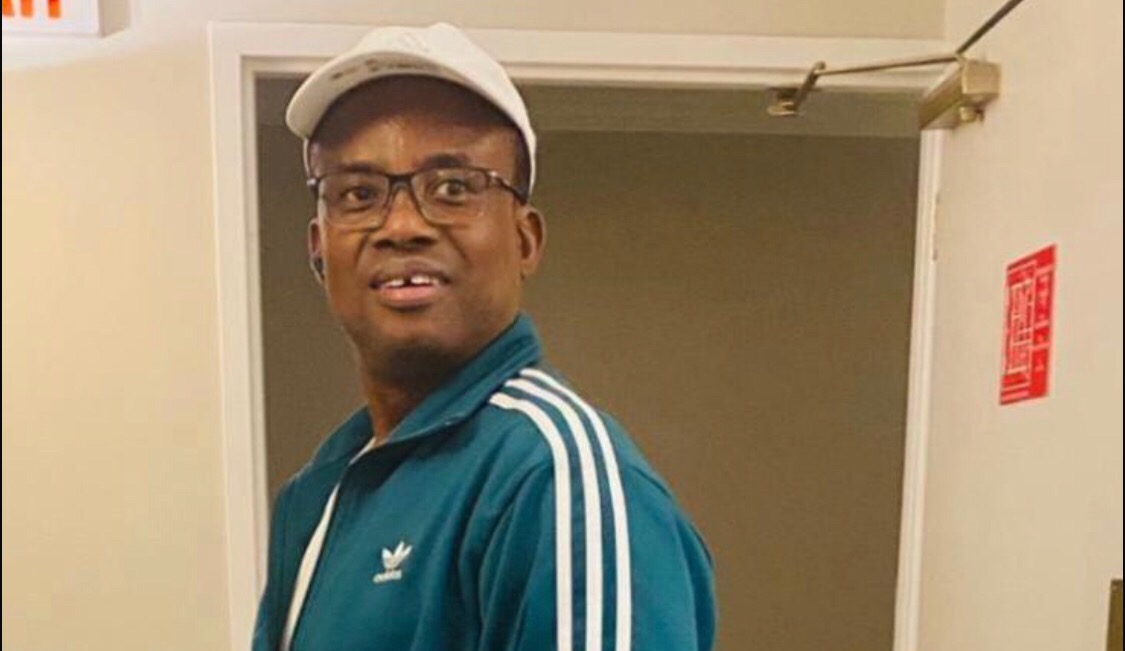
By Paul Lucky Okoku Former Nigerian International
-
WHY THE NFF’S REFEREE SUSPENSIONS MAY BE NIGERIA’S TURNING POINT
-
From continental rejection to global redemption—integrity begins with hard decisions at home
When I wrote “No Nigerian Referee for AFCON 2025: A National Embarrassment We Can’t Ignore,” I was not seeking sympathy for Nigerian football. I was issuing a warning.
CAF’s exclusion of Nigerian referees from the 2025 Africa Cup of Nations was not accidental, political, or personal. It was an institutional judgment—one rooted in years of troubling officiating standards, repeated controversies, and a credibility deficit that could no longer be ignored.
Today, something important has changed.
For the first time in a long while, the Nigeria Football Federation has chosen correction over convenience.
And that decision deserves recognition.
CAF SPOKE FIRST — NOW NFF HAS ANSWERED
CAF’s list for AFCON 2025 delivered a verdict without words: Nigeria’s refereeing system was no longer trusted. Not trusted to manage pressure. Not trusted to apply the Laws of the Game consistently. Not trusted to protect the integrity of elite competition.
As I stated clearly in my earlier column, CAF is home. And there is a Nigerian proverb that applies perfectly here: charity begins at home.
If your own confederation cannot vouch for you, FIFA will not rescue you.
That is why I have consistently maintained—and I stand by it—that Nigerian referees are already outside the serious consideration loop for the 2026 World Cup cycle. FIFA watches CAF closely. It relies on CAF’s technical confidence. When CAF steps back, FIFA rarely steps forward.
Global football does not reward sentiment.
It rewards structure, discipline, and trust.
THE SUSPENSIONS: NOT CHAOS, BUT CONTROL
The recent wave of suspensions across the NPFL, NNL, and NWFL has generated noise—as expected. But noise should not be confused with disorder.
What we are witnessing is delayed accountability finally arriving.
Match officials have been suspended—many indefinitely—not for opinions, but for decisions that clearly violated the Laws of the Game and materially altered match outcomes. Phantom penalties. Ignored fouls. Incorrect offside calls that denied obvious goal-scoring opportunities. Failure to protect goalkeepers. Arbitrary judgments that brought the game into disrepute.
Equally important, some officials were reviewed and exonerated where evidence was inconclusive.
That balance matters.
This is not a witch hunt.
This is governance.
And for that reason, I applaud the NFF.
WHY THIS MOMENT MATTERS
For too long, Nigerian football normalized what should have been unacceptable. We excused repeated “mistakes” as human error while ignoring patterns. We allowed intimidation, crowd pressure, and personal influence to creep into officiating. We failed to protect referees who officiated honestly—and failed to discipline those who did not.
That culture collapsed under its own weight.
CAF did not humiliate us.
Our tolerance for compromise did.
The NFF’s current stance sends a different message: officiating is not above scrutiny, and integrity is not optional.
That message is long overdue.
DISCIPLINE IS NOT THE END — IT IS THE RESET
Suspension does not destroy a referee’s future. In fact, it can save it.
Every serious football nation understands this truth: discipline is not punishment; it is course correction. Retraining, reassessment, and re-certification are how officials regain confidence—both their own and the game’s.
If Nigerian referees are to return to CAF competitions, officiate continental club matches, or be reconsidered for FIFA tournaments at any level, the pathway is clear:
• Technical excellence over familiarity
• Law-based decisions over crowd appeasement
• Protection for fair officials
• Zero tolerance for bias, inducement, or intimidation
• Promotion based strictly on merit
You cannot demand respect abroad while tolerating dysfunction at home.
I HAVE SEEN NIGERIA EARN GLOBAL TRUST BEFORE
I speak not as a commentator chasing relevance, but as someone who has lived Nigerian football on the global stage.
In 1983, as vice-captain of the Flying Eagles—Nigeria’s first national team to participate in a FIFA-organized tournament in Mexico—I witnessed what happens when competence meets credibility. Nigerian football was respected because it earned that respect, not because it demanded it.
Our referees once stood tall in Africa.
That history matters—because it proves decline is not destiny.
THE ROAD BACK IS OPEN — BUT IT IS NARROW
CAF has drawn a hard line.
The NFF has taken a necessary step.
And FIFA is watching quietly.
What happens next will determine whether Nigerian referees remain sidelined observers—or regain their rightful place in African and world football.
Integrity cannot be negotiated.
Dignity cannot be outsourced.
Respect must be enforced.
This is a turning point—if we have the courage to sustain it.
This column builds on my earlier publication:
No Nigerian Referee for AFCON 2025: A National Embarrassment We Can’t Ignore
You don’t return to the world stage by demanding trust—you earn it, one decision at a time.
By Paul Lucky Okoku,
Former Super Eagles International
Vice-Captain, Flying Eagles Class of 1983
Reflections, In My Own Words — Championing Fairness, One Story at a Time. ✍️
Leave feedback about this