

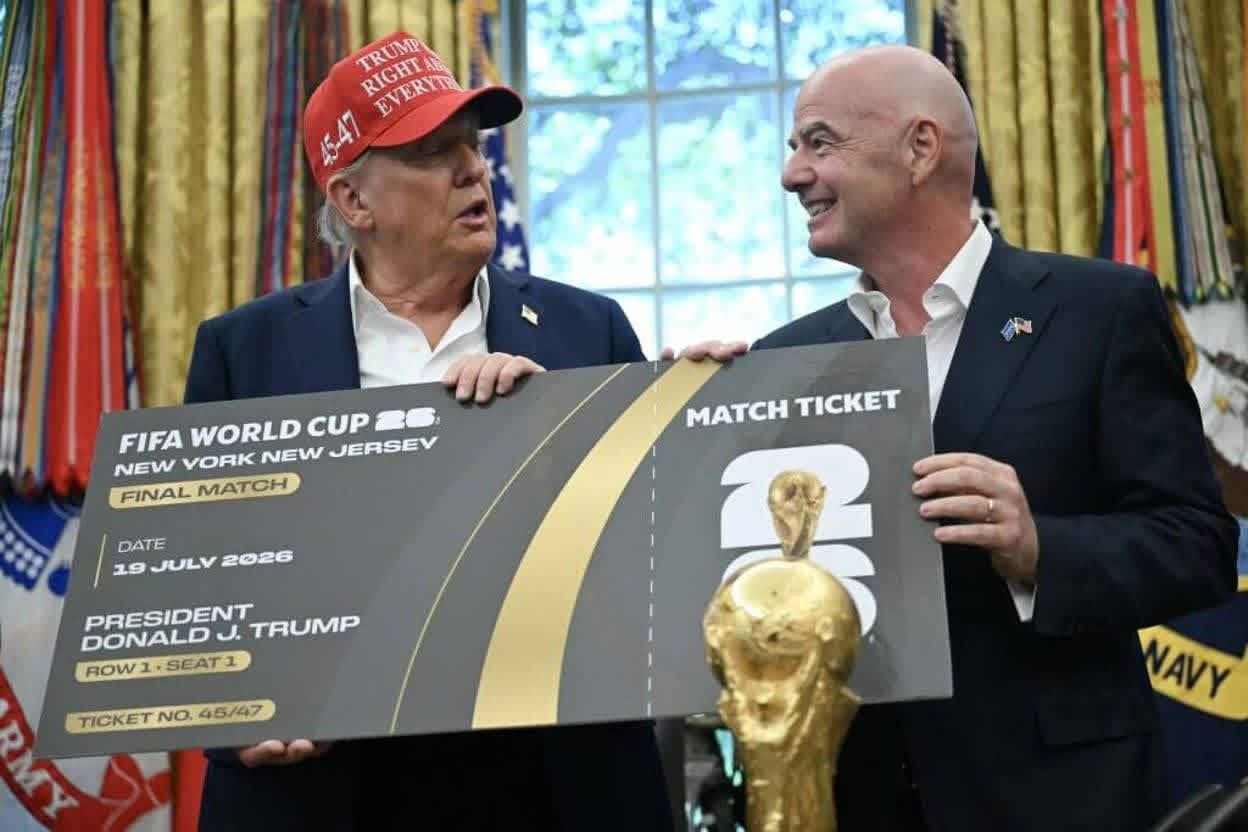
Several U.S. cities that hosted matches during the 2026 FIFA World Cup are seeking millions of dollars in legacy funding they say was promised by FIFA but has yet to be delivered, adding another challenge for world football’s governing body amid a broader governance crisis.
According to multiple executives from U.S. World Cup host city committees, FIFA officials repeatedly gave verbal assurances that each of the 11 American host cities would receive a US$1 million legacy contribution, similar to the initiative announced for the FIFA Club World Cup in 2025. However, months after the tournament concluded, the payments have reportedly not been made.
FIFA declined to comment publicly on the matter when approached by The Athletic, which first reported the dispute.
Cities Awaiting Promised Funding
The affected host cities include: Atlanta
- Boston
- Dallas
- Houston
- Kansas City
- Los Angeles
- Miami
- New York/New Jersey
- Philadelphia
- San Francisco Bay Area
- Seattle
Several host committees are now completing financial reports or winding down operations, creating uncertainty over how any future payments would be administered.
Origin of the Dispute
The controversy traces back to April 2025, when FIFA President Gianni Infantino announced that each of the 11 U.S. host cities for the FIFA Club World Cup would receive US$1 million to support grassroots football, community mini-pitches and other social development projects. FIFA publicly described the initiative as a legacy investment designed to leave lasting benefits in local communities.
According to officials involved with preparations for the 2026 FIFA World Cup, FIFA management later indicated that the same contribution would also apply to the considerably larger World Cup tournament. However, unlike the Club World Cup announcement, no formal public commitment was ever issued for the World Cup host cities.
Billions in Public Spending
The payment dispute comes against the backdrop of unprecedented public investment by U.S. state and local governments.
While FIFA retained most revenues generated from:
- Ticket sales
- Broadcasting rights
- Sponsorship agreements
- Hospitality
- Concessions
Host cities assumed responsibility for much of the tournament’s operational costs, including:
Security and policing Transportation, infrastructure, Fan festivals, Airport operations, Traffic management, Stadium compliance and Public services.
Kansas City alone reported approximately US$86.8 million in public funding from Missouri, Kansas and local governments, excluding private donations and additional tax incentives provided to secure hosting rights.
Economic Impact Debate
FIFA has consistently argued that hosting the expanded 48-team World Cup would generate significant long-term economic benefits.
The organization estimated the tournament would contribute approximately US$30.5 billion to the U.S. economy through tourism, hospitality, infrastructure spending and related business activity. Independent economists have frequently cautioned that economic impact projections for major sporting events often exceed the measurable long-term financial returns, making post-event evaluations particularly important.
Philadelphia Case Highlights Delays
Questions surrounding the legacy funding are not entirely new. In May 2026, The Philadelphia Inquirer reported that Philadelphia had yet to receive the promised US$1 million legacy payment connected to the 2025 FIFA Club World Cup, despite FIFA having publicly announced the initiative the previous year. The report stated that ten of the eleven Club World Cup host cities were still awaiting payment at that time.
Pressure Mounts on FIFA Leadership The funding dispute emerges as FIFA President Gianni Infantino faces mounting political pressure within international football.
Recent weeks have seen growing criticism from UEFA and several continental confederations following the collapse of Infantino’s proposal to sell a stake in FIFA’s commercial rights to private investors. The failed initiative has intensified questions over governance, transparency and decision-making within FIFA ahead of the organization’s next presidential election cycle.
A major leadership crisis has erupted within FIFA following President Gianni Infantino’s controversial and now-abandoned proposal to sell a $4.2 billion stake in World Cup commercial rights. Key FIFA executives and confederations have voiced opposition, with Secretary General Mattias Grafstrom lamenting the internal turmoil and stressing a return to core values. Arsène Wenger distanced himself from the plan, calling its withdrawal necessary. Infantino’s influence has waned significantly, with UEFA, CONCACAF, and the Asian Football Confederation (AFC) denouncing the lack of transparency and consultation, and some officials allegedly strategizing to remove him from office. Several European associations have withdrawn support for his re-election, while Morocco, Qatar, Kuwait, Lebanon, and Sri Lanka continue backing him.
Infantino now faces challenges to prevent an Extraordinary Congress and must repair fractured alliances before the March 2027 election. Meanwhile, former FIFA President Sepp Blatter endorsed Norwegian football leader Lise Klaveness as a possible successor, citing her integrity and stance against external investment. The unfolding events signal a deep power struggle and calls for systemic reform at FIFA.
Although the unpaid legacy contributions represent a relatively small financial commitment compared with FIFA’s multibillion-dollar revenues, host city officials argue the issue has become symbolic of broader concerns regarding accountability and commitments made to local organizing partners.
For now, the affected cities continue to await clarity on whether the promised legacy funding will ultimately be delivered.
Leave feedback about this