

-
When One of Football’s Smallest Nations Took the Defending Champions to the Edge
By Paul Lucky Okoku
A Moral Victory: When Defeat Still Announces a Nation’s Arrival
The Moral Victory That Felt Larger Than Defeat
Not every football match is remembered because of who won.
Some matches are remembered because they changed how the world viewed a team.
This was one of those matches.
Argentina advanced to the next round.
Cape Verde advanced something just as important—its reputation.
I must be honest.
For most of my life, Cape Verde was not a country I knew deeply. In fact, like many people I have spoken to over the years, I knew very little about Cape Verde as a nation, let alone its football.
It was only a few years ago, when Nigeria played Cape Verde in a FIFA World Cup qualifier, that I became curious enough to learn more about the country. That curiosity opened my eyes to its history, its Portuguese heritage, its Atlantic island geography, its tourism, its fishing industry, its vibrant diaspora, and the quiet football identity it had been building.
What many people may not know is that Cape Verde is an archipelago of ten volcanic islands in the Atlantic Ocean, off the coast of West Africa. For decades, its economy has relied heavily on tourism, fishing, maritime services, and the resilience of a large diaspora whose remittances have helped support the country. Its beautiful beaches, year-round sunshine, volcanic landscapes, and rich Creole culture have made it an increasingly attractive destination for visitors from around the world.
That is one of football’s greatest gifts:
Football does not simply produce champions.
It introduces nations to the world.
It places unfamiliar flags on television screens.
It inspires millions of people to open maps, search the internet, and learn about countries they may never have heard of before.
Some will now discover Cape Verde’s beaches.
Others will read about its fishing industry, its music, its Portuguese influence, and its growing tourism sector.
Others may even decide to visit.
That is the extraordinary power of football.
It does not only create sporting heroes.
It creates global visibility for entire nations.
In one unforgettable evening, Cape Verde received something money cannot buy:
Global recognition.
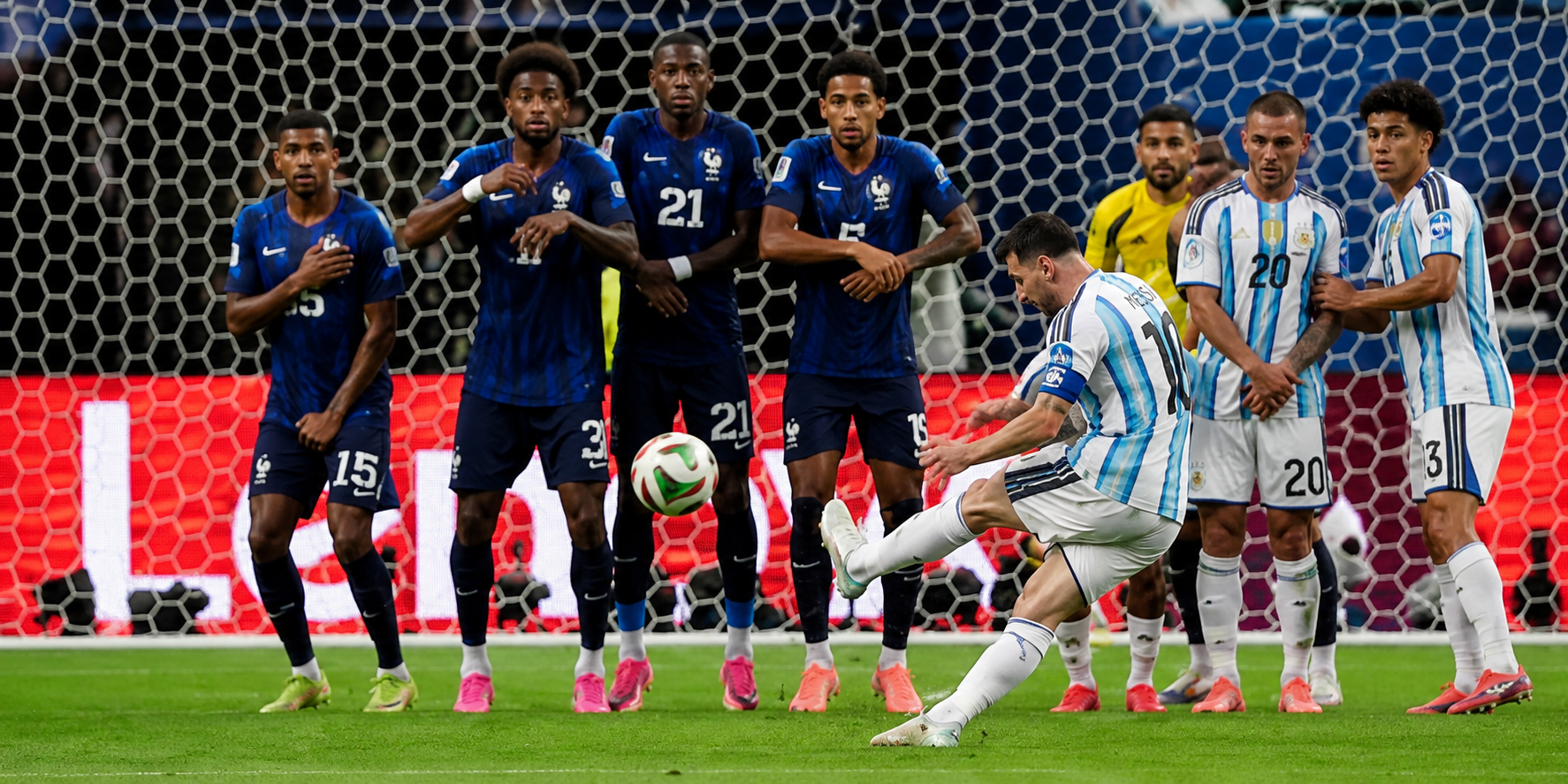
They stood opposite the defending world champions, Argentina—a team led by Lionel Messi, arguably the greatest player of this generation—and refused to be intimidated.
They scored twice.
They pushed the defending champions into extra time.
And they forced one of football’s greatest nations to fight desperately for survival.
Even Lionel Messi’s celebration after Argentina regained the lead revealed the intensity of the contest. It was not the celebration of someone expecting an easy evening. It was the celebration of someone who knew victory had to be earned.
That is why I call this a moral victory:
Not because Cape Verde won the match.
They did not.
But because they left the pitch with something they did not possess before kickoff:
The respect—and the attention—of the football world.
The Biggest Deal: Cape Verde Made the World Search Its Name
This is what made this match special.
Cape Verde is not Brazil.
Cape Verde is not Argentina.
Cape Verde is not Germany, France, Spain, or England.
Cape Verde is a small African island nation off the west coast of the continent, with a population of just over half a million people. Yet on the biggest football stage on earth, they made millions of people ask the same question:
Where Is Cape Verde?
That is the magic of football.
A nation that many casual fans may not have known before the tournament suddenly became a global conversation.
Children will search the flag.
Fans will search the map.
Analysts will study their players.
Journalists will write their story.
That is why football is the world’s game.
It does not only give exposure to individuals.
It gives visibility to nations.
The Messi Reaction Told Its Own Story
When Argentina finally found the goal that gave them breathing room, *Lionel Messi’s reaction was revealing.
This was not the relaxed celebration of a team cruising past a smaller opponent.
This was relief.
This was emotion.
This was the reaction of a champion who knew his team had been taken into dangerous territory.
Argentina expected to win.
But Cape Verde made them feel the weight of survival.
That is when respect is earned.
Not before the match.
Not in the rankings.
Not in the predictions.
Respect is earned when the favorite begins to feel fear.
Vozinha: The Old Warrior Who Refused to Bow
Cape Verde’s goalkeeper, Vozinha, became one of the emotional faces of this match.
At 40 years old, he stood on the World Cup stage against Messi and Argentina and performed with dignity, courage, and authority.
He reminded us of Vozinha, who, at 40 years old, became one of the second-oldest goalkeepers to play at a FIFA World Cup, behind Dino Zoff, the legendary Italian goalkeeper and captain who lifted the FIFA World Cup in Spain in 1982. Coincidentally, both men were goalkeepers, proving that experience, leadership, and composure can remain invaluable on football’s biggest stage.
There is something beautiful about an older goalkeeper standing between history and humiliation, refusing to let the moment swallow him.
Vozinha did not merely make saves.
He gave Cape Verde belief.
He gave his defenders calm.
He gave his nation pride.
Argentina Advanced, but Cape Verde Changed the Conversation
Argentina dominated many of the numbers.
More possession.
More passes.
More shots.
More control.
But football is not only mathematics.
Football is emotion under pressure.
Cape Verde equalized twice.
They refused to disappear.
Every time Argentina appeared ready to close the door, Cape Verde pushed it open again.
That is not luck.
That is character.
Africa’s World Cup Story Is No Longer About Participation
Earlier in the day, Egypt eliminated Australia on penalties.
Morocco had already advanced.
Cape Verde pushed Argentina to the edge.
Ghana later lost narrowly to Colombia, but even that result showed how competitive this stage has become.
African football is no longer arriving at the World Cup merely hoping to be respected.
African football is now demanding to be measured seriously.
That is a major shift.
The New African Mentality
For years, many African teams carried talent but not always the tournament management required to finish games.
That is changing.
We are seeing better structure.
Better fitness.
Better tactical discipline.
Better goalkeeper performances.
Better belief.
Better exposure from players competing across Europe and beyond.
Most importantly, we are seeing a psychological change.
African teams are no longer shocked to stand beside giants.
They are beginning to believe they belong there.
Beyond the Scoreboard
Some will say Cape Verde lost.
That is true.
But not every defeat is empty.
Some defeats announce the beginning of something.
Cape Verde may have left the tournament, but they did not leave quietly.
They left with the world knowing their name.
That matters.
The Global Impact of a Single Match: A Nation Introduced to the World
Football has always been more than a game.
It is identity.
It is diplomacy.
It is geography.
It is history.
It is visibility.
Sometimes, one football match introduces an entire nation to the world.
When Cape Verde faced Argentina, they were not simply representing eleven players.
They were representing an island nation, a resilient people, a rich culture, a global diaspora, and an African dream.
Millions of viewers who had never heard of Cape Verde before this World Cup now know its name.
Many will search for its location.
Others will discover its history, its Portuguese heritage, its breathtaking islands, its tourism, its fishing industry, and its vibrant Creole culture.
That is football’s extraordinary power.
It does not merely create sporting memories.
It creates global awareness.
That is why this match mattered.
They were representing an island nation, a diaspora, a language, a history, and an African dream.
That is why this match mattered.
The African Football Blueprint
Africa must now build on this moment.
The next step is not celebration alone.
The next step is investment.
African football must continue to invest in youth academies, coaching education, sports science, nutrition, goalkeeper development, match analytics, and artificial intelligence.
Talent has never been Africa’s problem.
Structure has often been the missing bridge.
When African talent meets elite structure, the world will no longer be surprised.
From Brave Performances to Championship Ambition
Cape Verde gave the world a beautiful story.
Egypt gave Africa another victory.
Morocco continues to represent tactical maturity.
Ghana’s exit reminds us that progress still comes with pain.
But the direction is clear.
Africa is moving.
The challenge now is to turn admiration into advancement, and advancement into trophies.
Conclusion: Cape Verde Lost the Match, but Won the World’s Attention
Argentina survived.
Cape Verde rose.
That is the truth of this match.
The defending champions continue their journey, but Cape Verde gave football one of its most powerful reminders:
No nation is too small to be seen.
No team is too unknown to be respected.
No dream is too distant when courage meets preparation.
For one unforgettable night, Cape Verde made the world pause, search, learn, and admire.
That is not defeat.
That is arrival.
Football was not my destination.
It was my transportation.
Share Note
If this article gave you a deeper appreciation of Cape Verde and the changing face of African football, share it. Football is how many nations first introduce themselves to the world.
Paul Lucky Okoku
FIFA Legend | CAF Silver Medalist | Former Nigerian Super Eagles & Flying Eagles International | Former Olympic Qualifying Team Member | Football Analyst | Founder, GTCF
Leave feedback about this