

By Paul Lucky Okoku
Every football match has statistics. Every tournament has history. But only a few of us have had the privilege of living part of that history.
As I reflected on today’s meeting between Morocco and the Netherlands, I asked myself one question:
What can I tell the reader that only Paul Okoku can tell?
As football fans around the world eagerly anticipate one of the most compelling Round of 32 matches of the 2026 FIFA World Cup, I find myself reflecting on a journey that began more than four decades ago.
Unlike most analysts covering this encounter, I have had the privilege of competing against both nations on the international stage. I faced the Netherlands at the 1983 FIFA World Youth Championship in Monterrey, Mexico, and I faced Morocco in two pivotal, winner-takes-all international qualifiers that helped shape not only my football career but also an important chapter in Nigeria’s football history.
These were not ordinary international matches.
One determined who qualified for the 1984 Africa Cup of Nations.
The other decided who would represent Africa at the 1984 Olympic Games in Los Angeles, California.
The winner advanced.
The loser went home.
Before revisiting those memories, here are the essentials of today’s encounter.
Match Information
2026 FIFA World Cup – Round of 32 (Knockout Stage)
Match: Netherlands vs. Morocco
Date: Monday, June 29, 2026
Venue: Estadio BBVA, Monterrey, Nuevo León, Mexico
What’s at Stake: The winner advances to the Round of 16 to face Canada, following Canada’s 1–0 victory over South Africa.
More than forty years after facing both nations, football has brought our paths together once again.
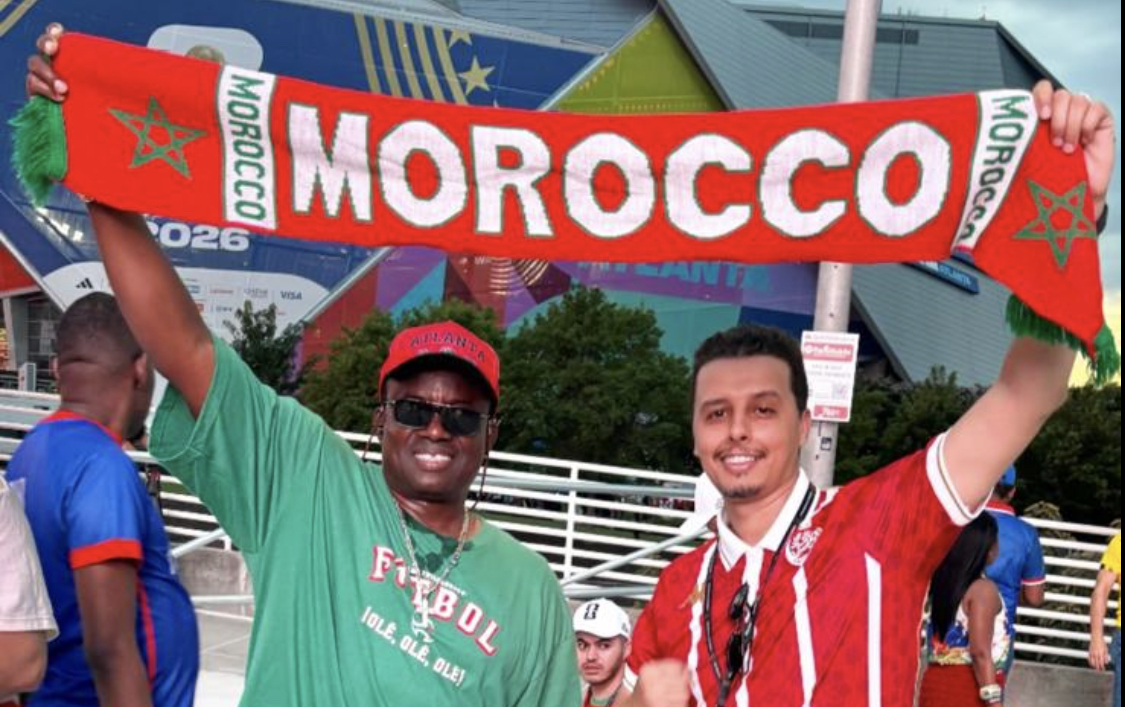
This time, I returned to the FIFA World Cup not as a player but as a FIFA Legend, honoured through FIFA’s Hospitality Program in partnership with the City of East Point* and the Greater Atlanta Area.
One of the highlights of that experience was watching Morocco defeat Haiti 4–2 inside Mercedes-Benz Stadium, Atlanta, before more than 68,000 passionate supporters. It was a thrilling six-goal encounter that showcased Morocco’s technical quality, attacking confidence, and growing maturity on football’s biggest stage.
Watching Morocco perform with such authority immediately transported me back to Rabat.
Preparing to analyse the Netherlands reminded me of Monterrey.
Football has an extraordinary way of connecting generations, allowing yesterday’s experiences to illuminate today’s stage. As the Netherlands and Morocco prepare to meet once again on the World Cup stage, I cannot help but reflect on the remarkable journey that connected my football life with both nations more than four decades ago.
Rabat — When Opportunity Knocked Without Warning
August 1983 remains one of the defining moments of my international career.
Having just returned from the 1983 FIFA World Youth Championship with Nigeria’s Flying Eagles, Chibuzor Ehilegbu, Isa Shofoluwe, and I were unexpectedly summoned to join the Super Eagles under Coach Adegboyega Onigbinde, assisted by James Peters, just days before Nigeria’s decisive 1984 Africa Cup of Nations qualifying match against Morocco in Rabat.
We had been preparing for the WAFU Cup in Ibadan.
Then everything changed.
Several senior national team players who had featured earlier in the qualifying campaign were unavailable. With only days remaining before the return leg, three young Flying Eagles were entrusted with one of the biggest assignments in Nigerian football.
Within hours we travelled from Ibadan to Lagos, connected through Europe, and eventually landed in Rabat.
Few expected us not only to feature but to play the entire match.
Yet all three of us completed the full contest.
Morocco fielded one of Africa’s strongest teams, led by experienced professionals, including the dangerous striker Abdelkrim “Krimau” Merry, whose reputation extended well beyond North Africa.
For 120 tense minutes, neither side found the breakthrough.
Everything came down to penalties.
Nigeria held its nerve.
That victory secured our place at the 1984 Africa Cup of Nations.
Looking back today, what impresses me most is not simply that Nigeria won.
It is how accomplished Morocco already was.
Their technical ability.
Their discipline.
Their organisation.
Their belief.
Those qualities have remained the foundation of Moroccan football for more than four decades.
The names have changed.
The philosophy has not.
Watching Morocco during this World Cup only reinforced that conviction.
They no longer play as hopeful underdogs.
They compete with the confidence of a nation that expects to challenge—and defeat—the very best.
Monterrey — Where Football History Gathered
Only weeks before Rabat, I had stood on another great stage—the 1983 FIFA World Youth Championship in Monterrey, Mexico.
Monterrey was more than where Nigeria faced the Netherlands.
It was also where Tarila Okorowanta’s historic goal secured a 1–0 victory over the Soviet Union, giving Nigeria its first goal in a FIFA-organised World Cup competition and announcing the Flying Eagles on the world stage.
When we faced the Netherlands, the match ended in a goalless draw.
Statistics tell us the score.
History tells us much more.
That tournament assembled one of the finest collections of young football talent ever seen.
Among those competing were players who would later become FIFA World Cup champions, Ballon d’Or winners, European champions, and enduring icons of world football, including Marco van Basten, Dunga, Bebeto*, and many others.
At the time, however, we were simply young internationals representing our countries with pride.
No one stepped onto the field thinking about future awards or legendary status.
We thought only about the next ninety minutes.
Looking back today, I consider it one of the greatest privileges of my football career to have shared the field with so many exceptional footballers.
It reminds me that greatness often reveals itself only after history has been written.
And now, more than four decades later, football has brought me back to +Monterrey*—not as a player pursuing qualification, but as an observer reflecting on how yesterday’s experiences continue to illuminate today’s game.
Casablanca — When Football Gives You No Time to Mourn
If Rabat represented one of the happiest moments of my international career, Casablanca remains one of its most painful.
Once again, this was no ordinary international match.
It was the decisive qualifier for the 1984 Olympic Games in Los Angeles, California, USA.
Nigeria had earned the right to face Morocco after eliminating Ghana in the previous round. We drew 0–0 in Kaduna before defeating Ghana 2–1 in Accra through goals by .Chibuzor Ehilegbu and John Omughele, securing our place in the final qualifying round.
Our confidence was high.
After all, only six months earlier we had defeated this same Moroccan side in Rabat to qualify for the 1984 Africa Cup of Nations.
Football, however, has a way of reminding you that yesterday’s victory guarantees nothing tomorrow.
I was dressed.
My boots were laced.
My jersey was on.
Everything was ready.
Then, less than twenty minutes before kickoff, during the routine verification of passports against the official registered team list, an unexpected problem emerged.
Nigeria’s squad list carried my baptismal name, Paul Okoku.
My passport carried my birth name, Lucky Okoku.
Morocco immediately questioned the discrepancy and lodged an official protest, arguing that the name on Nigeria’s registered squad list did not match the name in my passport.
There was never any doubt about my identity. I was the same player who had represented Nigeria against Morocco just six months earlier in Rabat.
Even so, Coach Adegboyega Onigbinde was unwilling to expose Nigeria to even the slightest administrative risk in a match of such enormous importance.
The winner would represent Africa at the 1984 Olympic Games.
The loser would see that dream come to an end.
Rather than allow even the possibility of a post-match technical protest, he made the difficult—but understandable—decision to leave me out of the match.
The decision was made.
I would not play.
Instead, I took my place on the bench, fully dressed in my match kit, hoping I might still be called upon if circumstances changed.
They never did.
Sometimes football’s greatest disappointments have nothing to do with talent.
Sometimes they are decided by circumstances completely beyond your control.
Morocco eventually prevailed after another penalty shootout.
The Olympic dream ended.
The disappointment was immense.
Only God knows what might have happened had I played that day.
Six months earlier, I had helped Nigeria defeat Morocco in Rabat to qualify for the 1984 Africa Cup of Nations. It is only natural, after all these years, to wonder whether my presence in *Casablanca* might have made a difference.
That is a question I will never be able to answer.
Perhaps no one can.
Football leaves us with unforgettable memories.
Sometimes, it also leaves us with unanswered questions that only God knows.
Yet that is not where the story ends.
Football Rarely Gives You Time to Mourn
One of the greatest lessons football taught me came on *February 26, 1984*, immediately after our heartbreaking defeat in Casablanca.
There was no opportunity to return home.
No chance to dwell on the disappointment.
No time to ask, “What if?”
The reason was simple.
The 1984 Africa Cup of Nations was scheduled to begin in Abijan, Côte d’Ivoire on March 4, 1984—barely a week later.
There simply wasn’t enough time for us to return to Nigeria before reporting for Africa’s biggest football tournament.
Instead, we travelled directly from Casablanca to Côte d’Ivoire* for the very tournament we had earned the right to play by defeating Morocco in Rabat six months earlier.
That journey remains one of the great ironies of my football career.
In Rabat. we ended Morocco’s dream of reaching the 1984 Africa Cup of Nations.
Six months later, in Casablanca, Morocco ended our dream of reaching the 1984 Olympic Games.
Yet instead of returning home to reflect on the disappointment, we boarded another flight—not to Nigeria, but to Côte d’Ivoire—to represent our country at the very tournament we had fought so hard to reach.
That experience shaped my understanding of elite sport.
Football rarely gives you time to mourn.
One heartbreaking defeat can become the starting point of another remarkable journey.
Whenever I reflect on those emotions, I remember the late South African reggae icon Lucky Dube and the powerful message conveyed in his song “Crying Games.” It reminds us of a truth every athlete eventually learns: *the winner may celebrate the victory, but the emotional burden of defeat remains with those left behind.
The joy of Rabat has never faded.
Neither has the heartbreak of Casablanca.
Yet neither memory defines me.
Football taught me resilience.
It taught me perspective.
It taught me to prepare for the next challenge even before the pain of the previous one had disappeared.
Nigeria responded by reaching the final of the 1984 Africa Cup of Nations, returning home with the silver medal.
Heartbreak had given way to hope.
Looking back today, I realise that football’s greatest lessons are not always learned in victory.
Sometimes they are learned in defeat.
Sometimes they are learned on the flight to the next destination.
And sometimes they become the memories that shape us for the rest of our lives.
Why I Support Morocco Today
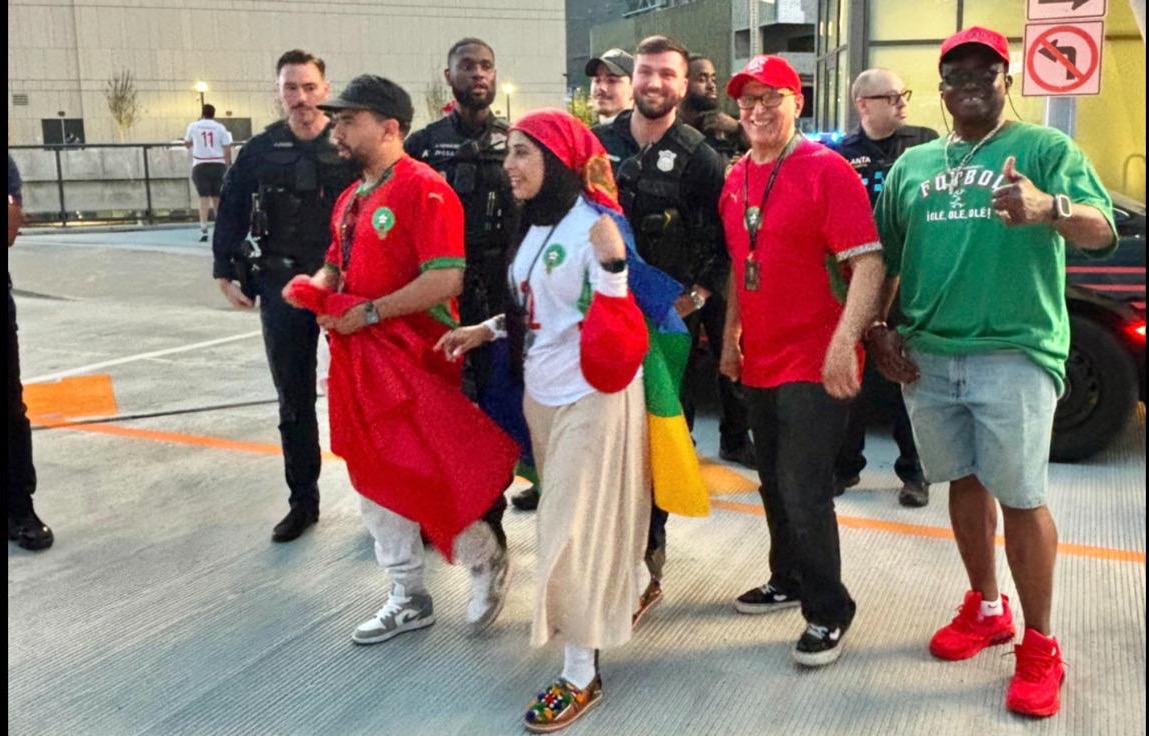
Some people have asked why I openly support Morocco during this World Cup.
The answer is simple.
I am Nigerian.
I will always be Nigerian.
But I am also proudly African.
When an African nation succeeds on football’s biggest stage, the entire continent benefits.
Strong performances elevate Africa’s footballing reputation.
They strengthen the case for greater representation at future FIFA World Cups.
They inspire young boys and girls from Lagos to Rabat, from Kinshasa to Cape Town, to believe that they too belong on football’s biggest stage.
Fifty years ago, Africa struggled for meaningful representation at the FIFA World Cup. For many years, the continent had just one World Cup place, forcing dozens of nations to compete for a single opportunity.
Today, the story is remarkably different.
With the expansion of the 2026 FIFA World Cup, ten African nations qualified for the tournament, and nine advanced to the Round of 32—the highest number in African football history.
That progress did not happen overnight.
It was built by generations of players, coaches and administrators who refused to accept that African football should remain on the margins of the global game.
Every successful African team today stands on the shoulders of those who came before them.
Morocco’s success therefore resonates far beyond one nation.
Every strong African performance strengthens African football.
When Africa succeeds, Nigeria succeeds.
That is why I proudly support every African nation once Nigeria is no longer in the competition.
Not because Nigeria is absent.
But because Africa is present.
The Match
This is why I believe Netherlands versus Morocco has all the ingredients of one of the outstanding matches of the Round of 32.
The Netherlands arrive with decades of football tradition, technical excellence and tactical discipline.
Morocco arrive with confidence, defensive organisation and the belief that they belong among the world’s elite.
Having watched Morocco defeat Haiti 4–2 1in person during this World Cup, I was struck by more than their attacking quality.
I saw composure.
I saw tactical maturity.
I saw a team that no longer carries the mentality of an underdog.
That confidence matters in knockout football.
Matches of this magnitude are rarely decided by talent alone.
They are often decided by composure, discipline and belief.
Both teams possess those qualities.
The midfield battle will be decisive.
Whichever team controls possession, manages transitions more effectively, and remains emotionally composed under pressure will likely emerge victorious.
My heart naturally wants to see Morocco continue making history for Africa.
My football mind expects an exceptionally close contest that could be decided by the finest of margins—or perhaps, fittingly, by another penalty shootout.
If that happens, memories of Rabat and Casablanca will undoubtedly return to me once again.
Final Reflection
Football has taken me from Monterrey to Rabat, from Casablanca to Atlanta
Along that journey, I had the privilege of competing against players who would later become FIFA World Cup champions, Ballon d’Or winners, European champions, and enduring icons of the game.
Decades later, I returned to the FIFA World Cup not as a player chasing victory, but as a FIFA Legend, celebrating football’s extraordinary ability to unite generations.
Looking back across more than four decades, I realise that football has given me far more than victories and defeats.
It gave me friendships.
It gave me unforgettable memories.
It gave me lessons in resilience, humility and gratitude.
Most importantly, it gave me the privilege of witnessing history—first as a player, and now as a storyteller.
As Morocco and the Netherlands prepare to meet once again on football’s biggest stage, I wish both nations the very best.
But as an African, I know where a part of my heart will be.
Because every great African performance today creates new opportunities for the generations that will follow tomorrow.
Football is more than ninety minutes. It is memory, resilience, history, and hope—connecting yesterday’s experiences with tomorrow’s possibilities. It never forgets its past; it simply invites each generation to write the next chapter.
Share Note
If this story resonated with you—whether through football, life’s victories, heartbreaks, or the loss of someone dear—please share it with others. You never know whose journey may be strengthened by a story that reminds them they are not alone.
Paul Lucky Okoku
FIFA Legend | Former Super Eagles & Flying Eagles International | CAF 1984 Africa Cup of Nations Silver Medalist | Former Olympic Qualifying Team Member | Football Analyst | Founder, GTCF
Leave feedback about this