

The latest crisis in Nigerian football is no longer confined to what happened on the pitch in Morocco. It has moved decisively into the corridors of football administration, with a fact-finding committee commissioned by the Nigeria Football Federation raising questions about player selection, financial practices, governance, staff welfare and the concentration of power within the federation.
The committee was established after Nigeria’s disastrous 2026 Women’s Africa Cup of Nations campaign and the subsequent failure of the Super Falcons to qualify for the 2027 FIFA Women’s World Cup. The NFF officially announced the six-member panel on August 14 and President Ibrahim Musa Gusau inaugurated it three days later, instructing members to investigate the direct and remote causes of the national teams’ poor performances.
But the committee’s eventual report has become considerably more damaging to the image of the federation than a conventional technical post-mortem. At its heart is a question of governance.
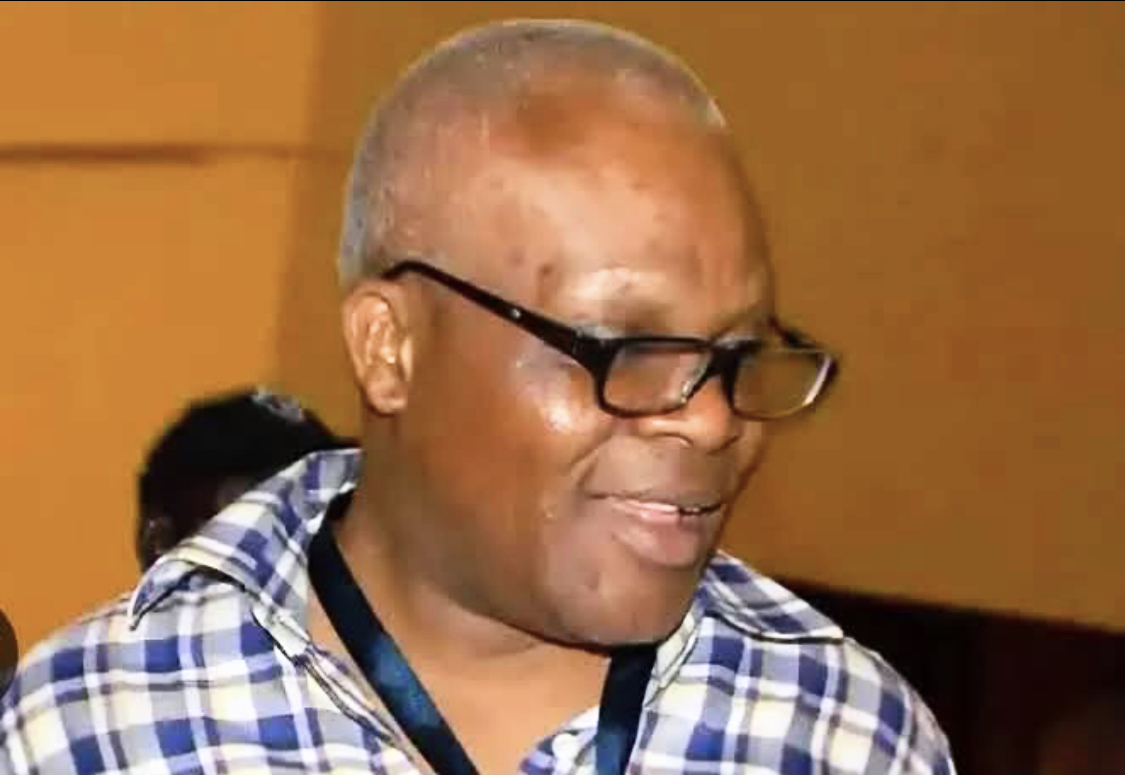
Former NFF General Secretary Fanny Amun, who chaired the committee, has now revealed that Gusau did not honour the panel’s invitation to appear before it. Amun said he personally contacted the NFF president because he wanted him to clarify issues and answer questions, but Gusau refused to attend.
The irony is difficult to ignore: the man who inaugurated the committee and asked it to investigate the crisis was, according to its chairman, unwilling to appear before it.
Amun eventually submitted the report and resigned, saying he wanted to prevent attempts to influence the outcome. He said the assignment was completed ahead of the two-week deadline and that copies of the report were circulated to football and government institutions, including FIFA, CAF, the National Sports Commission and security agencies.
The report does not accuse one individual of causing Nigeria’s football decline. Instead, it describes a system in need of fundamental restructuring. Its most serious passages concern allegations surrounding the selection and invitation of players.
The committee alleges that some board members influenced national-team invitations and that some coaches and officials may have used player invitations as a source of financial gain. It also records allegations that board members, management officials and coaches accepted incentives to compromise decisions surrounding national-team camps.
These allegations are potentially explosive, but responsible journalism demands an important caveat: the committee did not identify the alleged beneficiaries and did not establish the claims as proven misconduct. Premium Times, which reviewed the leaked report, noted that the committee itself called for mechanisms to verify the allegations.
The report also raises questions about money and welfare. It records allegations that players and coaches could be left unpaid while board members and management staff received allowances on international assignments. Amun independently confirmed that the committee heard concerns about unpaid coaches and unequal payments within national-team delegations.
This is potentially one of the most consequential areas of the investigation because Nigeria’s football crisis has unfolded alongside increasing scrutiny of the federation’s finances.
The NFF has previously acknowledged that the EFCC and ICPC are investigating the utilisation of a ₦12 billion Federal Government intervention fund released for national-team obligations, after the federation declined an information request on the grounds that the matter was already under investigation.
That financial scrutiny, combined with the committee’s questions about compensation and resource allocation, means the football crisis now extends well beyond coaching appointments or tactical failures.
It also coincides with an institutional confrontation over the future of the NFF.
The National Sports Commission cancelled the federation’s planned September 27 electoral congress and began considering a normalisation structure to reorganise Nigerian football. The NSC subsequently denied reports that the Federal Government had ordered the NFF leadership to resign, saying consultations were ongoing over how best to re-engineer Nigerian football.
The Senate has meanwhile summoned the NFF and NSC over the national football crisis, signalling that the deterioration of Nigeria’s football fortunes has become a matter of broader public concern. And the sporting evidence behind that concern is difficult to dismiss.
Nigeria’s senior men failed to qualify for the 2026 World Cup. The Golden Eaglets have not qualified for the FIFA U-17 World Cup since 2019. The Super Falcons, meanwhile, have now suffered the most significant setback in the history of Nigerian women’s football: missing the FIFA Women’s World Cup for the first time since the competition began in 1991.
The immediate trigger was devastating. Cameroon defeated Nigeria 1–0 in the WAFCON quarter-final, ending the Falcons’ title defence and denying them automatic World Cup qualification. South Africa subsequently defeated Nigeria 2–1, eliminating the final route to Brazil 2027.
The committee nevertheless found that the problem cannot simply be blamed on the players.
It recommended earlier preparation, stronger technical oversight, clearer lines of authority, better player data, stricter regulations, improved coaching education, stronger domestic leagues and a deliberate development framework for both men’s and women’s football. It also recommended that player selection be linked more closely to fitness and performance rather than opaque considerations.
Significantly, the report said there was no evidence of individual players influencing team selection, pushing back against one of the recurring narratives surrounding Nigerian national teams. That matters because it shifts the debate away from convenient scapegoats.
The deeper issue is whether the structures surrounding Nigerian football are capable of producing consistent, transparent and professional decision-making.
Amun’s recommendation for a maximum of two terms for elected football administrators is therefore not an isolated suggestion. It reflects a broader concern about entrenched interests and the recurring battles that accompany NFF elections. He has also questioned why sitting board members should allegedly be treated differently from other contestants in ethical screening.
For an organisation responsible for one of Africa’s biggest football ecosystems, the implications are enormous.
Nigeria possesses enormous football talent, a huge player pool, a globally recognised diaspora, commercially valuable national teams and a domestic competition capable of producing elite players. Yet the committee’s report suggests that the country’s institutional framework is failing to convert those advantages into sustainable success.
That is why the refusal of the NFF president to appear before his own fact-finding committee has become more than a procedural footnote.
It has become a symbol of the central question now confronting Nigerian football:
Who is accountable when the system responsible for fixing the system is itself part of the problem?
The answer cannot be another press statement, another reshuffle or another temporary technical appointment.
The allegations must be independently verified. Financial questions must be answered with documentary evidence. Governance reforms must be measurable. Player welfare must be protected. National-team selection must be transparent. And those found responsible for wrongdoing must face appropriate consequences.
Nigeria’s football crisis has reached a point where rebuilding credibility may be as important as rebuilding teams. The committee has opened the door.
What happens next will determine whether Nigerian football walks through it — or closes it and returns to business as usual.
Leave feedback about this